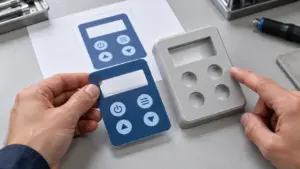
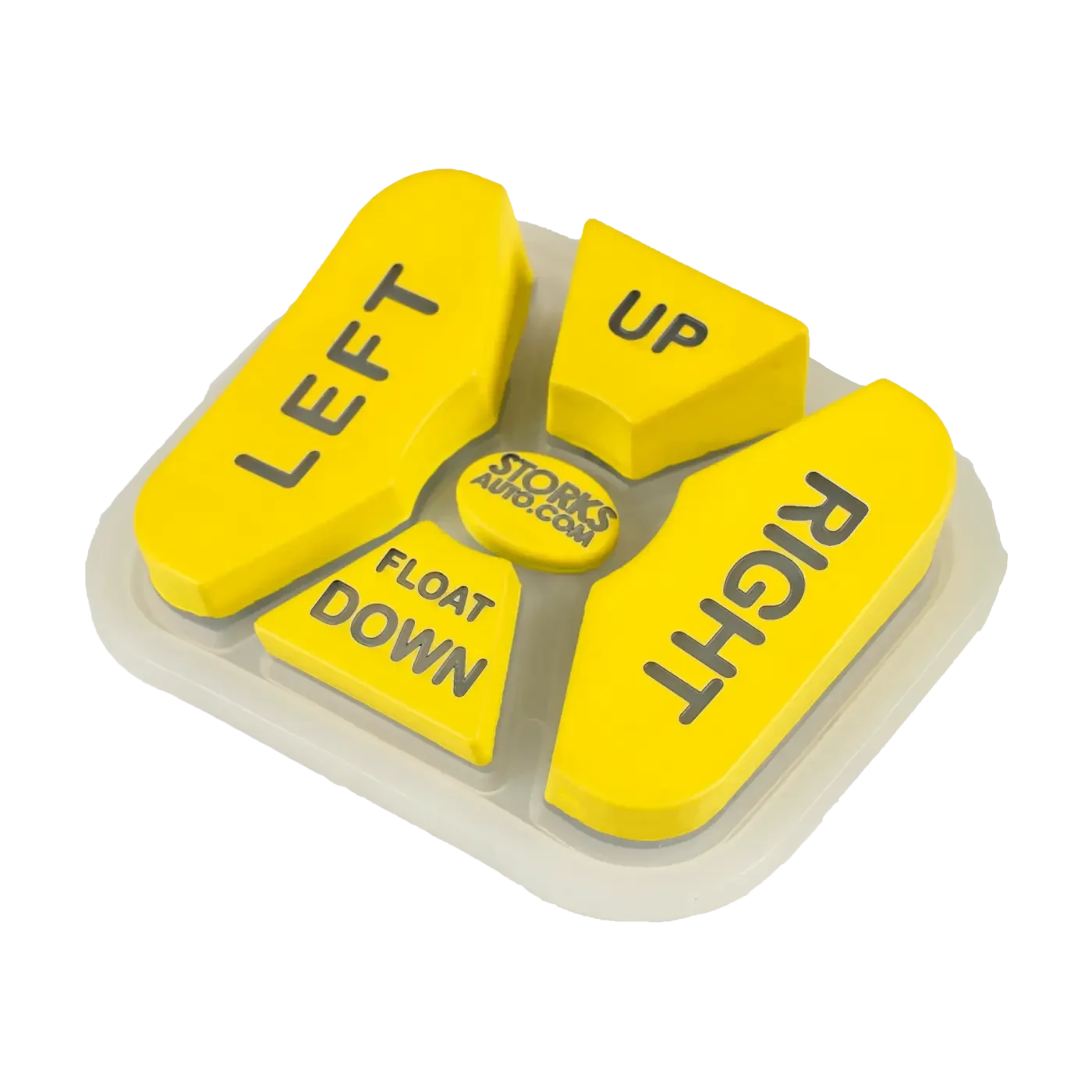
A custom silicone keypad needs a project-specific quote, not a universal price per button. Separate tooling and development charges from the recurring unit price, then identify sample, testing, packaging and delivery charges. Supplier pricing also depends on the molded configuration, decoration and production quantity. 1
Start by defining what you are buying. A quotation for custom silicone rubber keypads may cover the molded component rather than an assembled electrical interface. Compare prices only after the delivered item, revision and acceptance requirements match.
- Separate Tooling, Unit Price and Other Project Costs
- Use a fillable cost structure
- Review Geometry, Materials and Contact Choices
- Account for Graphics, Coatings and Backlighting
- Distinguish appearance from protection
- Quote the illuminated system
- Include Assembly, Testing and Documentation
- Separate qualification from production inspection
- Compare Quantity Scenarios on the Same Basis
- Build a Like-for-Like Quote Comparison
- Prepare Inputs for a Project-Specific Quote
- Submit Your Keypad RFQ
Separate Tooling, Unit Price and Other Project Costs
Tooling and non-recurring engineering, or NRE, are not necessarily the same line item. A supplier’s development package may include engineering, the compression mold, printing screens and manufacturing jigs. Ask what each charge buys rather than assuming that “tooling” means the mold alone. 1
Use a fillable cost structure
Illustrative blank worksheet—not a supplier quotation. Complete the amount and inclusion fields from the actual offer. A blank means unresolved, not zero. Classify each charge by its agreed billing basis; the categories below do not prescribe supplier accounting.
| Cost item | Billing basis to confirm | Scope or charge trigger | Quoted amount / inclusion |
|---|---|---|---|
| Mold and development | One-time, defined revision | Tool identity, cavities, engineering deliverables | _____ |
| Decoration tooling and fixtures | One-time or revision-specific | Screens, positioning aids, inspection fixtures | _____ |
| Samples and first-article reports | Per agreed build | Quantity, finish, assembly and report content | _____ |
| Molded keypad | Per delivered piece or set | Material, contacts, trimming and included inspection | _____ |
| Decoration and coatings | In unit price or separately itemized | Exact color, print, coating and laser route | _____ |
| Electronics and assembly | Per supplied module | Bill of materials, assembly and functional test | _____ |
| Production setup | Per run, or included | Batch size, color/artwork changes, release conditions | _____ |
| Qualification and special reports | Per agreed activity | Specimen quantity, method, laboratory and report | _____ |
| Packaging and delivery | Per unit, shipment or included | Packaging, freight and other agreed delivery charges | _____ |
An item may be bundled into another line. Mark it “included in line…” instead of adding it again. Separate startup spending from repeat-order spending and show when each payment falls due. Record any sample credit against production explicitly.
Keep quoted production unit price separate from an internal per-unit budget allocation. Spreading a paid mold charge across forecast demand is a planning choice; it does not change the supplier’s repeat-order price. Conversely, ask whether a quoted unit price already contains a tooling-recovery charge before adding NRE again.
For mold approval, correction and tool-management decisions, use the silicone keypad tooling and prototyping guide. Here, the purchasing question is which work is included and which change triggers another quotation.
Review Geometry, Materials and Contact Choices
Key count is not a sufficient cost specification. Tool complexity and cavity count influence tooling, while the manufactured volume and production configuration affect unit pricing. 1 Ask the supplier to identify the cost-sensitive features in the current drawing rather than applying a generic surcharge per key.
Use the following as a review agenda, not a ranked list of savings. Ask which operations, trials or inspection activities a feature adds to the offer; do not assign an unverified cost premium.
| Design area | Potential quoted work to clarify | What to hold constant or verify |
|---|---|---|
| Keymat geometry | Mold work, insert handling, demolding and trimming | Key shapes, web sections, locating and sealing features |
| Functional tolerances | Tool trials, corrections and dimensional inspection | Critical dimensions, measurement method and acceptance |
| Silicone specification | Compound sourcing, color preparation and required processing | Material identity, hardness, color and approved substitutions |
| Contact architecture | Pill loading or separate switch parts and assembly | Matching circuit, contact method and assembled acceptance |
| Mold configuration | Cavity arrangement and production-run assumptions | Tool proposal associated with each quantity offer |
A conductive keypad can use a molded-in carbon/silicone pill to close PCB contacts. A non-conductive rubber key can instead actuate a separate metal dome. These are different constructions, even when their visible key shapes resemble each other. 3 Compare the circuit and switch parts as well as the rubber component; deleting the pill does not make a complete switching system unnecessary.
For materials, ask whether the specified compound, color and processing requirements change the quoted sourcing or preparation work. Hardness alone is not a complete material purchasing description. Treat material substitutions and relaxed tolerances as proposed design changes, not automatic savings. Ask engineering to approve the functional consequences before requesting a revised price. This keeps a lower quotation from silently becoming a different specification.
Account for Graphics, Coatings and Backlighting
Write the finishing route into the comparison. Body color, printed legends, sprayed color layers and laser-opened legends are not interchangeable descriptions. Color and secondary-process choices are identified as pricing factors in supplier literature. 1
Distinguish appearance from protection
Polyurethane spray coatings and epoxy key-top coatings are examples of different finishing options. Epoxy can produce a harder, glossier key-top surface; it should not be treated as the same finish as a thin protective spray. 2 Request the specified coverage, appearance and acceptance criteria, rather than a quotation that merely says “coated.”
Ask whether finish qualification, masking, curing and inspection are included. Approve any proposed coating deletion against the actual cleaning and wear requirements. A lower decoration charge is not a like-for-like saving when the required finish has been removed.
Quote the illuminated system
One established backlit construction uses translucent silicone, opaque surface layers and laser-opened legends, with LEDs illuminating the intended areas. Light blocking may be needed to prevent illumination from appearing in neighboring zones. 4
Translate that construction into a supply question: does the price include only the light-transmitting keymat, or also the LED board, drive components, optical separators and assembly? Request a separate option for each genuinely different scope.
For acceptance, specify the powered configuration, viewing conditions and permitted visual differences. A quotation for an unpowered decorated part should not be recorded as equivalent to one that includes powered optical inspection.
Include Assembly, Testing and Documentation
A silicone keypad assembly can have a broader supply boundary than a loose keymat: circuit, LEDs, connector, spacer, adhesive and functional test may be part of the module. Confirm the actual included bill of materials rather than treating the product name as a complete scope statement.
When comparing component-only and assembled offers, record who purchases the remaining parts, performs assembly and accepts the finished interface. Add buyer-side work only to the comparison scenario where it is genuinely required. An assembled offer is not automatically cheaper, and a loose component is not automatically the lower-cost installed solution.
Separate qualification from production inspection
Ask for distinct descriptions of development validation, first-article reporting and recurring shipment inspection. “Tested” should identify the test object, method, acceptance criterion, sampling or coverage, and record supplied.
For example, request clarification of whether electrical testing uses a reference circuit or the shipped module. Identify whether force checks and powered appearance checks are sampled or performed on every unit. For environmental or durability work, agree the specimen configuration and quoted test activity separately; do not assume that it repeats for every shipment.
Specify the documentation actually required, such as dimensional reports, material declarations, lot identification or individual test records. Ask which are included and which require separate preparation. Apply the same principle to trays, separators, labels and protection for finished surfaces.
Compare Quantity Scenarios on the Same Basis
Distinguish annual forecast, committed order quantity, manufacturing batch and shipment release. A forecast is an estimate of demand, not a commitment to buy one production batch. Request the conditions attached to each price tier.
Illustrative quantity worksheet. Enter your quantities; these scenarios are not minimum-order requirements. Keep the design and supply scope constant, or identify differences before comparing prices.
| Quotation field | Pilot order | Repeat production | Larger committed order |
|---|---|---|---|
| Committed quantity, pieces or sets | _____ | _____ | _____ |
| Manufacturing batch quantity | _____ | _____ | _____ |
| Shipment quantity and frequency | _____ | _____ | _____ |
| Annual forecast, non-binding | _____ | _____ | _____ |
| Drawing, artwork and supply scope | _____ | _____ | _____ |
| Tool configuration | _____ | _____ | _____ |
| Quoted production unit price and currency | _____ | _____ | _____ |
| Separate NRE and batch charges | _____ | _____ | _____ |
| Price validity and commitment conditions | _____ | _____ | _____ |
Request an explanation of each price change. Does it reflect the batch quantity, a different mold proposal, purchasing commitments or a changed inspection scope? Do not assume that a larger forecast alone earns a lower unit price.
Compare cash commitment as well as price per piece. A larger order can require buying inventory before it is needed. Record your own storage and obsolescence assumptions separately from supplier charges; do not present estimated internal savings as a supplier discount.
Build a Like-for-Like Quote Comparison
Normalize quotations against one approved baseline. Use “included,” “excluded,” “customer-supplied” or “TBD” for scope fields; enter amounts with their currency and billing unit. Leave unknown costs unresolved rather than treating them as free.
| Comparison field | Required baseline | Supplier A | Supplier B |
|---|---|---|---|
| Part, drawing, artwork and BOM revisions | _____ | _____ | _____ |
| Delivered unit: keymat or complete module | _____ | _____ | _____ |
| Material, contact and finishing route | _____ | _____ | _____ |
| Order quantity, batch and shipment releases | _____ | _____ | _____ |
| Tooling/NRE, sample charges and credits | _____ | _____ | _____ |
| Production unit price and included work | _____ | _____ | _____ |
| Setup, testing, reports and packaging | _____ | _____ | _____ |
| Currency, validity and payment schedule | _____ | _____ | _____ |
| Delivery rule, edition and named place/port | _____ | _____ | _____ |
| Freight, insurance, duties and taxes: inclusion/owner | _____ | _____ | _____ |
| Buyer-side work and unresolved exclusions | _____ | _____ | _____ |
Delivery terms matter because Incoterms® rules allocate delivery-related costs, responsibilities and risks. 5 Request offers on the same agreed delivery basis, or document the adjustments needed to reach the same comparison point. Keep payment terms and quotation validity as separate commercial fields.
Illustrative example: one offer covers a printed keymat, while another includes a coated, illuminated PCB assembly. Comparing their headline unit prices does not identify the better offer. First align the deliverables or list the additional work needed for each option. Do not invent an adjustment for an unquoted item.
Use separate decision totals for startup, the first order and an unchanged repeat order. Identify already-paid tooling and do not charge it again in a future-spend comparison. Keep any lifetime-cost allocation clearly labeled as an internal planning view.
Prepare Inputs for a Project-Specific Quote
Use the silicone rubber keypad design guide for the full engineering input package. For cost review, add the commercial baseline: required delivered item, quantity scenarios, shipment plan, required records and preferred delivery basis.
Separate mandatory requirements from options. Ask for the baseline first, then individually priced alternatives where practical. Label unresolved choices “TBD” and request the assumptions behind the estimate. Compare final offers only after material, finish, assembly and test differences have been resolved or explicitly accepted.
Frequently Asked Questions
Can I request a budget estimate without final drawings?
Yes. Provide the clearest layout, sample reference or description available, together with scope and quantity assumptions. Treat the response as a budget estimate until the quoted configuration is agreed, not as approval to release production tooling.
What does “tooling included” mean?
Ask whether tooling is bundled into a project charge, recovered through unit pricing or conditional on a purchase commitment. The phrase alone does not establish a separate tool price, ownership or future repeat-order terms.
Will tooling be charged again on a repeat order?
Confirm that the existing tool remains suitable for the unchanged revision. Ask separately about maintenance, repair, storage, modification or replacement charges. Payment for the original tool should not be interpreted as a promise that every future tooling activity is included.
Can several legend versions share one quantity tier?
Request quantities by artwork and color version. Ask whether the supplier will aggregate them and whether separate setup, identification, packaging or inspection charges apply. A shared keymat outline does not establish a shared commercial price tier.
Is a low-volume custom rubber keypad always uneconomic?
No universal cutoff follows from this worksheet. Request a feasible sample and production plan for the actual project. Judge the quoted startup commitment, recurring price and unresolved design risk together; do not assume a generic MOQ or discount.
Submit Your Keypad RFQ
Send JASPER your drawing or sample reference, expected order and annual quantities, equipment application, key requirements and desired supply scope. Identify alternatives and mark open decisions “TBD.” Include the completed cost-comparison fields so the quotation can distinguish startup charges from repeat-order pricing.
Ready to Start Your Project?
Tell us about your membrane switch, keypad, or graphic overlay requirements. Our engineering team will review your specifications and provide a detailed quote.