
Dongguan, China · Established 2006
Custom Membrane Switch Manufacturer in China
Your design. Built by JASPER.
Custom membrane switches and keypads for OEM equipment—from design review and prototyping to printing, assembly and testing.
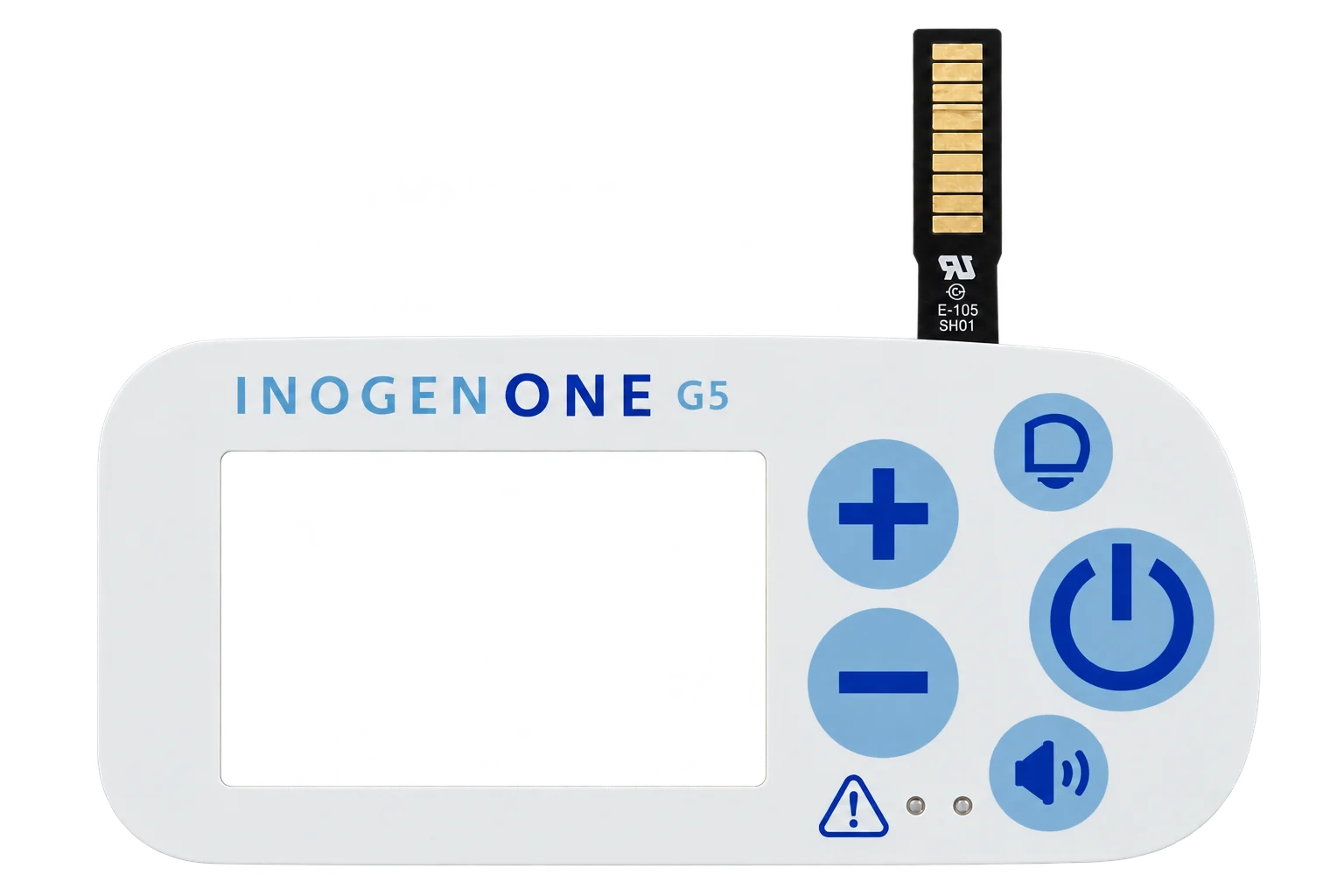
Drawing or sample · Prototype and production inquiries
01 / See the manufacturing behind your switch
Inside our Dongguan
membrane switch factory
From printed layers to the assembled interface, our production workflow brings screen printing, lamination, assembly and inspection together.
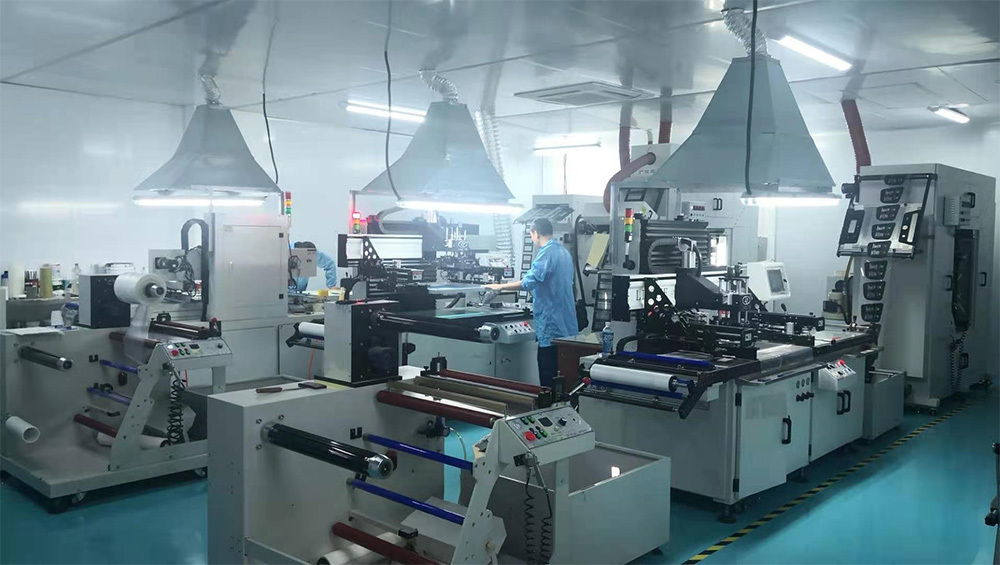
Graphic and conductive layers, built from approved files.
Our screen-printing workflow follows the agreed artwork, color references and circuit layout, with registration and surface finish checked during production.

Class 50,000 cleanroom
Layer alignment, adhesive lamination and tactile-element assembly.

Continuity and isolation
Circuit connections and open/short checks against the approved pinout.

Appearance against a reference
Print, windows and alignment checked against agreed acceptance criteria.
Have a drawing or a switch to replace?Start with the part, the application and your order quantities.
Discuss Your Build02 / Built around your equipment
Custom membrane switches
we manufacture
Choose the starting construction. We configure the graphics, circuit and assembly around your equipment; tactile response, lighting, sealing and shielding can be combined.
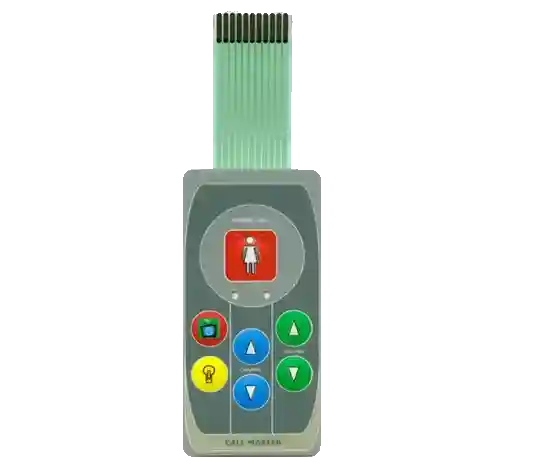
Tactile membrane switches
A defined click, with dome selection and key feel matched to the interface.
View options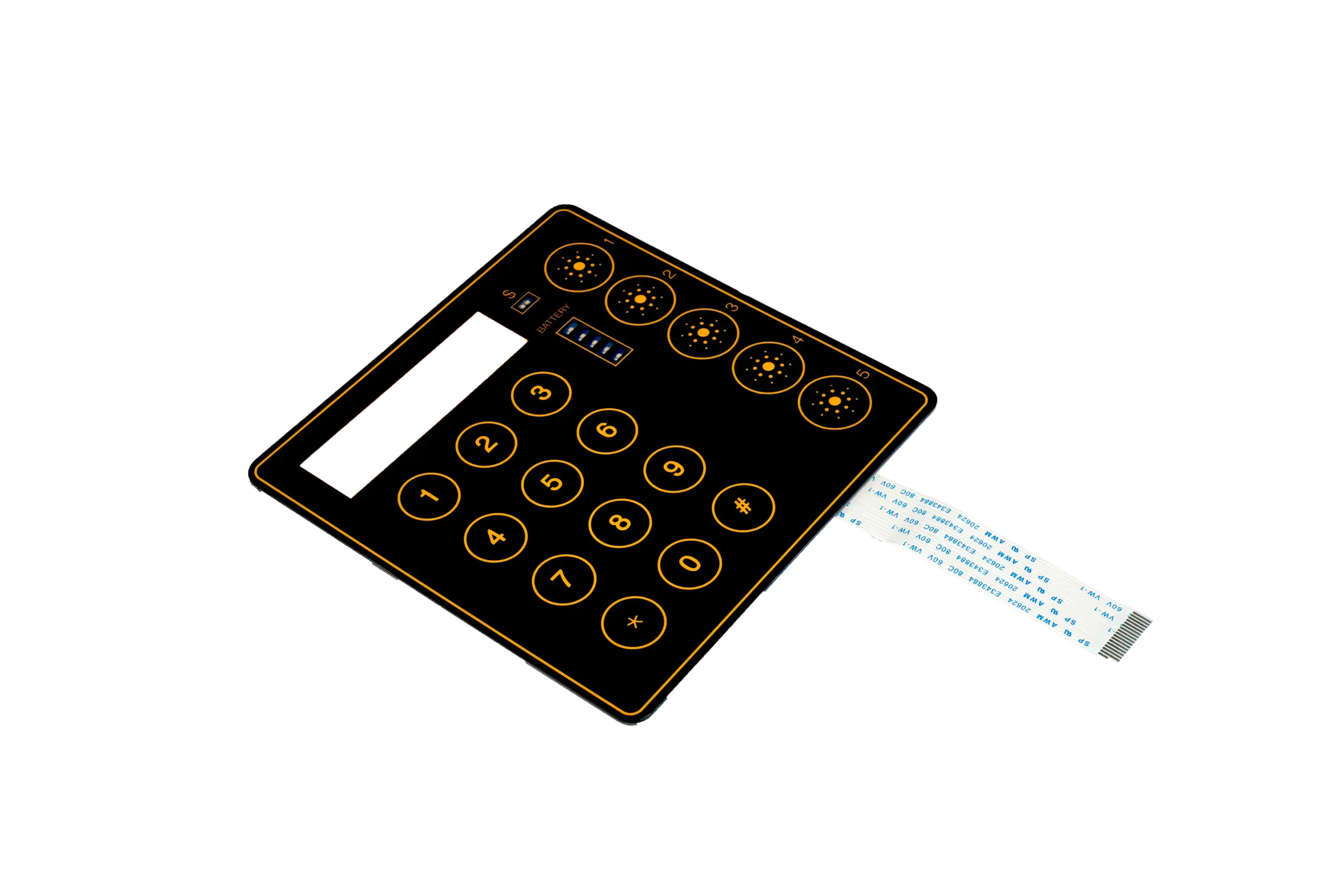
Non-tactile membrane switches
Flat, low-profile controls without snap-action tactile feedback.
View options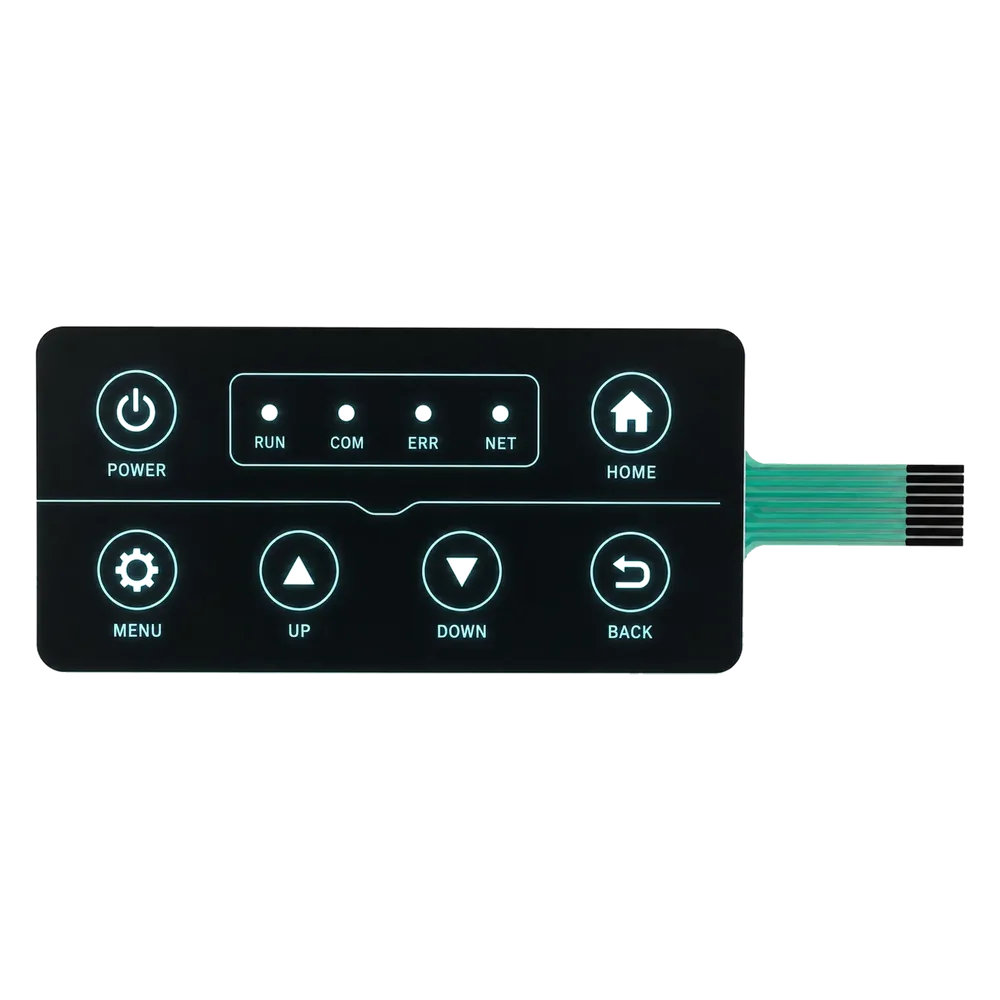

Waterproof membrane switches
Sealed constructions reviewed together with the enclosure and tail exit.
View options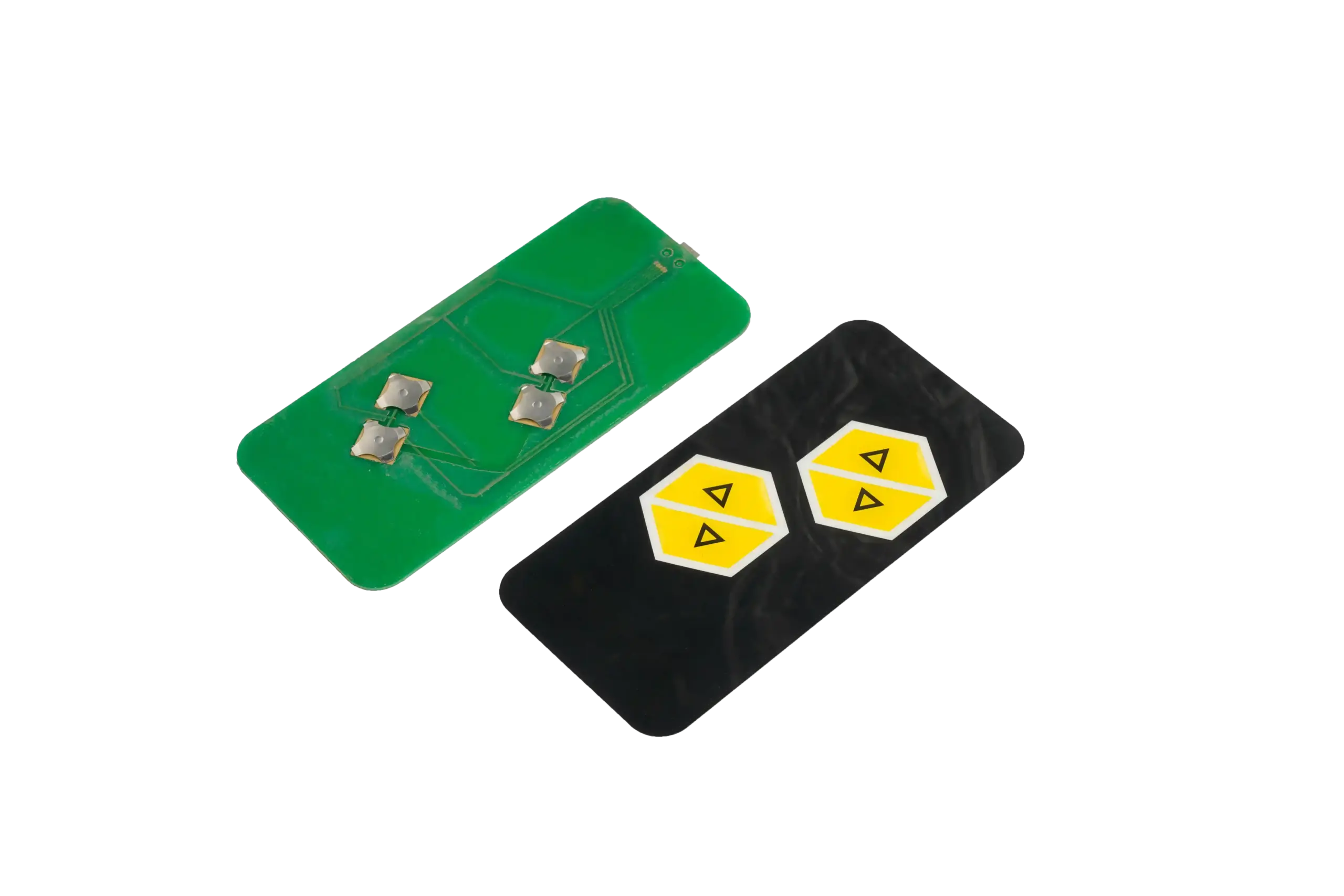
PCB & FPC membrane switches
Rigid board support, flexible routing and component integration.
View options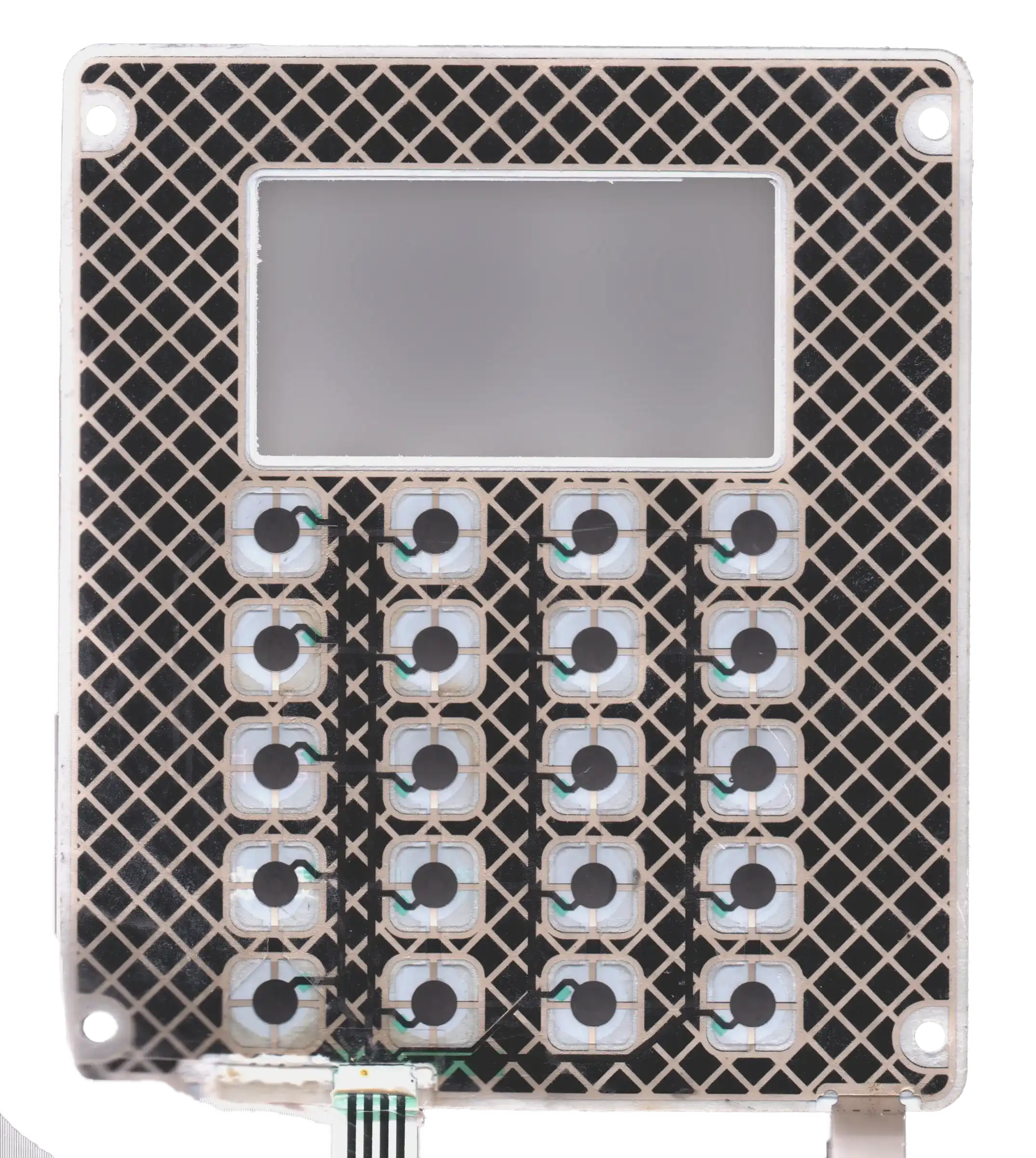
Shielded membrane switches
Shield layers and grounding paths for project-specific EMC requirements.
View optionsBrowse the full membrane switch range · How a membrane switch works
03 / One specification, from front to back
What can we customize?
Our design review connects the visible panel, circuit and enclosure. These are the decisions we work through with your team before tooling.
On smaller screens, swipe the table to compare the requirements.
| Design decision | We configure | Your project reference |
|---|---|---|
| Graphics & surface | Brand colors, legends, languages, texture and selective finishes | Editable artwork, color references and cosmetic acceptance criteria |
| Overlay material | Polyester or polycarbonate, film thickness and relevant surface properties | Cleaning chemicals, expected wear, temperature and exposure conditions |
| Display & indicator windows | Clear or tinted areas, cutouts, printed borders and light-transmitting icons | Display drawing, viewing area, location tolerances and optical expectations |
| Circuit construction | Printed circuits, copper FPC or PCB-supported assemblies | Schematic or key matrix, pinout, electrical requirements and board constraints |
| Tactile response | Metal domes, formed tactile features or a non-tactile structure | Desired feel, force requirements, key geometry and operating conditions |
| Backlighting & indicators | LED indicators, illuminated legends and light-guide or other lighting structures | Illuminated areas, supply details, brightness expectations and space limits |
| Tail & connector | Tail position, length, routing, contact pitch and connector orientation | Mating connector drawing, contact side, bend location and assembly access |
| Adhesive & sealing | Adhesive family, coverage pattern, perimeter sealing and tail-exit treatment | Enclosure material, surface finish, cleaning process and sealing test requirement |
| Shielding & grounding | Shield layer, conductive coverage and a defined connection to the equipment ground | Grounding arrangement and applicable equipment-level EMC or ESD requirements |
| Mounting & integration | Overall outline, backer or stiffener, mounting holes, display and enclosure fit | 2D/3D enclosure files, critical dimensions, assembly method and thickness limits |
Sealing, chemical exposure, tactile life and electrical limits are reviewed for the selected construction and installation. The agreed test conditions define what the sample must demonstrate.
04 / Engineering handovers, made clear
From drawing to production
We carry the agreed drawing, materials and sample reference through the build. Your team approves the specification and the fit on your equipment before production release.
- 01
Application review
We review your drawing or sample for stack-up, mounting, circuit and material requirements.
Your input: application, environment and quantities. - 02
Build plan & quotation
The build discussion brings artwork, pinout, materials, tooling and commercial scope together.
Your approval: specification, costs and schedule. - 03
Prototype build
We prepare samples to the agreed revision for appearance, fit and functional review.
Handover: sample reference and inspection scope. - 04
Equipment approval
Your team checks the sample on the actual enclosure and connected electronics.
Your approval: acceptance or identified revisions. - 05
Production & inspection
We manufacture to the released specification and agreed inspection requirements.
Build reference: approved files, sample and packing. - 06
Shipment & repeat supply
Shipment coordination and repeat orders use the approved part and revision reference.
Before reordering: confirm quantity and any changes.
05 / From an approved sample to repeat supply
Quality control &
repeat-order consistency
Our inspection workflow covers the materials, printed layers, electrical function and finished appearance. The approved specification gives each check a project-specific reference.
Materials matched to the build
Film, adhesive, domes and connectors are reviewed against the specified material requirements and relevant lot references.
Print and assembly checks
Artwork revision, color, windows, layer alignment, tail geometry and mounting dimensions follow the agreed drawing and cosmetic reference.
Electrical and key function
Continuity, isolation and key response are checked to the project scope. Life, sealing and environmental verification are agreed separately.
Finished part and packing
Final review includes the visible finish and agreed records, with packing planned to protect the face, domes, tails and connectors.
Review our quality and compliance information, then request current certificates, applicable scope and the records your order requires. Company certification is not a blanket product approval.
06 / Overseas OEM collaboration
Working directly with
a manufacturer in China
English-language engineering communication and a shared drawing reference keep decisions connected from the first inquiry to the repeat order.
A shared technical reference
Our review brings dimensions, units, revisions and open questions into one discussion with your engineering team.
File-sharing requirements
NDA and access requirements belong in the initial discussion, before restricted drawings are shared.
Samples through shipment
We coordinate packing and shipment requirements. Freight, taxes, delivery terms and documents are confirmed for the order.
Reorders without ambiguity
Earlier order and sample references identify the baseline; quantity, artwork or material changes are reviewed before release.
07 / Scope the prototype and the production order
Prototype, MOQ,
lead time & cost
Our quotation review covers the complete interface: construction, quantities, tooling, inspection and delivery requirements—not only the front-panel size.
The project quotation confirms scope and start date after drawing, artwork and material decisions. Special components, added tests or revisions may change the schedule.
Check your project schedule ↗Quantities matched to your design
We review prototype, first-order and repeat demand separately. MOQ depends on printing setup, material usage, construction and purchased components.
Tooling and setup made visible
The cost discussion separates recurring parts from applicable screens, cutting or embossing tools, test fixtures and setup. Repeat-order charges and design changes are clarified in the quotation.
The drivers behind the unit price
Size, materials, colors, layers, domes, LEDs, shielding, connectors, assembly, quantity and verification requirements determine the build cost.
For early budget planning, try the membrane switch cost estimator. Its reference estimate does not replace engineering review or a confirmed production quotation.
08 / Practical engineering resources
Engineering documents
for your RFQ
Three English-language PDFs for your engineering and purchasing teams. The approved drawing and quotation remain the final project reference.
Membrane switch specification
Organize the technical details to discuss during design and purchasing review.
Open specification PDFMembrane switch RFQ checklist
Prepare artwork, dimensions, circuit details, quantities and application requirements.
Open RFQ checklist PDFMembrane switch types
Review construction choices before narrowing the options for your equipment.
Open switch types PDFSend what you have. Flag what still needs a decision.
- Drawing, dimensions, mounting surface and thickness limits
- Artwork, legends, colors and window requirements
- Circuit or key matrix, pinout, tail and mating connector
- Operating environment, cleaning and required verification
- Prototype quantity, production demand and delivery location
- Required documents, packing and confidentiality conditions
09 / Before you place an order
Questions OEM
buyers ask
Get the scope clear before comparing suppliers or releasing tooling.
Can you manufacture from a drawing, sample or existing membrane switch?
Yes. We review drawings and artwork, or an existing sample when files are unavailable. Dimensions, key functions, connector details and the changes you need establish the starting point. The replacement specification and acceptance criteria are agreed before production.
What information do you need for an accurate quotation?
The key inputs are a dimensioned outline, artwork, circuit or pinout, tail and connector details, mounting surface, environment and quantities. Identify prototype, first-order and repeat demand separately. Unresolved details can be raised during the engineering review; a fully finished drawing is not required to begin the discussion.
What is the minimum order quantity for prototypes and production?
JASPER supports prototype and production projects. The practical minimum is quoted for the specific design because material utilization, printing setup, tooling and purchased components differ. Ask for the quantities you actually need and a separate production price break; no single MOQ applies to every construction.
How long does a prototype take, and when does the lead time start?
The standard prototype lead time is 7–10 days. Confirm applicability and the start date in the quotation after the drawing, artwork, material choices and any necessary tooling arrangements have been agreed. Special components, added verification or design changes may change the schedule. Production and transport lead times are confirmed separately.
Are tooling, fixtures and setup included in the unit price?
The quotation defines applicable one-time charges and recurring part costs. Depending on the design, setup can include screens, cutting or embossing tools and test fixtures. The commercial review clarifies what each charge covers and whether a repeat order or later design change requires additional work.
How should we approve samples and request changes?
Check fit on the actual enclosure, key response, pinout, artwork, windows, adhesion and any agreed lighting or environmental requirements. Record acceptance against the drawing revision and sample reference. Submit revisions as an identified change package; confirm the revised files and whether new samples are needed before the next build.
How do you control repeat-order consistency?
The approved drawing, artwork, materials, color reference, connector and inspection criteria form the repeat-order baseline. Earlier order and sample references help identify that build. Changes to materials, construction or requirements return to engineering review before production release.
Can you support overseas packaging and documentation?
Yes. Our order review covers delivery location, shipping arrangement, labeling, packing and required documents. Packing needs to protect the printed face, domes and flexible tails. Material declarations, inspection records and other project documents are agreed for the order, rather than assumed to be included in every shipment.
10 / Start with your requirements
Let’s review your
next membrane switch.
Send a drawing, artwork or an existing sample reference. Tell us where the interface will be used and what your team needs to approve.
Drawings · Materials · Quantities · Project requirements
[email protected]