
Spa, pool & wet-area equipment
Membrane Switch Panels for Spa and Pool Equipment
Water-resistant membrane switch panels and overlays for spa, pool, and wet-area control interfaces exposed to humidity and cleaning.
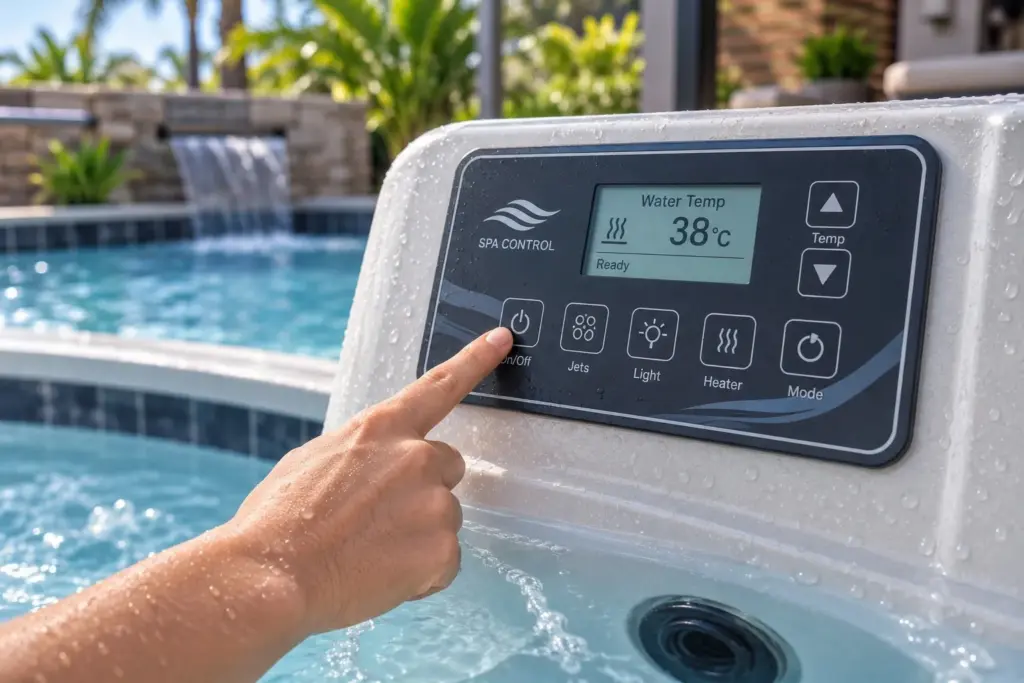
Engineering notes from the planning draft
Spa and pool equipment interfaces are exposed to moisture, cleaning chemicals, sunlight, temperature change, and frequent user operation. JASPER manufactures custom membrane switch panels, control panel overlays, waterproof keypads, and printed interface assemblies for spa, pool, and wet-environment equipment manufacturers.
The design must protect graphics, maintain bonding, support clear operation, and reduce moisture-related failure risks.
Design Requirements
| Requirement | Design Response |
| Moisture exposure | Sealed surface and edge review |
| Cleaning chemicals | Chemical-resistant film and printing structure |
| Outdoor use | UV-stable material and readable graphics |
| User operation | Clear icons and tactile or visual feedback |
| Enclosure fit | Accurate cutouts, tail routing, adhesive area |
| Long-term supply | Stable artwork, materials, and repeat production |
Engineering Notes
Spa and pool panels should be designed as part of the equipment housing. A waterproof overlay will not perform well if the tail exit, connector area, or housing edge allows water intrusion.
FAQ
Can JASPER make waterproof spa control panel overlays?
Yes. Waterproof performance depends on the full structure and enclosure design.
Can the overlay resist cleaning chemicals?
Material and printing choices can be reviewed based on the chemicals used.
Can JASPER make replacement-style panels for OEM equipment?
Yes, if drawings, samples, and authorization are available.
Spa and pool equipment design details
This section turns the application draft into a build-ready review checklist. Use it to decide the material stack, sealing method, key feel, artwork limits, and RFQ inputs before tooling.
Design decisions that should be made before tooling
| Decision | What JASPER needs to know |
|---|---|
| Wet-finger operation | Review tactile feedback, key spacing, and surface finish for users pressing with wet hands. |
| Chlorine and humidity | Confirm chemical exposure before choosing overlay, ink, adhesive, and window materials. |
| Night visibility | Backlit icons or LEDs may be needed for outdoor spa and pool controllers. |
| Sealing with enclosure | The membrane panel must work with gasket, housing, tail exit, and connector protection. |
Common failure risks and how to prevent them
| Risk | Prevention |
|---|---|
| Chlorine attacks surface | Test actual chlorine/bromine exposure and cleaning concentration. |
| Moisture enters connector area | Protect tail exit and connector location from drip paths. |
| Icons unreadable at night | Define backlighting, legend contrast, and viewing angle. |
| Adhesive fails on textured plastic | Share housing material and texture before adhesive selection. |
Typical structure to review
- Water-resistant overlay
- Sealed membrane switch panel
- Optional backlit legend/LED layer
- Controlled tail exit
- Wet-area adhesive matched to plastic or coated housing
Application-specific RFQ checklist
- Chlorine, bromine, humidity, or cleaning exposure
- IP or splash target and water direction
- Night visibility or backlighting requirement
- Housing material, texture, and gasket design
- Tail exit and connector protection plan
Additional application questions
Is a spa keypad the same as a normal waterproof membrane switch?
No. Wet fingers, chlorine, humidity, sunlight, and night visibility can change material and lighting choices.
Can spa panels include backlit buttons?
Yes. Backlit legends or LED indicators can be added when light leakage and sealing are designed together.
Moisture-path validation
Seal the complete interface, not only the printed front surface
A water-resistant front film cannot compensate for an open tail exit, an uneven housing edge, a poorly matched adhesive, or condensation reaching the connector. The design review should trace every possible moisture path from the user surface to the enclosure interior. This includes perimeter bonding, cutouts, display windows, cable routing, connector protection, gasket compression, and any pressure or temperature cycle that can draw moisture into the assembly.
Material validation should reflect the actual spa or pool environment. Chlorine, bromine, cleaning products, sunlight, warm surfaces, wet fingers, and repeated heating and cooling can affect print protection, film appearance, adhesive bonding, and tactile response in different ways. JASPER can use the exposure information to recommend a construction and define sample checks, but the final sealing target should be confirmed on the assembled equipment.
Wet-area validation points
- Direction and duration of splash or water exposure.
- Chemical names or cleaning products used in service.
- Housing material, texture, edge condition, and gasket design.
- Tail exit, connector location, and condensation risk.
- UV, temperature cycle, backlighting, and night readability.
Recommended interface types
Final selection depends on enclosure drawings, operating environment, cleaning exposure, key feel, cable routing, quantity, and documentation requirements. JASPER reviews these points before tooling.
What to send for an application quote
- Panel size, enclosure drawing, or sample photos.
- Artwork file, legend requirements, and window positions.
- Operating environment: cleaning, UV, moisture, vibration, temperature, or glove use.
- Connector, tail exit, adhesive surface, expected annual quantity, and compliance requirements.
Build this interface around your real use environment.
Send your drawing, application notes, and target quantity. JASPER will review the material stack, sealing method, graphics, circuit, connector, and manufacturing path.
Request an Engineering Review