
Manufacturing
JASPER manufacturing pages explain how OEM membrane switch, membrane keypad, capacitive touch switch, and graphic overlay projects move from drawings and samples to controlled production.
Membrane Switch Manufacturer
Core manufacturer page for custom membrane switches, OEM supplier evaluation, production control, and RFQ review.
Membrane Keypad Manufacturer
Manufacturer support page for custom membrane keypads, tactile and non-tactile key feel, connectors, overlays, and repeat production.
Capacitive Touch Switch Manufacturer
Manufacturer support page for sealed capacitive touch interfaces, touch zones, PCB/FPC support, LEDs, overlays, and enclosure review.
Graphic Overlay Manufacturer
Manufacturer page for printed graphic overlays, materials, windows, adhesives, embossing, clean handling, and inspection.
Factory Tour and Cleanroom Production
Factory proof page covering cleanroom-supported production, inspection flow, and manufacturing credibility.
For sourcing and engineering review: start with the closest manufacturer page, then connect to product, capability, resource, case study, and RFQ pages for the complete project context.
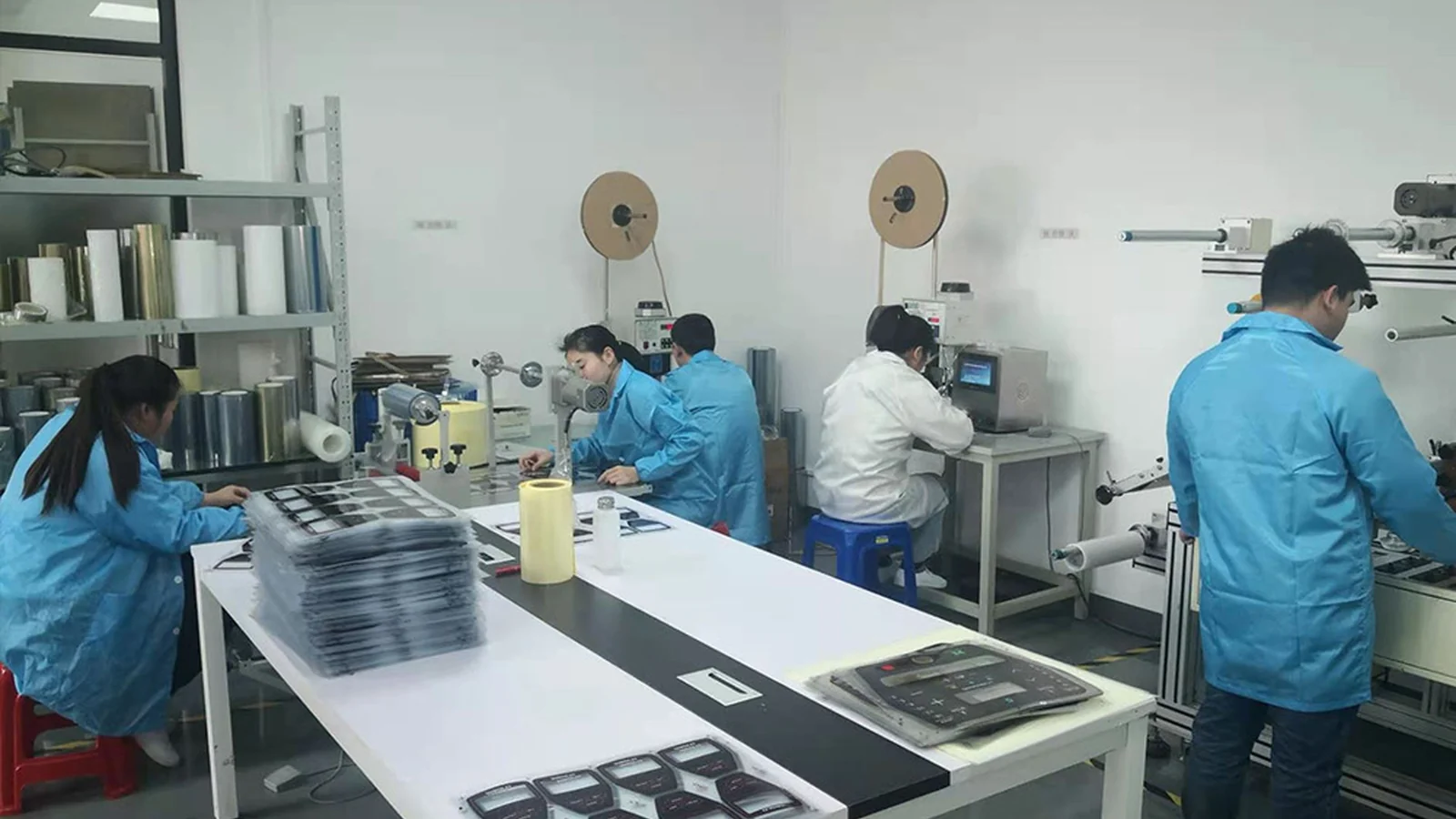
Manufacturing processes in the workshop
Screen printing, printed-circuit alignment, roller lamination and visual inspection.
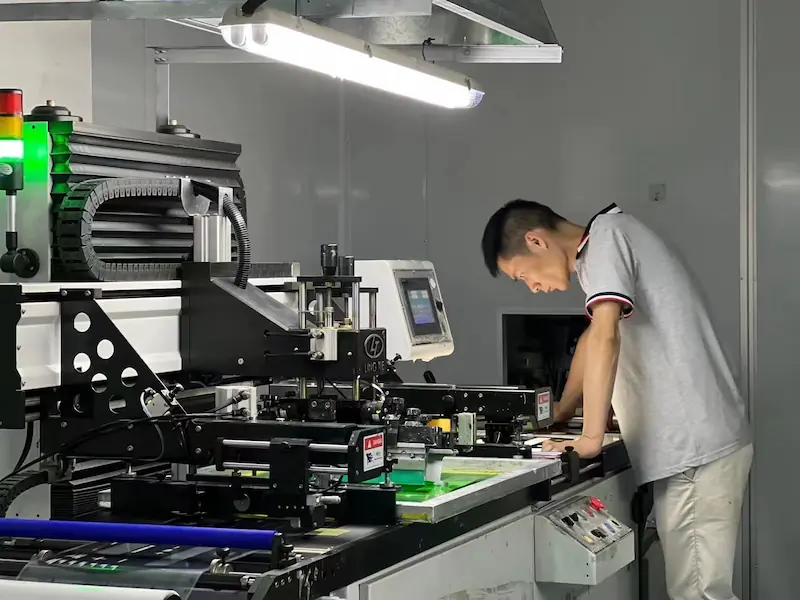
Screen printing
Operator at a screen-printing production station.
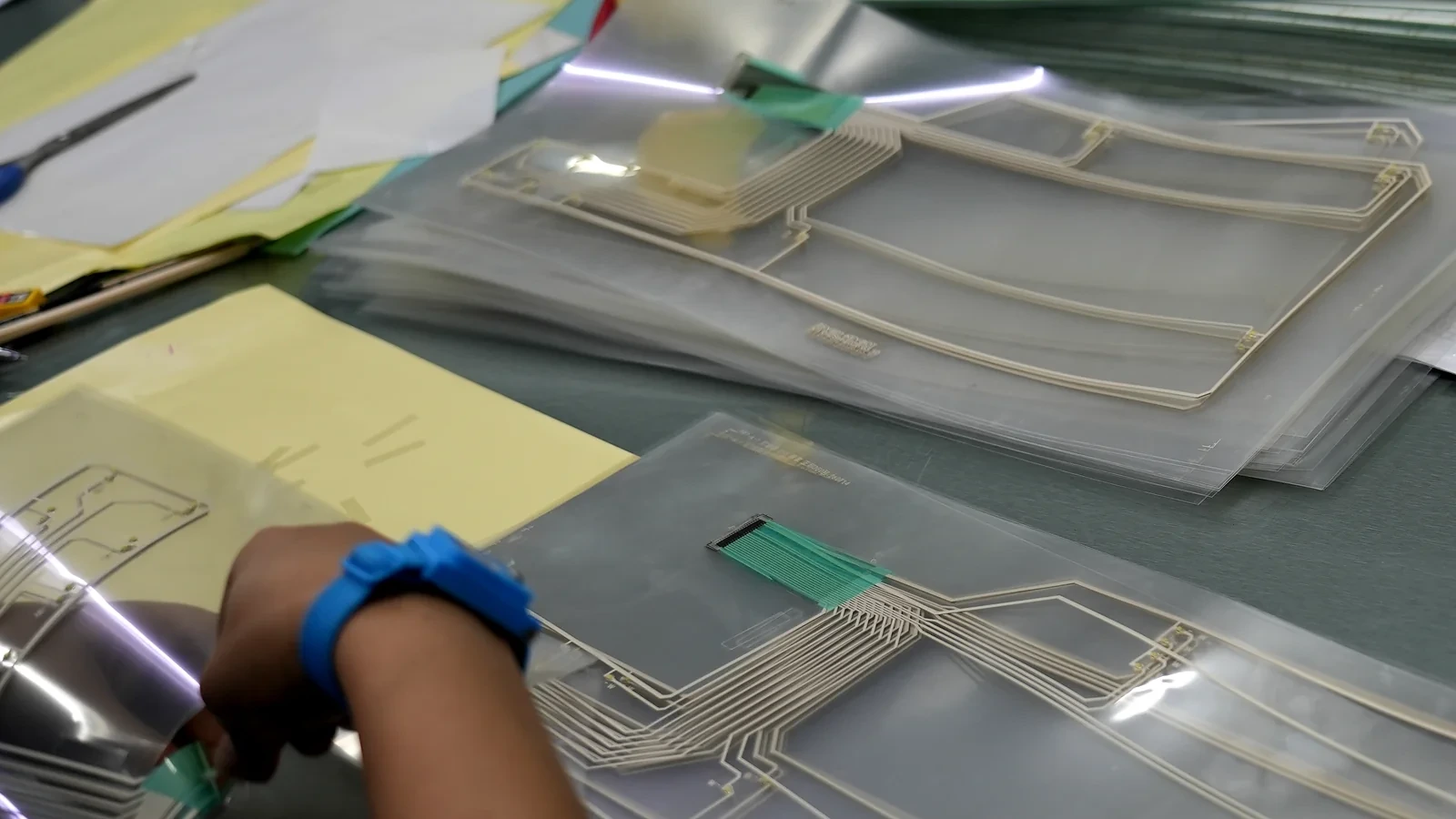
Circuit-layer alignment
Manual alignment of printed circuit sheets during layer assembly.
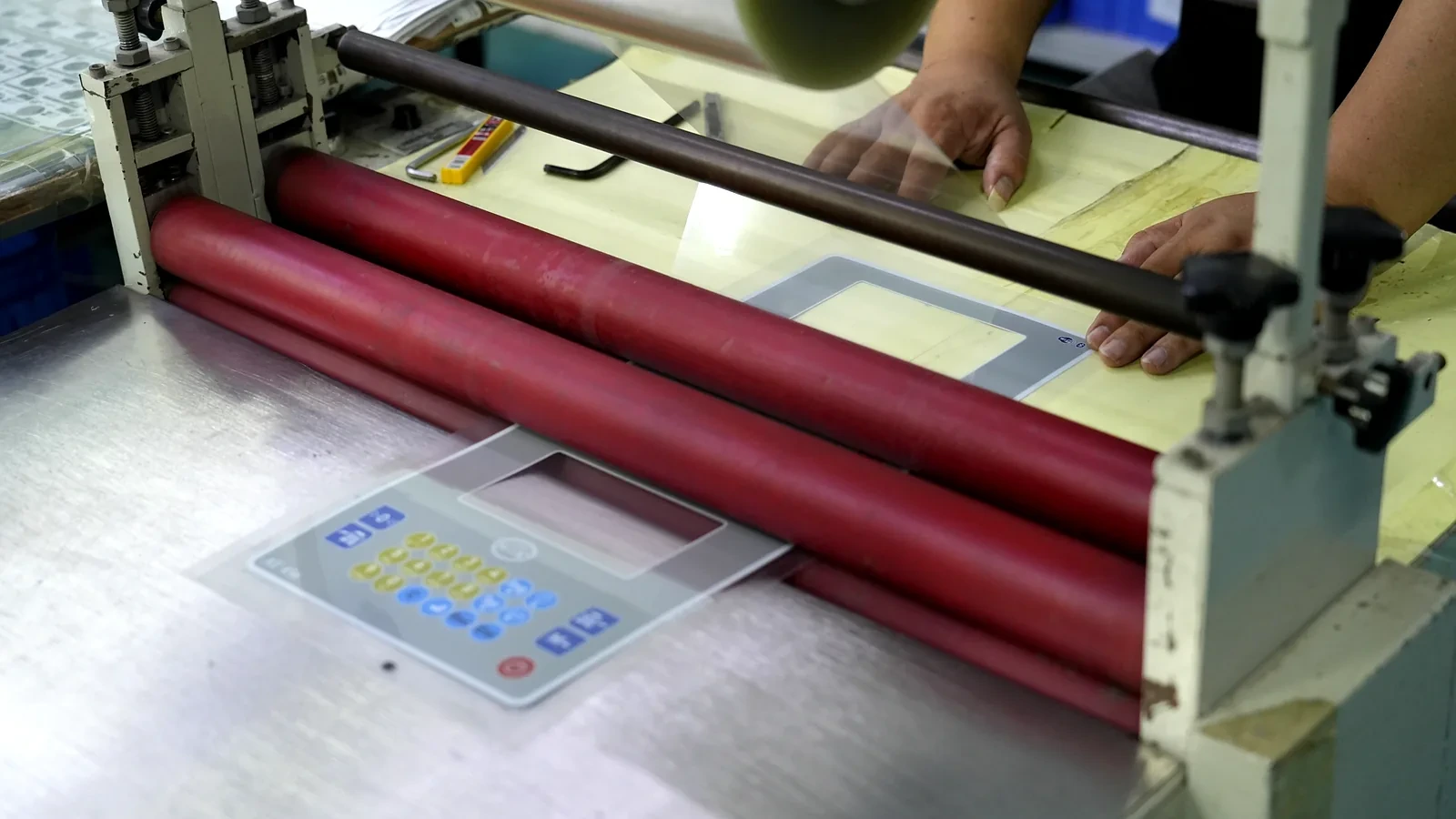
Roller lamination
Printed overlay layers passing through the roller-lamination station.

Visual inspection
Visual inspection of printed interface sheets before the next production step.
OEM manufacturing workflow
From drawing review to repeatable membrane switch production
JASPER’s manufacturing work starts before screen printing or lamination. For each OEM project we review the drawing, housing interface, connector direction, adhesive surface, expected operating environment, inspection method, and annual volume. This early review helps avoid the common problem where a sample looks acceptable but is difficult to assemble or unreliable in the field.
The same factory workflow supports membrane switches, membrane keypads, capacitive touch panels, graphic overlays, silicone rubber keypads, and HMI assemblies. Engineering, material selection, printing, circuit processing, lamination, assembly, inspection, and export packaging are coordinated so the finished interface can be repeated across prototype and production orders.
Design review
We check artwork, circuit layout, tail routing, connector pitch, adhesive area, window position, embossing, LED location, and enclosure fit before tooling.
Controlled production
Screen printing, circuit processing, spacer lamination, dome placement, LED or PCB/FPC integration, and final assembly are handled under documented process steps.
Inspection records
Visual inspection, continuity, insulation, actuation force, dimensions, color, adhesive bonding, and packaging checks can be aligned with project requirements.
How to choose the right manufacturing path
If your project is still at concept stage, start with the product family and use environment. If you already have drawings or an existing sample, send the files together with the target quantity, housing material, cable exit direction, and any known failure history. The manufacturing route changes depending on whether the interface needs tactile feedback, waterproof sealing, backlighting, display windows, ESD shielding, or PCB/FPC support.
- For sealed button interfaces, compare tactile membrane switches, non-tactile circuits, and waterproof construction details.
- For branded front panels, review graphic overlay materials, hard coat, windows, adhesive choice, and clean handling.
- For thin electronic interfaces, confirm capacitive touch zones, PCB/FPC support, LED integration, and enclosure grounding.
- For repeat production, lock inspection standards, packaging, labeling, revision control, and re-order documentation.
Production release control
Define the evidence required before repeat production
A functional prototype is only one approval point. Before repeat production, the OEM team should identify the critical-to-quality features that must stay consistent: key force, circuit resistance, tail dimensions, connector orientation, display-window alignment, print color, adhesive coverage, cosmetic limits, and final packaging. JASPER can align these checkpoints with the drawing and approved sample so incoming inspection is based on the same evidence used at the factory.
Revision control is equally important. Artwork, circuit files, bills of material, inspection criteria, and packaging instructions should carry a clear version. When a material or process change is proposed, the affected characteristics should be reviewed before production continues. This reduces the chance that a later order is technically functional but no longer fits, looks, or assembles like the approved build.
Useful production-release records
- Approved drawing and golden sample.
- Critical dimensions and electrical test limits.
- Material, adhesive, connector, and print references.
- Lot identification and revision history.
- Packaging and labeling requirements.
- Agreed response for nonconforming material.
Production route selection
Match the manufacturing route to the interface risk
A sealed keypad, backlit interface, display window overlay, and PCB-supported HMI assembly do not use the same production route.
Before sampling, JASPER checks the use environment, housing contact surface, cable exit, connector, target force, light path, and inspection criteria.