
CUSTOM OEM TOUCH INTERFACES
Capacitive Touch Switch Manufacturer
Your control surface, built around the complete assembly.
Bring the artwork, touch layout and enclosure requirements. JASPER reviews the printed panel, sensing interface, lighting and assembly scope with your electronics team before sampling.
Overlay-only or assembly projects. Controller and firmware responsibilities are agreed separately.
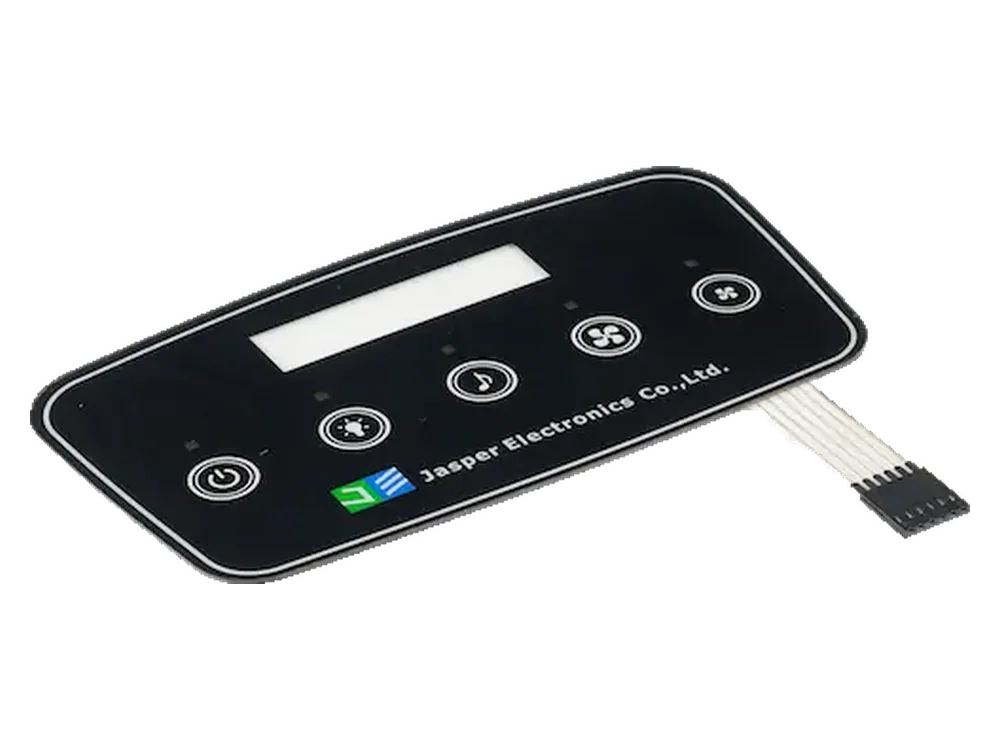
START WITH THE DELIVERABLE
Choose what arrives at your factory
A printed faceplate, a sensing interface and a finished control assembly are different purchases. Select the scope that fits your existing electronics and assembly process.
Printed overlays and faceplates
Custom graphics, icons, windows, surface finish and adhesive geometry for your sensor or electronics. Material and thickness are reviewed against the intended sensing arrangement.
Useful when you already own the sensor and controller design.
Panels with a sensing interface
Review the panel together with the sensor pattern, PCB or FPC support, tail exit and connector requirements. The drawing and quotation define which parts JASPER supplies.
Controller compatibility is a project input, not an assumption.
Lighting and assembly options
Coordinate LED windows, hidden icons, light blocking, bonding and the enclosure interface. Confirm the lighting parts and assembly responsibilities before releasing a sample.
An appearance option is not a guarantee of environmental performance.
A CLEAR QUOTATION
Agree the boundary between the panel and the electronics
Your quotation should identify the supplied parts, required customer inputs and agreed checks. A panel photograph alone does not establish a controller, firmware or complete-system specification.
Swipe or use the keyboard to read the full table.
| Project element | Panel manufacturing scope | Customer input or joint confirmation |
|---|---|---|
| Graphics and cover material | Artwork, printing, windows, finish and agreed overlay or faceplate construction. | Approved artwork, thickness, appearance limits and cleaning exposure. |
| Sensor, PCB/FPC and connection | Review sensor location, mechanical fit, tail routing and the quoted component scope. | Sensor/controller requirements, drawings, pinout, connector and grounding concept. |
| Controller and firmware | Define the interface to the supplied panel; any additional electronics work needs explicit agreement. | Name the party responsible for controller selection, firmware, tuning and software changes. |
| LEDs and assembly | Review window registration, light isolation, bonding and assembly operations included in the quote. | LED positions and drive conditions, enclosure parts and cosmetic approval conditions. |
| System validation | Agree the inspection items and sample records for the parts being supplied. | Verify touch behavior with the final enclosure, controller settings and intended use conditions. |
We do not assume a specific controller IC, firmware package, communication protocol or certification is included. Put those requirements in the RFQ so the scope can be confirmed.
DESIGN INPUTS
Review the stack-up in its real operating environment
The visible surface is only one part of the interface. Share the intended layer arrangement and operating conditions so the sample evaluates your actual product.
Material and sensing distance
Identify the cover material, thickness, finish and adhesive layers. Changes in the material or distance to the electrode may require a new response check.
Bonding and air gaps
Show the recess, bonding area, flatness and support behind the panel. Do not assume an unbonded sample behaves the same way as the finished assembly.
Water and cleaning
Describe droplets, wet fingers, cleaning methods and any standing water. Agree acceptable and rejected inputs with the controller owner; a flat front surface is not an IP rating.
Gloves and users
Supply the actual glove type and describe how users operate the controls. Validate the required actions, missed inputs and unintended activations on assembled samples.
Grounding and electrical surroundings
Include the housing material, power arrangement, nearby electronics and grounding concept. System-level noise and EMC requirements need a defined validation plan.
Icons and lighting
Align touch zones with artwork and LED windows. For hidden icons, agree the unlit appearance and the viewing conditions used to approve the lit sample.
MANUFACTURING AND HANDLING
Control the visible parts and the assembly interfaces
JASPER combines printed interface manufacturing with project-specific assembly review. The approved construction sets the production route, while the inspection plan defines the agreed appearance, alignment and connection checks.
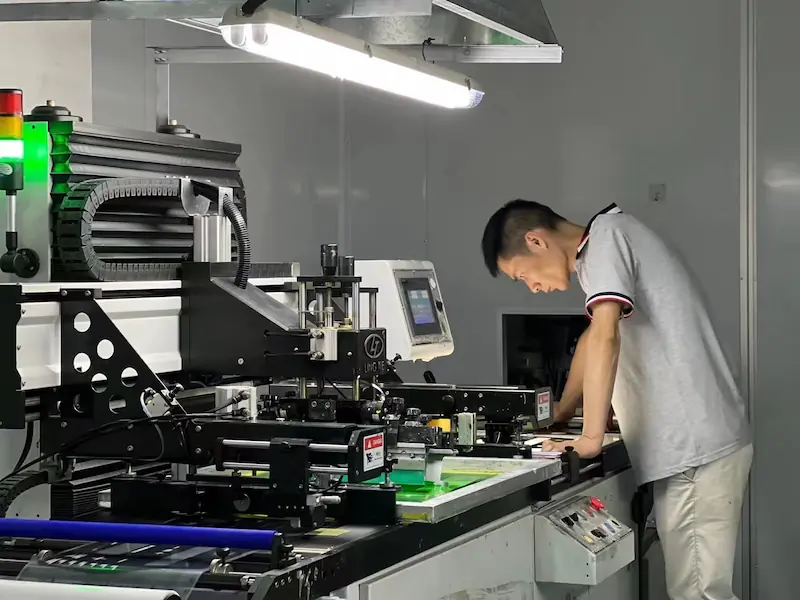
Printing and appearance
Check artwork revision, icon position, windows and agreed visual references. Define inspection conditions for glossy surfaces, transparency and hidden graphics.
Alignment and bonding
Review locating features, adhesive areas, openings and connection exits. Confirm the handling and assembly sequence for the specified layers.
Connections and supplied components
Include the agreed electrical or connection checks in the inspection plan. Verify the connector orientation and fit against the released drawing.
SAMPLE ACCEPTANCE
Approve appearance, assembly and touch behavior separately
A good-looking panel is not a substitute for a functional sample in your product. Agree the evidence needed for each approval before production.
Appearance approval
Artwork revision, color reference, icon alignment, windows and agreed lit/unlit appearance.
Mechanical approval
Outline, stack thickness, adhesive fit, connection exit, enclosure recess and assembly method.
System approval
Final controller settings, grounding, user inputs and the specified water, glove, cleaning or electrical conditions.
Required IP, EMC, regulatory or other compliance evidence must be defined for the actual product and test conditions. It is not implied by the material or panel style.
FROM DRAWING TO REPEAT ORDERS
A sample is a decision point, not just a delivery
Share the starting package
Send artwork, dimensions, layer concept, connector details and quantities. Mark missing information so it can be resolved before tooling.
Confirm the supply scope
Agree the construction, electronics responsibilities, acceptance criteria, quoted quantities and sample schedule.
Evaluate assembled samples
Review appearance and fit, then test touch behavior with the intended electronics and enclosure. Record any changes against the sample revision.
Release the approved revision
Use the approved artwork, drawings and acceptance references for production. Reassess relevant checks when materials, electronics or the enclosure change.
Sample planning typically targets 7–10 days, subject to the construction, material availability and project confirmation. Controller or firmware development and additional validation require a separately agreed schedule.
Request a panel reviewPREPARE YOUR PROJECT
Useful technical references
Capacitive touch panel options
Review the product family before defining the parts and assembly scope for your quotation.
Open the resource →Custom panel design guide
Prepare the mechanical stack-up, electronics boundary and validation inputs together.
Open the resource →Capacitive design checklist (PDF)
English PDF with mechanical, electrical and sample-validation inputs to prepare before requesting a quote.
Open the resource →BEFORE YOU REQUEST A QUOTE
Capacitive interface questions
Start with what you need to receive and who owns the electronics. We can then review the panel construction and sampling requirements.
Request a panel reviewCan you supply only the printed overlay?
Yes. An overlay-only project can be reviewed separately from a sensor or assembly project. Share the cover material, thickness, artwork, adhesive and the position of the sensing areas so the overlay can be coordinated with your electronics.
Is a controller or firmware included?
Not by default. The quotation must state who supplies the controller, selects the IC, develops the firmware and performs tuning. Any additional electronics scope needs explicit project confirmation.
Can the interface include LEDs and hidden icons?
These options can be reviewed with the panel construction. Provide the LED positions, lighting requirements and appearance references. Confirm alignment, light blocking and the lit and unlit sample appearance before release.
Will it work with water or gloves?
This depends on the assembled stack, sensor, controller settings, grounding and the actual water or glove conditions. Provide representative conditions and agree the required behavior. Validate samples in the final product rather than assuming compatibility from a photograph.
Does a sealed-looking panel have an IP rating?
No. A flat faceplate or bonded construction does not establish an ingress-protection rating. The complete enclosure, seals, connections and defined test conditions must support any required rating.
Can an existing panel be replaced from a sample?
A sample can help establish the outline and visible features. It does not reveal all controller, sensor or firmware requirements. Provide the pinout, installation details and operating requirements, and validate the proposed replacement with the original system.
How long does sampling take?
The usual planning target is 7–10 days, subject to the agreed construction, materials and project confirmation. Extra electronics development, special materials or validation can change the schedule. The project quotation and confirmation define the applicable timing.
What should I send for a quotation?
Send the artwork and dimensions, material and layer concept, touch zones, PCB/FPC and connector information, controller ownership, lighting needs, enclosure details, use conditions and required quantities. Identify unresolved items rather than filling them with assumptions.
START THE TECHNICAL CONVERSATION
Bring the panel and electronics requirements together
Have a drawing, an existing sample or an early concept? Share what is known and what still needs a decision. We will review the manufacturing scope before the sample plan is fixed.
Request a panel reviewInclude in your review package
- Artwork, overall dimensions and the intended layer arrangement
- Touch zones, lighting, PCB/FPC, connector and controller information
- Enclosure, water/glove/cleaning conditions, quantities and target timing
Incomplete drawings are a starting point for review, not a promise that missing electronics or performance requirements are already covered.