
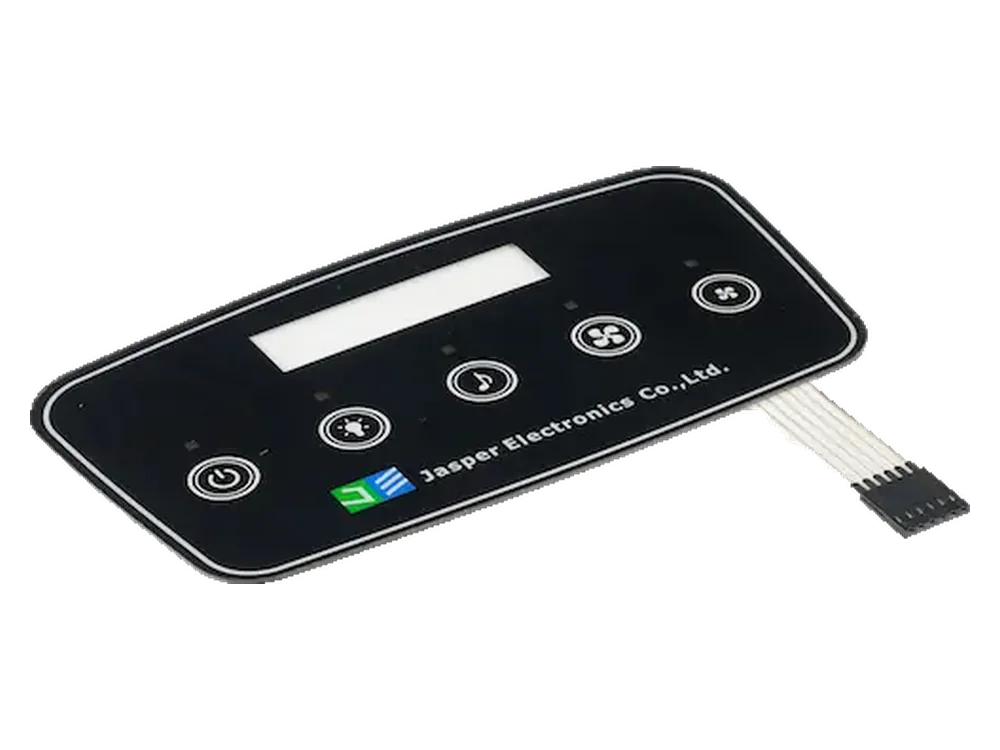
Fabricante de interruptores tactiles capacitivos
JASPER fabrica interfaces tactiles capacitivas para productos OEM que necesitan superficies selladas, planas, modernas y limpiables, con iconos impresos, zonas tactiles, respuesta LED y soporte de ensamblaje.
A capacitive touch switch manufacturer must coordinate the overlay material, sensor layout, printed graphics, PCB or FPC support, grounding, LED windows, adhesive stack, controller requirements, and final enclosure conditions.
Que hace un fabricante de interruptores tactiles capacitivos?
Respuesta corta: A capacitive touch switch manufacturer builds sealed touch-control interfaces by combining printed overlays, touch sensing zones, PCB or FPC support, LED windows, adhesives, connectors, inspection, and assembly review for the final product enclosure.
Capacitive sensing is sensitive to overlay thickness, dielectric material, ground design, air gaps, water exposure, user conditions, controller settings, and enclosure geometry. Early review reduces the risk of weak sensitivity, noise, false triggers, uneven LED appearance, and assembly rework.
Como evaluar un fabricante de interruptores tactiles capacitivos
Capacitive touch projects need both manufacturing control and electronics-aware design review. The supplier should understand the visible overlay and the sensing behavior behind it.
| Punto de evaluacion | Que revisa JASPER | Por que importa for capacitive touch projects |
|---|---|---|
| Overlay material | PET, polycarbonate, glass or acrylic concepts when applicable, surface finish, thickness, windows, and printed icons | Overlay thickness and dielectric behavior affect touch sensitivity and appearance |
| Touch layout | Button zone size, spacing, icon position, slider or key arrangement, edge distance, and user operation | Poor layout can create weak sensing, unintended activation, or difficult user operation |
| PCB or FPC support | Sensor pad geometry, routing, connector, grounding, shielding discussion, and controller interface requirements | The sensor pattern and electronics environment affect sensitivity, noise, and stability |
| Lighting and windows | LED indicators, dead-front icons, backlit symbols, diffuser needs, light blocking, and registration | Capacitive panels often need both clean appearance and readable feedback |
| Adhesivo and assembly | Bonding surface, air gaps, panel flatness, gasket zones, housing material, and installation pressure | Air gaps or poor bonding can change sensing performance and visible quality |
| Validation planning | Electrical review, appearance inspection, function checks, environmental assumptions, and customer-side controller testing | Final touch behavior must be validated in the real enclosure with the intended controller |
Controlled manufacturing for printed overlays and touch interface assemblies
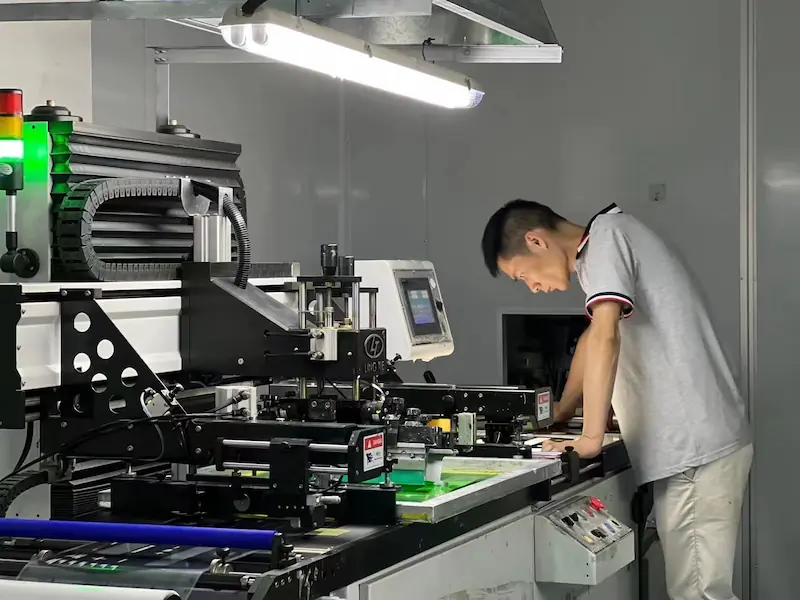
JASPER operates a 5,000-square-meter factory with 2,500 square meters of espacio de produccion cleanroom. This supports printed overlay production, clean handling, alignment, inspection, and assembly-level review for capacitive touch switch panels.
- Printed icons, windows, dead-front graphics, and LED areas are reviewed together with touch zone position.
- Overlay material, thickness, adhesive, and housing conditions are checked before sampling when touch sensitivity is important.
- PCB or FPC support can be reviewed with customer electronics requirements and final enclosure constraints.
- Cleanroom-supported handling helps reduce visible particles around display windows, glossy surfaces, and lighted icons.
Nota RFQ: Send the overlay drawing, touch zone layout, PCB or FPC concept, controller notes, LED requirements, panel thickness, housing material, grounding assumptions, use environment, and expected annual volume.
Soporte de fabricacion for capacitive touch interfaces
The goal is practical engineering alignment: a sealed touch panel must look right, assemble correctly, and sense reliably in the final product.
Overlay and icon printing
Review colors, icons, windows, dead-front symbols, surface finish, transparency, registration, and clean appearance.
Touch zone and sensor review
Check button area, spacing, slider layout, sensor pad position, overlay thickness, edge distance, and controller constraints.
PCB and FPC coordination
Support PCB or FPC interface discussions, tail routing, connector direction, shielding assumptions, and grounding needs.
LED feedback integration
Plan LED windows, hidden icons, light blocking, diffuser concepts, brightness consistency, and alignment with the printed overlay.
Sealed and cleanable surface
Use flat overlay structures and adhesive review to support control panels that need cleaning, appearance control, and fewer mechanical openings.
Sample and validation support
Prepare samples for customer-side sensitivity tuning, enclosure testing, visual approval, and production readiness review.
Capacitive touch switch manufacturer vs. standard membrane switch manufacturer
Both product types can use printed overlays and adhesives, but capacitive touch adds sensing behavior that must be considered with electronics and enclosure design.
| Question | Standard membrane switch focus | Capacitive touch switch focus |
|---|---|---|
| How does the user input work? | Mechanical contact through tactile or non-tactile membrane layers | Capacitive sensing through an overlay and sensor electrode |
| What design risks are different? | Dome feel, spacer design, contact resistance, tail durability, and actuation life | Sensitivity, noise, water behavior, grounding, air gaps, controller tuning, and LED interference |
| What does the overlay affect? | Appearance, durability, key feel, windows, and sealing | Appearance plus dielectric distance, touch response, LED readability, and dead-front effects |
| What must be validated? | Electrical continuity, key force, dimensions, appearance, and assembly fit | Touch response in the final enclosure, controller settings, grounding, LED effect, and user conditions |
| Mejor caso de uso | Keypad interfaces that need defined press feedback | Flat sealed interfaces where modern appearance and cleanable surfaces are priorities |
Information to send before requesting a capacitive touch switch quotation
Capacitive projects are easier to quote when the mechanical, overlay, electronics, and enclosure details are available at the same time.
| RFQ item | Detalles utiles para incluir | Decision affected |
|---|---|---|
| Touch layout | Button zones, sliders, icons, active area, spacing, panel size, and user operation notes | Sensor pad design, artwork, spacing, and touch usability |
| Overlay and surface | Material, thickness, finish, windows, dead-front icons, cleaning exposure, and scratch expectations | Sensitivity, appearance, durability, and cleanability |
| Electronics scope | PCB or FPC requirement, controller, connector, pinout, grounding, shielding, and customer electronics ownership | Fabricacion scope, sensor review, connector choice, and validation plan |
| LED requirements | Indicator position, color, brightness, hidden icons, diffuser needs, and light blocking | Window design, print stack, alignment, and power/electronics coordination |
| Enclosure details | Housing material, panel recess, bonding surface, air gap risk, gasket areas, and installation method | Adhesivo, sensing distance, mechanical fit, and assembly process |
| Use environment | Water exposure, gloves, cleaning, temperature, humidity, EMI assumptions, and regulatory needs | Testing plan, controller tuning, material selection, and risk review |
Paginas relacionadas de ingenieria y RFQ
Estas paginas ayudan a los compradores a conectar la revision de fabricacion con opciones de producto, capacidades, guias de recursos, casos, control de calidad y preparacion de cotizacion.
Questions buyers ask before choosing a manufacturer
Can JASPER manufacture the full capacitive touch panel?
Yes, depending on the electronics scope and design requirements. JASPER can review the overlay, touch zones, PCB or FPC support, LEDs, adhesive structure, connector, and assembly requirements.
Can JASPER supply only the printed overlay for a capacitive touch switch?
Yes. Overlay-only projects and assembly-level projects can both be reviewed. The overlay thickness, material, windows, adhesive, and touch zone position should still be aligned with the electronics design.
Can capacitive touch panels include LEDs and dead-front icons?
Yes. LED indicators, hidden icons, dead-front graphics, and light windows can be integrated, but light blocking, registration, brightness, and overlay structure should be reviewed early.
Will a capacitive touch switch work with gloves or water?
It depends on the controller, sensor layout, overlay structure, grounding, enclosure, glove material, water condition, and tuning. These requirements should be tested in the final product environment before production release.
What files should buyers send for a capacitive touch switch quotation?
Send the overlay drawing, touch zone layout, PCB or FPC concept, controller notes, LED requirements, material and thickness target, housing details, grounding assumptions, environment, compliance needs, and quantity.
What is the difference between capacitive touch panels and membrane keypads?
A membrane keypad usually uses mechanical switch contact and may provide tactile feedback. A capacitive touch panel senses finger input through a surface and requires sensor, controller, overlay, grounding, and enclosure review.
Need a manufacturer to review your capacitive touch switch project?
Send your touch interface drawing, overlay concept, PCB or FPC requirements, LED notes, controller assumptions, and enclosure details so JASPER can review manufacturability before sampling.
Request Touch Panel Review