
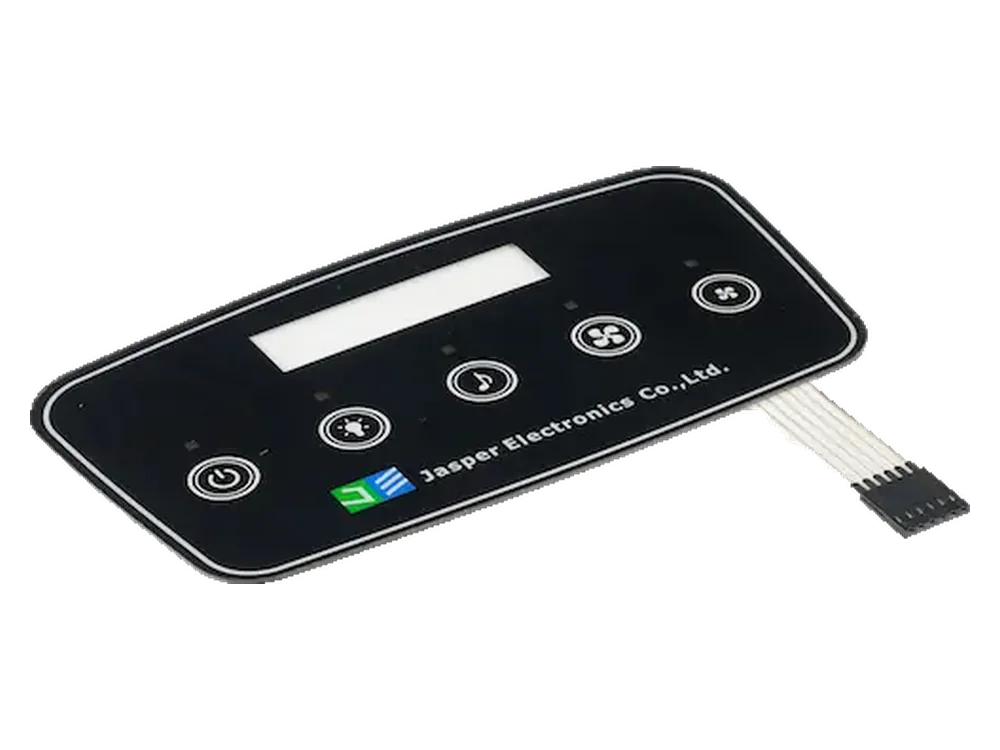
静電容量式タッチスイッチメーカー
JASPER は、印刷されたアイコン、タッチ ゾーン、LED フィードバック、および組み立てサポートを備えた、密封されたフラットで最新の清掃可能な制御面を必要とする OEM 製品向けに、静電容量式タッチ スイッチ インターフェイスを製造しています。
静電容量式タッチ スイッチのメーカーは、オーバーレイ材料、センサー レイアウト、印刷グラフィックス、PCB または FPC サポート、接地、LED ウィンドウ、粘着スタック、コントローラー要件、および最終的な筐体条件を調整する必要があります。
静電容量式タッチスイッチのメーカーは何をしているのですか?
Short answer: A capacitive touch switch manufacturer builds sealed touch-control interfaces by combining printed overlays, touch sensing zones, PCB or FPC support, LED windows, adhesives, connectors, inspection, and assembly review for the final product enclosure.
静電容量センシングは、オーバーレイの厚さ、誘電体材料、グランド設計、エアギャップ、水への曝露、ユーザー条件、コントローラ設定、およびエンクロージャの形状の影響を受けます。早期レビューにより、感度の低下、ノイズ、誤ったトリガー、不均一な LED の外観、および組み立ての手戻りのリスクが軽減されます。
静電容量式タッチスイッチのメーカーを評価する方法
静電容量式タッチプロジェクトには、製造管理とエレクトロニクスを意識した設計レビューの両方が必要です。サプライヤーは、目に見えるオーバーレイとその背後にある感知動作を理解する必要があります。
| Evaluation point | What JASPER reviews | Why it matters for capacitive touch projects |
|---|---|---|
| オーバーレイ material | PET, polycarbonate, glass or acrylic concepts when applicable, surface finish, thickness, windows, and printed icons | オーバーレイ thickness and dielectric behavior affect touch sensitivity and appearance |
| Touch layout | Button zone size, spacing, icon position, slider or key arrangement, edge distance, and user operation | Poor layout can create weak sensing, unintended activation, or difficult user operation |
| PCB or FPC support | Sensor pad geometry, routing, connector, grounding, shielding discussion, and controller interface requirements | The sensor pattern and electronics environment affect sensitivity, noise, and stability |
| Lighting and windows | LED indicators, dead-front icons, backlit symbols, diffuser needs, light blocking, and registration | Capacitive panels often need both clean appearance and readable feedback |
| Adhesive and assembly | Bonding surface, air gaps, panel flatness, gasket zones, housing material, and installation pressure | Air gaps or poor bonding can change sensing performance and visible quality |
| Validation planning | Electrical review, appearance inspection, function checks, environmental assumptions, and customer-side controller testing | Final touch behavior must be validated in the real enclosure with the intended controller |
プリントオーバーレイとタッチインターフェイスアセンブリの管理された製造
JASPER は、2,500 平方メートルのクリーンルーム生産スペースを備えた 5,000 平方メートルの工場を運営しています。これにより、静電容量式タッチ スイッチ パネルのプリント オーバーレイの製造、クリーンな取り扱い、位置合わせ、検査、およびアセンブリ レベルのレビューがサポートされます。
- 印刷されたアイコン、ウィンドウ、デッドフロント グラフィックス、LED エリアがタッチ ゾーンの位置とともに確認されます。
- タッチ感度が重要な場合は、サンプリング前にオーバーレイの材質、厚さ、接着剤、ハウジングの状態がチェックされます。
- PCB または FPC のサポートは、顧客の電子機器要件と最終的なエンクロージャの制約に応じて検討できます。
- クリーンルーム対応の取り扱いにより、表示ウィンドウ、光沢のある表面、照明付きアイコンの周囲に目に見える粒子を減らすことができます。
RFQ note: Send the overlay drawing, touch zone layout, PCB or FPC concept, controller notes, LED requirements, panel thickness, housing material, grounding assumptions, use environment, and expected annual volume.
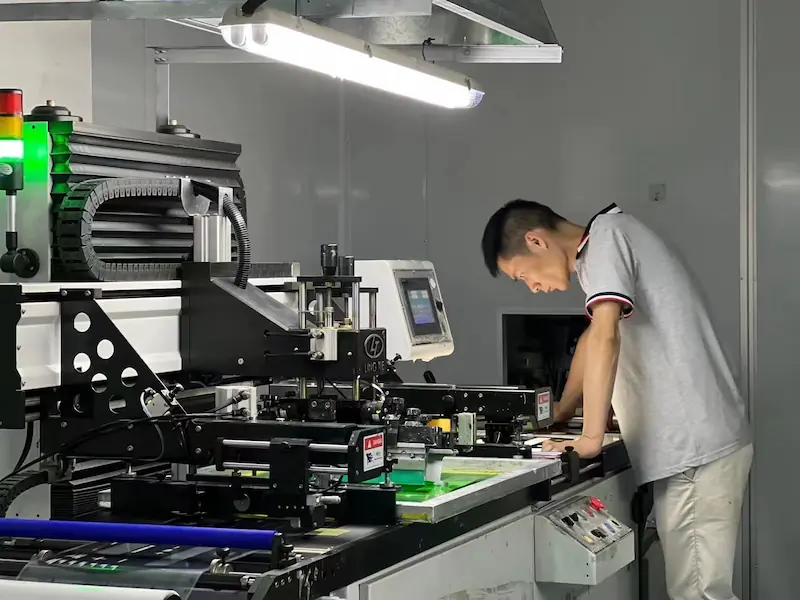
静電容量式タッチインターフェースの製造サポート
The goal is practical engineering alignment: a sealed touch panel must look right, assemble correctly, and sense reliably in the final product.
オーバーレイ and icon printing
Review colors, icons, windows, dead-front symbols, surface finish, transparency, registration, and clean appearance.
Touch zone and sensor review
Check button area, spacing, slider layout, sensor pad position, overlay thickness, edge distance, and controller constraints.
PCB and FPC coordination
Support PCB or FPC interface discussions, tail routing, connector direction, shielding assumptions, and grounding needs.
LED feedback integration
Plan LED windows, hidden icons, light blocking, diffuser concepts, brightness consistency, and alignment with the printed overlay.
Sealed and cleanable surface
Use flat overlay structures and adhesive review to support control panels that need cleaning, appearance control, and fewer mechanical openings.
Sample and validation support
Prepare samples for customer-side sensitivity tuning, enclosure testing, visual approval, and production readiness review.
Capacitive touch switch manufacturer vs. standard membrane switch manufacturer
Both product types can use printed overlays and adhesives, but capacitive touch adds sensing behavior that must be considered with electronics and enclosure design.
| Question | Standard membrane switch focus | Capacitive touch switch focus |
|---|---|---|
| How does the user input work? | Mechanical contact through tactile or non-tactile membrane layers | Capacitive sensing through an overlay and sensor electrode |
| What design risks are different? | Dome feel, spacer design, contact resistance, tail durability, and actuation life | Sensitivity, noise, water behavior, grounding, air gaps, controller tuning, and LED interference |
| What does the overlay affect? | Appearance, durability, key feel, windows, and sealing | Appearance plus dielectric distance, touch response, LED readability, and dead-front effects |
| What must be validated? | Electrical continuity, key force, dimensions, appearance, and assembly fit | Touch response in the final enclosure, controller settings, grounding, LED effect, and user conditions |
| Best use case | Keypad interfaces that need defined press feedback | Flat sealed interfaces where modern appearance and cleanable surfaces are priorities |
Information to send before requesting a capacitive touch switch quotation
Capacitive projects are easier to quote when the mechanical, overlay, electronics, and enclosure details are available at the same time.
| RFQ item | Useful details to include | Decision affected |
|---|---|---|
| Touch layout | Button zones, sliders, icons, active area, spacing, panel size, and user operation notes | Sensor pad design, artwork, spacing, and touch usability |
| オーバーレイ and surface | Material, thickness, finish, windows, dead-front icons, cleaning exposure, and scratch expectations | Sensitivity, appearance, durability, and cleanability |
| Electronics scope | PCB or FPC requirement, controller, connector, pinout, grounding, shielding, and customer electronics ownership | 製造 scope, sensor review, connector choice, and validation plan |
| LED requirements | Indicator position, color, brightness, hidden icons, diffuser needs, and light blocking | Window design, print stack, alignment, and power/electronics coordination |
| Enclosure details | Housing material, panel recess, bonding surface, air gap risk, gasket areas, and installation method | Adhesive, sensing distance, mechanical fit, and assembly process |
| Use environment | Water exposure, gloves, cleaning, temperature, humidity, EMI assumptions, and regulatory needs | Testing plan, controller tuning, material selection, and risk review |
Related engineering and RFQ pages
These pages help buyers connect manufacturing review with product options, capability details, resource guides, case examples, quality control, and quotation preparation.
Questions buyers ask before choosing a manufacturer
Can JASPER manufacture the full capacitive touch panel?
Yes, depending on the electronics scope and design requirements. JASPER can review the overlay, touch zones, PCB or FPC support, LEDs, adhesive structure, connector, and assembly requirements.
Can JASPER supply only the printed overlay for a capacitive touch switch?
Yes. オーバーレイ-only projects and assembly-level projects can both be reviewed. The overlay thickness, material, windows, adhesive, and touch zone position should still be aligned with the electronics design.
Can capacitive touch panels include LEDs and dead-front icons?
Yes. LED indicators, hidden icons, dead-front graphics, and light windows can be integrated, but light blocking, registration, brightness, and overlay structure should be reviewed early.
Will a capacitive touch switch work with gloves or water?
It depends on the controller, sensor layout, overlay structure, grounding, enclosure, glove material, water condition, and tuning. These requirements should be tested in the final product environment before production release.
What files should buyers send for a capacitive touch switch quotation?
Send the overlay drawing, touch zone layout, PCB or FPC concept, controller notes, LED requirements, material and thickness target, housing details, grounding assumptions, environment, compliance needs, and quantity.
What is the difference between capacitive touch panels and membrane keypads?
A membrane keypad usually uses mechanical switch contact and may provide tactile feedback. A capacitive touch panel senses finger input through a surface and requires sensor, controller, overlay, grounding, and enclosure review.
Need a manufacturer to review your capacitive touch switch project?
Send your touch interface drawing, overlay concept, PCB or FPC requirements, LED notes, controller assumptions, and enclosure details so JASPER can review manufacturability before sampling.
Request Touch Panel Review