A quick turn PCB assembly checklist determines whether an urgent build can proceed with the correct materials, released files, usable tooling, executable tests and available decision-makers. Use a strict readiness benchmark: 100% of required kit lines accepted for the authorized lot, zero unresolved build blockers, and the agreed inspection and testing preserved. Reserve an expedited manufacturing slot only after its start conditions are defined. Confirm carrier handoff separately from factory completion. A fast quote becomes an executable schedule when every dependency has evidence and an owner.
- Why an Urgent Slot Can Still Produce a Late Delivery
- Check Whether the Kit and Released Files Are Truly Ready
- 1. Complete materials for the authorized lot
- 2. One released build package
- Remove Engineering Questions Before the Urgent Slot
- 3. Approved component and layout decisions
- 4. Agreed process and acceptance requirements
- Prepare Stencils, Programs and Test Resources in Parallel
- 5. Available, revision-matched tooling
- 6. Programs and setup capacity
- 7. Executable tests and firmware
- Set Approval Windows for First Articles and Exceptions
- 8. Reachable approval authority
- Separate Expedited Manufacturing from Expedited Logistics
- 9. A defined manufacturing clock and price scope
- 10. A feasible shipping arrangement
- Use a Quick-Turn Go-or-No-Go Readiness Checklist
- Step 1 — Define the usable deliverable
- Step 2 — Reconcile data and materials
- Step 3 — Build the dependency plan
- Step 4 — Accept a scoped schedule
- Step 5 — Release and control exceptions
- Step 6 — Verify shipment release
- Eight Signals to Stop or Escalate the Urgent Build
- Prepare the Release Package Before Requesting the Slot
Why an Urgent Slot Can Still Produce a Late Delivery
An urgent PCBA slot loses its value when the factory must wait for a missing component, engineering answer or release decision. The reservation cannot clear the hold. Expediting can reduce queue time and fund additional resources, but an incorrect footprint still requires an engineering decision and functional testing still requires a working setup.
Consider a hypothetical OEM control board whose replacement connector arrives after SMT assembly. If the approved route already includes a separate connector operation, that arrival may be manageable. If the substitute changes the footprint or blocks probe access, the same shortage can force rework and repeat testing. The purchase order’s promised date does not resolve either problem.
The premium is only one cost. Unused line reservations, replacement tooling, engineering interruptions and a missed customer installation can follow. Purchasing needs two decisions: whether preparation may begin, and whether the defined assembly lot is released to proceed.
The following ten criteria test those decisions. Each criterion pairs a good signal with a red flag; the final readiness matrix assigns evidence, responsibility and a recovery action.
Check Whether the Kit and Released Files Are Truly Ready
A quick-turn kit is ready when the assembly site has accepted the correct bare boards and every required component in usable quantities and condition. Released files are ready when one controlled package defines what to build, where to place it and how to accept it. A distributor stock screen or an uploaded ZIP alone satisfies neither condition.
1. Complete materials for the authorized lot
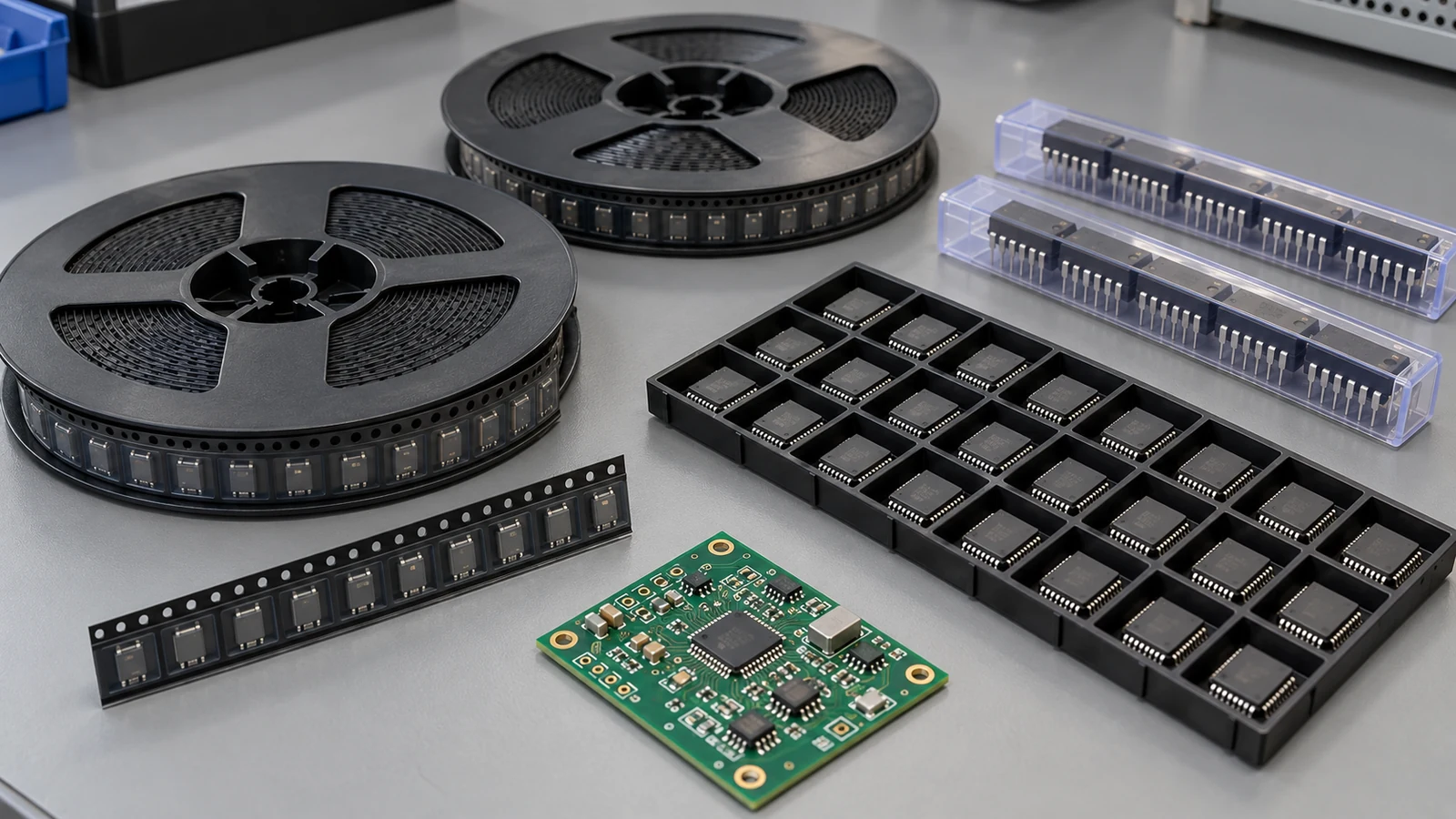
Reconcile each bill of materials (BOM) line against the receiving record: manufacturer part number (MPN), quantity, reference designators, package, approved source and incoming disposition. Include bare PCB revision, panel quantity and agreed setup or attrition extras. The referenced supplier explicitly makes sufficient attrition material a start condition; use the chosen assembler’s written requirements for the actual kit. The referenced supplier attrition guide.
Use 100% accepted required kit lines as the readiness reference target. A required regulator missing from an otherwise complete kit still blocks the lot. A smaller fully kitted lot can be assessed separately, with its own quantity, traceability and shipment authorization.
Check moisture condition before reserving reflow. Moisture sensitivity level (MSL) determines the permitted exposure before reflow for the applicable package; it is not an assembly service tier. The complete classification set is shown below. RH means relative humidity.
| Package classification | Permitted floor life out of dry protection | Ambient condition |
|---|---|---|
| MSL 1 | Unlimited moisture floor life | ≤30 °C and ≤85% RH |
| MSL 2 | 1 year | ≤30 °C and ≤60% RH |
| MSL 2a | 4 weeks | ≤30 °C and ≤60% RH |
| MSL 3 | 168 hours | ≤30 °C and ≤60% RH |
| MSL 4 | 72 hours | ≤30 °C and ≤60% RH |
| MSL 5 | 48 hours | ≤30 °C and ≤60% RH |
| MSL 5a | 24 hours | ≤30 °C and ≤60% RH |
| MSL 6 | Bake before use, then reflow within the label’s time limit | ≤30 °C and ≤60% RH |
Apply these exposure limits according to the device’s moisture-sensitivity classification, label and applicable handling procedure. Unlimited moisture floor life does not mean unlimited shelf life; storage and packaging requirements still need to be checked for the selected component.
For example, an MSL 3 lot with 150 hours of counted exposure has 18 hours remaining at the stated conditions. Include exposure through the final reflow pass. If exposure history is missing or limits have been exceeded, resolve drying requirements before committing the slot; select the bake process for the actual package and carrier rather than applying a blanket recipe.
Good signal: Receiving has accepted every required line, including extras and moisture records.
Red flag: The kit is described as complete while a required part remains in transit or under incoming inspection hold.
2. One released build package
Give the assembler a release index covering board data, BOM, component placement list (CPL), assembly drawings, do-not-populate positions, change notices and the inspection/test specification. CPL coordinates need an agreed unit, origin, side and rotation convention. The same reference designator must identify the same component across files.
The referenced supplier describes front-end preparation as checking BOM and CPL information against the board layout. That cross-check is the useful release test, not simply whether every file opens. The referenced supplier data preparation.
Good signal: The OEM and assembler identify the same release revision and populated variant.
Red flag: An email changes a component while the issued BOM and placement drawing still specify the earlier version.
Remove Engineering Questions Before the Urgent Slot
Engineering questions must be closed before they affect purchasing, tooling or irreversible assembly work. Assign each question to the person authorized to approve the answer, then incorporate the decision into the released package. A quick reply without configuration control can create a second problem downstream.
3. Approved component and layout decisions
Resolve MPN-to-footprint matching, polarity, pin 1, connector mating direction, component height and board-edge access. Check the exact ordering suffix. For substitutes, compare pin assignment, voltage rating, temperature grade and firmware behavior as well as mechanical fit; a matching package proves only part of the case.
Identify which operation a shortage affects. A missing part intended for a later approved hand-soldering step presents a different dependency from a missing device required for the first reflow pass. Record an engineering change order (ECO) or approved deviation where needed. Starting early requires an approved split route, controlled work in progress and a feasible completion/test plan.
Good signal: The design owner approves substitutions and drawing changes before they reach purchasing or setup.
Red flag: A supplier proposes to decide equivalence on the line from a component description alone.
4. Agreed process and acceptance requirements
Specify soldering requirements, inspection coverage, required records and the contractual acceptance edition/class. IPC J-STD-001 addresses soldering process and material requirements; IPC-A-610 addresses post-assembly acceptance. Their scopes do not replace the OEM’s product-specific functional-test definition. IPC’s assembly-standard scope announcement.
Close requirements for hidden joints, cleaning, coating and any cure before scheduling the affected operations. Required cure time cannot be skipped. For reflow, distinguish package-classification test conditions from the board’s actual oven settings: establish a suitable board profile within component limits. Check changed components and panels before reusing an earlier setup.
Good signal: Manufacturing and quality approve a route with explicit inspection and release points.
Red flag: The schedule works only if a required inspection, cure or electrical check disappears.
Prepare Stencils, Programs and Test Resources in Parallel
Quick-turn preparation can overlap when each workstream has stable inputs and an assigned resource. Stencil preparation, machine programming and test-fixture readiness need not wait in one queue. Actual production still waits for the required kit, validated setup and release gates. Parallel work saves time only when its outputs remain usable for the released revision.
5. Available, revision-matched tooling
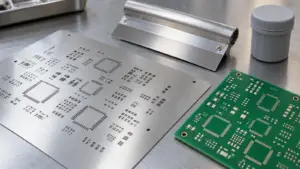
Confirm the stencil, support tooling, carriers and any selective-soldering fixtures required by the route. Record their revision and availability at the actual assembly site. A stencil used on a previous PCB revision is reusable only after the paste pattern, panel arrangement and process requirements have been checked.
Set the tooling decision deadline. Cutting from unstable data can create an unusable stencil and another queue. Where the OEM authorizes early preparation, identify the allowed work, revision assumption and cost exposure before it begins.
Good signal: Tooling is physically available or has a confirmed completion plan tied to released data.
Red flag: A stencil is marked ready without anyone checking its panel and paste revision.
6. Programs and setup capacity
Prepare pick-and-place data, automated optical inspection (AOI) programs, feeder assignments and the reflow setup plan against the same revision. Reserve verification capacity too. Offline programming does not establish that a reel fits its assigned feeder, the board is supported correctly or the first placed component has the right orientation.
The referenced supplier’s first-board process checks placement before reflow so setup errors can be corrected before the next operation. An OEM’s functional first-article approval may occur later; define both points when both apply. The referenced supplier first-board inspection.
Good signal: The planner can identify who completes setup verification and when the line becomes available.
Red flag: Several supposedly parallel tasks require the same unavailable engineer or fixture.
7. Executable tests and firmware
Deliver the released test procedure, firmware image and identifier, programming interface, fixtures, harnesses, loads, instruments and pass/fail limits. Check instrument calibration status. Prove the station against an approved reference where available, including representative failure checks such as a disconnected harness or communication failure. For a first design without a known-good board, allocate first-article bring-up and test-method qualification before batch release.
For a critical small-batch build, use a reference target of 100% of shipped units completing the agreed functional test, with unit-linked results. This describes unit coverage, not detection of every possible fault. AOI, X-ray, in-circuit testing and functional testing answer different questions; preserve the methods required by the accepted plan.
Good signal: A test run produces a traceable result using the released firmware and limits.
Red flag: The first assembled board will also be the first attempt to discover whether the tester works, with no time allocated for that work.
| Preparation workstream | Stable input needed | Work that can overlap | Required release evidence |
|---|---|---|---|
| Stencil and support tooling | Approved paste data and panel drawing | Kit reconciliation and program preparation | Correct revision received and checked |
| Placement and AOI programs | Matched BOM, CPL and component data | Tooling production and fixture preparation | Program review and setup verification |
| Functional test and programming | Test limits, firmware and interface definition | Manufacturing preparation | Station readiness record and controlled test versions |
| Material conditioning | Device labels, exposure history and approved procedure | Data review and tooling preparation | Required conditioning completed before affected assembly |
| Packing and freight preparation | Destination, packaging needs and release forecast | Assembly and testing | Packing instructions and confirmed handoff arrangements |
These overlaps are planning opportunities. Confirm actual resource availability before subtracting time from the schedule.
Set Approval Windows for First Articles and Exceptions
First-article approval can stop an urgent PCBA build even when the factory is ready. Agree the review evidence, authorized decision-maker, backup and response window before the slot starts. Give every exception a named disposition owner. Availability must cover the factory’s working hours and the OEM’s time zone.
8. Reachable approval authority
Define the first-article evidence: board revision, populated variant, placement/inspection findings, firmware identity, test results and any deviation request. Locate the hold point. Approval before reflow, approval to continue the batch and approval to ship authorize different operations; record exactly which decision the reviewer is making.
A hypothetical review plan might allow 60 minutes after receipt of the complete first-article package. Use that window only if the named approver and backup have accepted it, with the time zone and coverage period recorded. Partial evidence should not trigger an artificial response deadline.
Silence is not approval. If the window expires, the planner follows the agreed hold and escalation rule. Purchasing may authorize cost, design engineering may approve technical substitutions, and quality may release acceptance exceptions, each within delegated authority and the customer’s requirements. Availability alone confers no authority.
Record decisions against the affected serial numbers or lot. A deviation permitted for an engineering evaluation batch should not silently become the production requirement.
Good signal: The review invitation includes a complete evidence list, response deadline, time zone and authorized backup.
Red flag: Production is expected to proceed unless an absent customer objects.
Separate Expedited Manufacturing from Expedited Logistics
Expedited manufacturing accelerates the accepted factory scope; expedited logistics accelerates the agreed transport leg. An OEM needs separate commitments for production release, finished-board acceptance, carrier handoff and required arrival. A board completed after the collection cutoff may miss its intended service even when manufacturing meets its own schedule.
9. A defined manufacturing clock and price scope
Define the start and finish. The accepted schedule should state the working calendar, cutoff and hold/restart rule, and distinguish assembled boards from boards that are tested, released, packed or handed to the carrier. The referenced supplier’s published terms, for example, tie its assembly lead-time start to correct BOM/CPL data and components received into stock. Check the actual supplier’s accepted terms. The referenced supplier lead-time conditions.
Do not assume an assembly premium pays for every earlier or later activity.
| Quote scope | Written clarification needed | Potential separate expedite item |
|---|---|---|
| Component supply | Accepted MPNs, quantities and inbound receipt dates | Sourcing effort and inbound freight |
| Bare PCB supply | Released revision, fabrication scope and receipt | Fabrication priority and delivery |
| Tooling and setup | Stencil, fixture and program availability | New tooling or engineering work |
| Assembly | Released lot, routing and reserved capacity | Factory scheduling premium |
| Inspection and test | Required coverage, firmware and result records | Fixture preparation or test engineering |
| Outbound delivery | Packing, carrier service and destination | Freight and special collection |
Good signal: The quote identifies which event starts the expedite clock and which charges are included.
Red flag: A fast headline date has no accepted kit condition or test scope.
10. A feasible shipping arrangement
Confirm collection cutoff, shipping address, receiver availability, packaging and transport documentation. Check the receiving window too. For international shipments, assign customs-document and importer responsibilities before the handoff. Keep the delivery estimate separate from the factory’s completion commitment and account for the route’s working calendar.
Good signal: Logistics has checked a usable collection and receiving window against the release forecast.
Red flag: The only planned collection occurs before quality can release the boards.
Use a Quick-Turn Go-or-No-Go Readiness Checklist
A quick turn PCB assembly checklist supports release only when every blocking gate for the defined lot has evidence. One critical shortage can stop the lot. Record the revision, required shipment quantity and decision time, then assign each gate to its responsible owner; an average readiness percentage cannot resolve a missing part or unavailable tester.
| Readiness Gate | Required Evidence | Blocking Issue | Responsible Owner | Recovery Option |
|---|---|---|---|---|
| Complete material kit | Receiving acceptance for 100% of required kit lines, boards, agreed extras and moisture records | Required shortage, wrong revision or material hold | Materials lead | Close shortage; approve a complete smaller lot; resolve conditioning |
| Released build package | One release index matching BOM, board data, CPL, drawings and test specification | Conflicting revisions or unresolved variant | OEM configuration owner | Issue a reconciled release and repeat affected checks |
| Engineering closure | Approved answers for polarity, footprint, substitutions and process exceptions | A decision can still change the route or setup | OEM design engineer | Approve a documented change and reassess affected dependencies |
| Available tooling | Correct stencil/fixture revision accepted at the assembly site | Tool unavailable, incompatible or awaiting revision | Manufacturing engineer | Expedite correct tooling or qualify an approved alternative route |
| Test readiness | Working station, released firmware/limits, access and traceable result format | Missing fixture, undefined limit or unqualified test method | Test engineer | Complete test preparation; move the slot if coverage cannot be preserved |
| Approval availability | Named approver and backup, evidence list, review window and hold rule | Required authority unavailable at the decision point | OEM project manager | Arrange authorized coverage or reschedule the review |
| Manufacturing slot | Accepted start conditions, resource reservation and complete route | Calendar or capacity conflicts with release dependencies | Factory planner | Replan resources or offer a feasible slot |
| Shipping arrangement | Packaging instructions, collection plan, documents and receiving window | No feasible handoff after acceptance | Logistics coordinator | Change collection/service or revise the delivery commitment |
Use three decision states:
- GO: Every blocking gate for the specified lot and route is closed; production can proceed within the accepted scope.
- CONDITIONAL GO: Only explicitly authorized preparation or a separately released stage may proceed. Name the remaining hold point, owner and deadline.
- NO GO: A required dependency prevents the proposed route or date. Recover the dependency, reduce scope through an approved release, or replan.
A conditional decision is not permission to ship incomplete or untested boards. The 100% kit-line and zero-unresolved-blocker benchmark applies to the lot or stage actually released.
Step 1 — Define the usable deliverable
Define the usable lot. State the quantity, board revision, variant, test requirements and required receiving date, including whether a smaller accepted delivery would protect the customer’s milestone. A reduced lot still needs complete materials, testing and traceability.
Step 2 — Reconcile data and materials
Check accepted stock. Compare the release index with the assembler’s accepted files and kit record, close discrepancies at the reference-designator level and resolve any required conditioning before treating a material line as ready. Purchase-order dates alone are insufficient.
Step 3 — Build the dependency plan
Reserve the resources. Manufacturing, test and logistics owners must identify which tasks can run concurrently, which input revisions they use and who will perform the work. Mark required hold points. A shared engineer or machine can limit overlap.
Step 4 — Accept a scoped schedule
Read the clock conditions. Review the quote against the agreed route and readiness matrix, confirming clock start, working calendar, first-article window, acceptance finish and carrier handoff. Record extra charges separately so purchasing can see what the premium changes.
Step 5 — Release and control exceptions
Keep decisions traceable. Release the defined stage only when its gates close, recording first-article disposition and any deviation against the affected units. If a late change alters components, tooling, firmware or acceptance, revisit the affected gates before continuing.
Step 6 — Verify shipment release
Acceptance comes before dispatch. Reconcile accepted quantity, unit-linked test records, approved deviations, labels and packing instructions before logistics confirms carrier handoff and communicates the delivery estimate. Assembly completion alone does not establish that the usable deliverable shipped.
The release sequence is:
Defined lot → matched files and accepted kit → prepared tooling, programs and tests → authorized first article → completed acceptance → carrier handoff.
Eight Signals to Stop or Escalate the Urgent Build
An urgent PCBA commitment needs escalation when required evidence contradicts the proposed date. Make the recovery plan explicit. A correctable gap needs an owner and deadline, while a request to bypass agreed acceptance requires the affected operation to remain on hold.
- Unallocated required parts: Availability is a distributor estimate, with no accepted receipt plan for the slot.
- Unknown moisture exposure: Required drying cannot be determined or completed before the affected reflow operation.
- Conflicting revisions: BOM, placement data and bare boards describe different builds.
- Unapproved substitutions: Someone expects production to decide electrical equivalence without design authority.
- Unusable tooling or tests: The fixture, program or firmware exists but has not been checked for this revision.
- Absent approval authority: The first article will arrive outside the approver’s coverage, with no authorized backup.
- Acceptance removed to protect a date: Required inspection, test or cure is deleted from the proposed route.
- Impossible shipping handoff: The release forecast misses every available collection that could support the required arrival.
Preserve the accepted requirements. If recovery cannot meet them, stop pursuing the original date and request a revised commitment based on an executable route, available resources and a feasible carrier handoff.
Frequently Asked Questions
Quick-turn PCBA decisions depend on the released scope, accepted materials and available resources. These answers apply the same readiness gates to common purchasing and engineering questions.
Can quick-turn assembly begin with incomplete components?
Only under an approved staged release. The assembler must show how missing parts affect assembly, handling and test, while the OEM authorizes a bounded stage or separately complete smaller lot and its remaining hold points. Starting preparation does not establish full-build readiness or make the original ship date achievable.
Does quick-turn pricing include expedited part sourcing?
No, not automatically. The quote should identify component sourcing, inbound freight, bare-board fabrication, tooling, assembly, testing and outbound delivery as distinct scopes. Confirm the accepted receipt dates and charges for each required service. An assembly scheduling premium alone does not establish faster component supply or transport.
What approvals can delay an urgent PCBA build?
Substitution approval, engineering changes, first-article acceptance, deviation disposition and shipment release can each delay an urgent build. Assign the correct technical or quality authority, a backup and a review window before production. Purchasing approval of additional cost does not authorize a change to component equivalence or acceptance requirements.
Can functional testing be preserved on an expedited schedule?
Yes, with prepared test resources. The released procedure, firmware, fixture, instruments and trained personnel must be ready for the scheduled operation. For a critical small batch, use 100% completion of the agreed functional test across shipped units as the reference target. Preserve test limits and traceable results. Unit coverage does not guarantee detection of every fault.
When should an OEM stop pursuing a promised fast ship date?
Stop when the required route becomes infeasible. That includes a dependency that cannot be recovered within the logistics window, or a date achievable only by bypassing agreed acceptance. Request a documented recovery schedule, an approved smaller lot or a revised commitment. Verbal reassurance does not close a blocking gate.
When does the quick-turn manufacturing clock start?
It starts at the event defined in the accepted quotation or order. Confirm whether that event requires correct released files, accepted materials, engineering closure and a reserved slot. Also define working days, cutoffs and hold rules. The purchase-order date alone does not establish that production prerequisites have been satisfied.
Which preparation activities can run in parallel?
Stencil preparation, placement and inspection programming, test-fixture preparation, material conditioning and shipping preparation can overlap where their stable inputs and resources permit. Production still waits for the outputs required by its route. A late design change can invalidate several concurrent tasks, so each task needs a controlled revision.
Can moisture-sensitive components delay an urgent build?
Yes, moisture condition can block reflow. An MSL 3 package normally permits 168 hours of floor exposure at no more than 30 °C and 60% RH under the referenced handling conditions. Missing exposure records or exceeded limits can require drying. Follow the device label and approved process. Floor life is not bake duration.
Can repeat-order tooling guarantee a faster start?
No, reuse requires a compatibility check. Existing tooling can remove preparation work only after its revision and condition are checked against the current board and process. Confirm stencil data, panel arrangement, program versions, test access and firmware. A changed component or panel can make the previous setup unsuitable for the new lot.
Prepare the Release Package Before Requesting the Slot
Prepare one controlled release package before asking JASPER to assess an urgent PCBA build. Complete the readiness review. Include the BOM, board and placement files, assembly drawings, material ownership and receipt status, required tests, firmware identity, approval contacts and shipment needs, with the requested lot and any usable partial delivery clearly identified.
Use JASPER’s PCB assembly services route to start that review. Ask for the proposed route, remaining blockers, accepted clock-start conditions and separate manufacturing and carrier-handoff commitments. Commit the urgent slot when the evidence supports the schedule and the finished boards will meet the agreed acceptance requirements.
Ready to Start Your Project?
Tell us about your membrane switch, keypad, or graphic overlay requirements. Our engineering team will review your specifications and provide a detailed quote.