
Every hardware founder, mechanical engineer, and procurement manager launching a new electronic product faces the same architectural crossroads during BOM costing: should we build our user interface as a Tactile Metal-Dome Membrane Switch, a Compression-Molded Conductive Silicone Rubber Keypad, a Silicone-Membrane Hybrid, or Discrete Mechanical Pushbuttons under an overlay?
Looking only at piece price (Unit Cost) or only at upfront tooling (NRE) leads to costly mistakes: a conductive silicone keypad has a lower piece price ($1.35–$2.20) at high volume, but requires a CNC steel compression mold ($1,500–$2,800) plus an underlying gold-plated (ENIG) PCB; conversely, a self-contained membrane switch requires almost zero NRE tooling ($250–$450) and needs no underlying PCB at all! Because JASPER manufactures all four technologies in-house, we built this transparent 100-to-10,000-Unit Total Cost of Ownership (TCO) Model to help you pinpoint your exact break-even volume.
1. Complete 4-Way Architecture & Cost Breakdown (12-Key, 120 × 80 mm Benchmark)
Building upon our popular comparison Silicone Keypad vs. Membrane Keypad, the engineering table below models the true all-in system cost (including upfront tooling, mating PCB requirements, and enclosure sealing) for a representative 120 × 80 mm, 12-button industrial control panel:
|
TCO & Engineering Dimension |
1. Tactile Metal-Dome Membrane Switch |
2. Conductive Silicone Keypad (Carbon Pill + PCB) |
3. Silicone-Membrane Hybrid Keypad |
4. Discrete Tactile Switches + Cut Overlay |
|
Upfront NRE Tooling Cost |
Very Low ( |
Moderate ( |
Moderate ( |
Low ( |
|
Underlying PCB Requirement |
None Required ( |
Requires Dedicated ENIG Gold or Carbon PCB |
None Required ( |
Requires Dedicated PCB |
|
Amortized Cost @ |
|
~$11.90 / unit |
~$12.80 / unit |
~$8.70 / unit |
|
Amortized Cost @ |
|
|
~$3.85 / unit |
~$6.08 / unit |
|
Amortized Cost @ |
~$2.08 / unit |
|
~$2.95 / unit |
~$5.42 / unit |
|
Tactile Feel & Sealing |
Crisp audible metal click (<1 Ω); 0.9–1.2 mm thin flat profile; IP67. |
Deep 3D travel (1.5–2.5 mm, 30–150 Ω carbon pill); molded IP67 perimeter rib. |
Best of Both: 3D sculpted rubber keys + crisp <1 Ω stainless dome click; IP67. |
Crisp click, but poor front-surface washdown sealing around button holes. |
2. Navigating the 1,800–2,500 Unit TCO Crossover Point
As the amortized cost numbers demonstrate, from 50 units up to ~2,000 units, a Metal-Dome Membrane Switch delivers the lowest total program cost by a wide margin—and saves you from spinning a dedicated keypad PCB if your main electronics sit deeper inside the enclosure.
Once annual volumes climb past 2,000 to 2,500+ units—and your industrial design already mounts the main logic PCBA flush behind the front housing faceplate—a compression-molded Conductive Rubber Keypad amortizes its steel mold cost and drops your per-unit BOM cost down to $1.35–$1.80 while doubling as your front enclosure’s IP67 compression gasket!
3. Solving the ‘Mushy Carbon Puck’ Complaint: Snap-Ratio Engineering vs. Hybrid Keypads
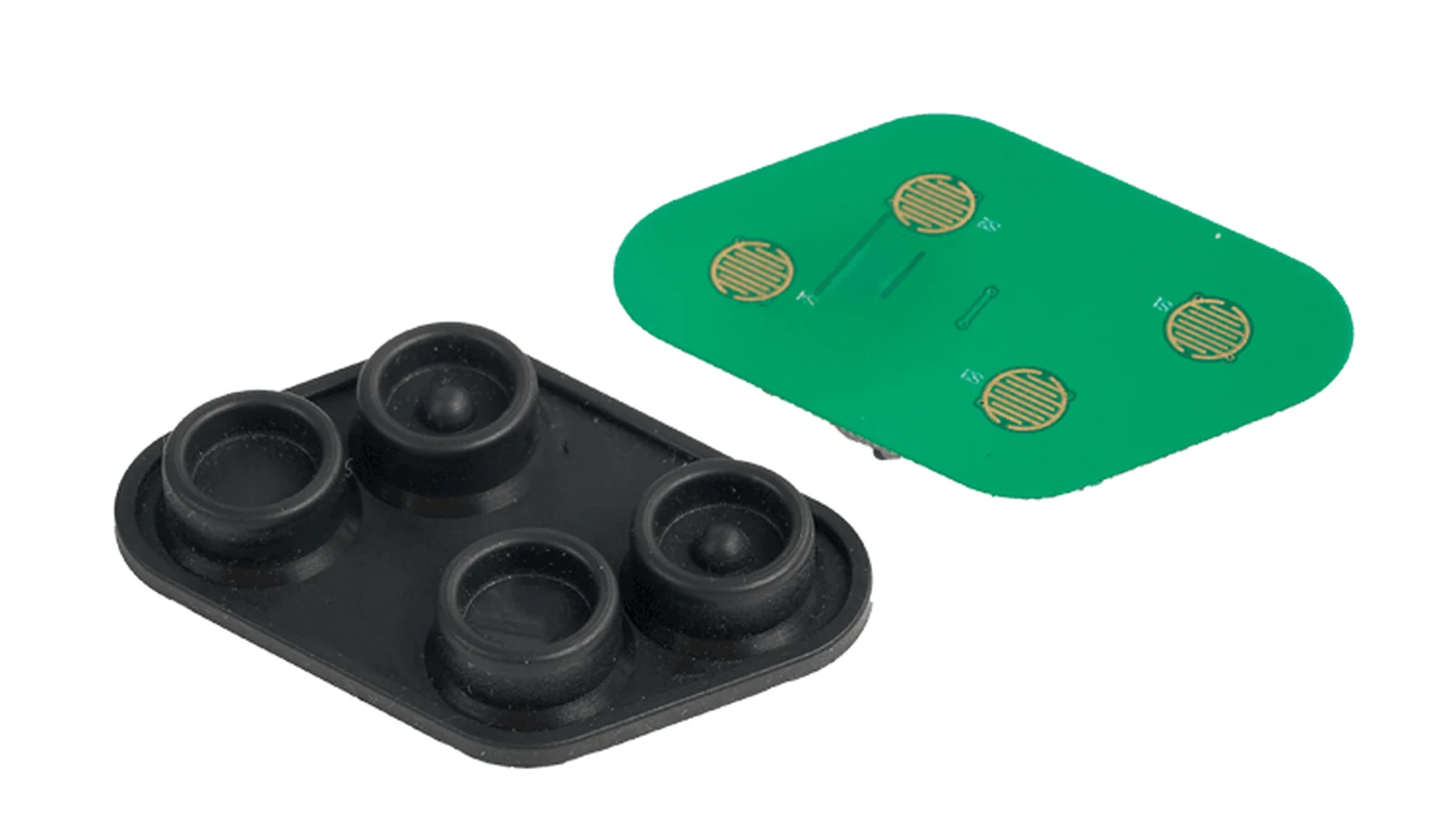
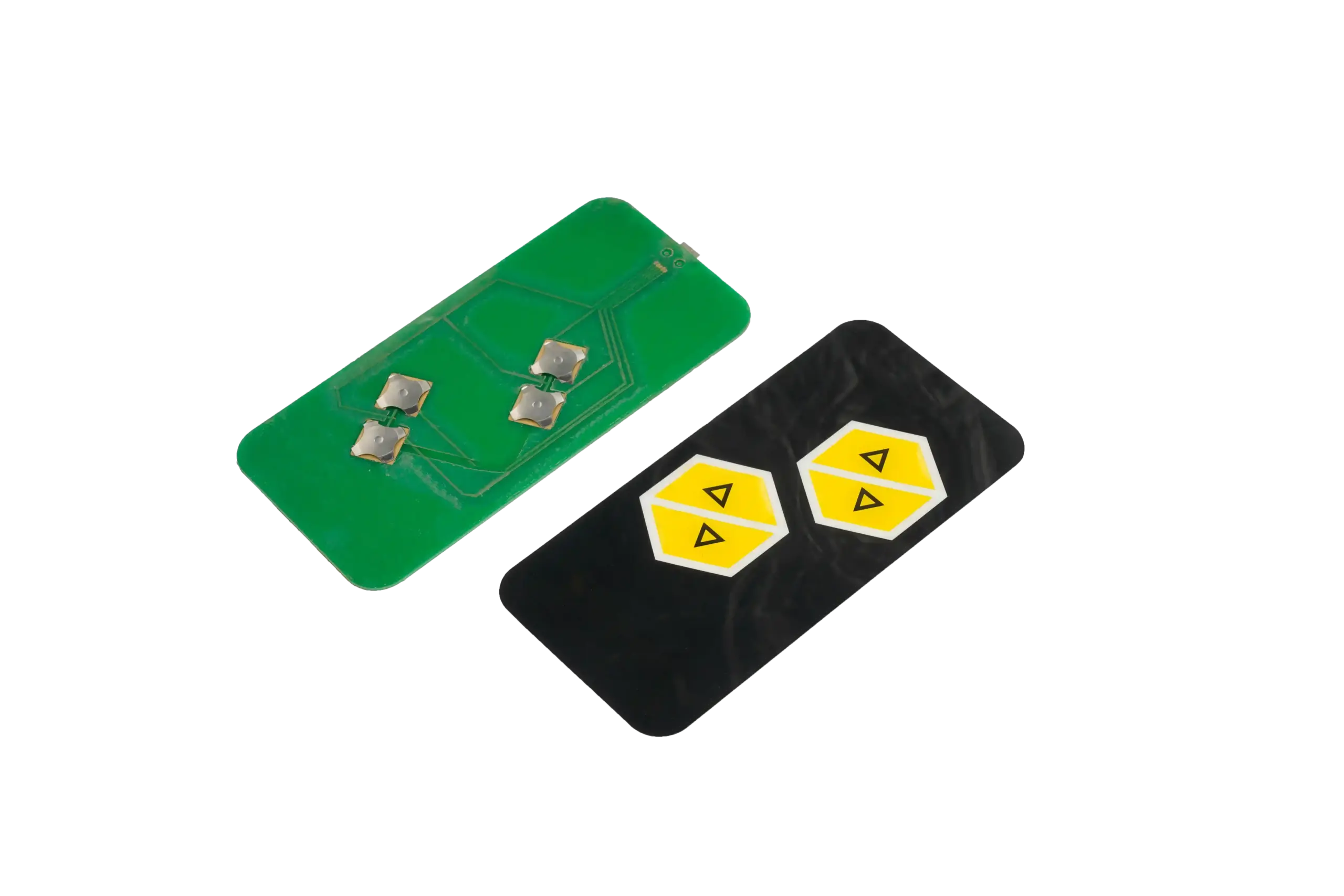
We eliminate mushy rubber keys through two precise engineering paths: (1) Optimizing the Silicone Frustum Cone Web for a 50% Tactile Snap Ratio (45° wall angle, 0.55–0.65 mm thickness), or (2) Specifying a Silicone-Rubber Hybrid Keypad that combines a 3D silicone button profile with the <1 Ω click of a stainless steel tactile dome.
|
Pre-RFQ Architecture Selection Checklist: 4 Checks to Lock Your BOM • [ ] Question 1 — Where Does Your Main PCBA Sit Inside the Enclosure?: If your PCB is mounted on the rear wall of the box, choose a Tactile Membrane Switch or Silicone-Membrane Hybrid with a flexible ZIF tail so you don’t have to buy a second PCB! • [ ] Question 2 — Do Operators Need to Find Buttons by Touch in the Dark or With Thick Gloves?: Specify either Pillow/Rim Embossed Membrane Keys ( • [ ] Question 3 — Use Soft-Tooling Prototype Molds ( • [ ] Calculate Your Exact Tier Pricing Online: Use our interactive Membrane Switch Cost Estimator. |
Frequently Asked Questions (FAQ)
Q1: Can JASPER quote both a Tactile Membrane Switch option and a Silicone Keypad option for the same project so our team can compare?
Yes! Because we operate both cleanroom membrane-switch lines and compression-molded silicone keypad presses in the same Dongguan factory, our engineers routinely provide side-by-side Dual-Option Quotes (Membrane vs. Silicone vs. Hybrid).
Q2: What is the difference in tooling lifespan between a membrane switch die and a silicone compression mold?
A laser-cut prototype membrane switch requires zero hard die tooling; a production steel-rule die (~$350) lasts 50,000–100,000 impressions. A hardened P20 / H13 steel silicone compression mold lasts 300,000 to 500,000+ molding cycles.
Q3: What prototype sampling lead time should we plan for?
Sampling lead time is 7–10 days, subject to project-specific confirmation. The schedule for Tactile Membrane Switches, Graphic Overlays, and custom molded Silicone Rubber Keypads depends on the confirmed project scope, including any CNC prototype mold machining and 200 °C post-cure baking.
Get a Side-by-Side TCO Quote for Your Keypad Project
Want to compare exact NRE tooling and unit pricing between a tactile membrane switch, a conductive silicone keypad, and a hybrid assembly for your enclosure? Try our Membrane Switch Cost Estimator or Request a Quote today.
Ready to Start Your Project?
Tell us about your membrane switch, keypad, or graphic overlay requirements. Our engineering team will review your specifications and provide a detailed quote.