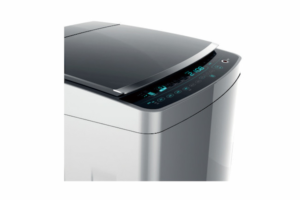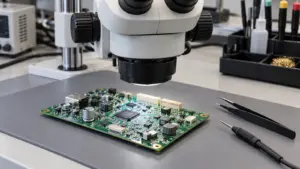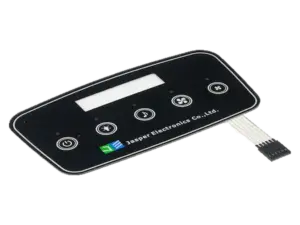
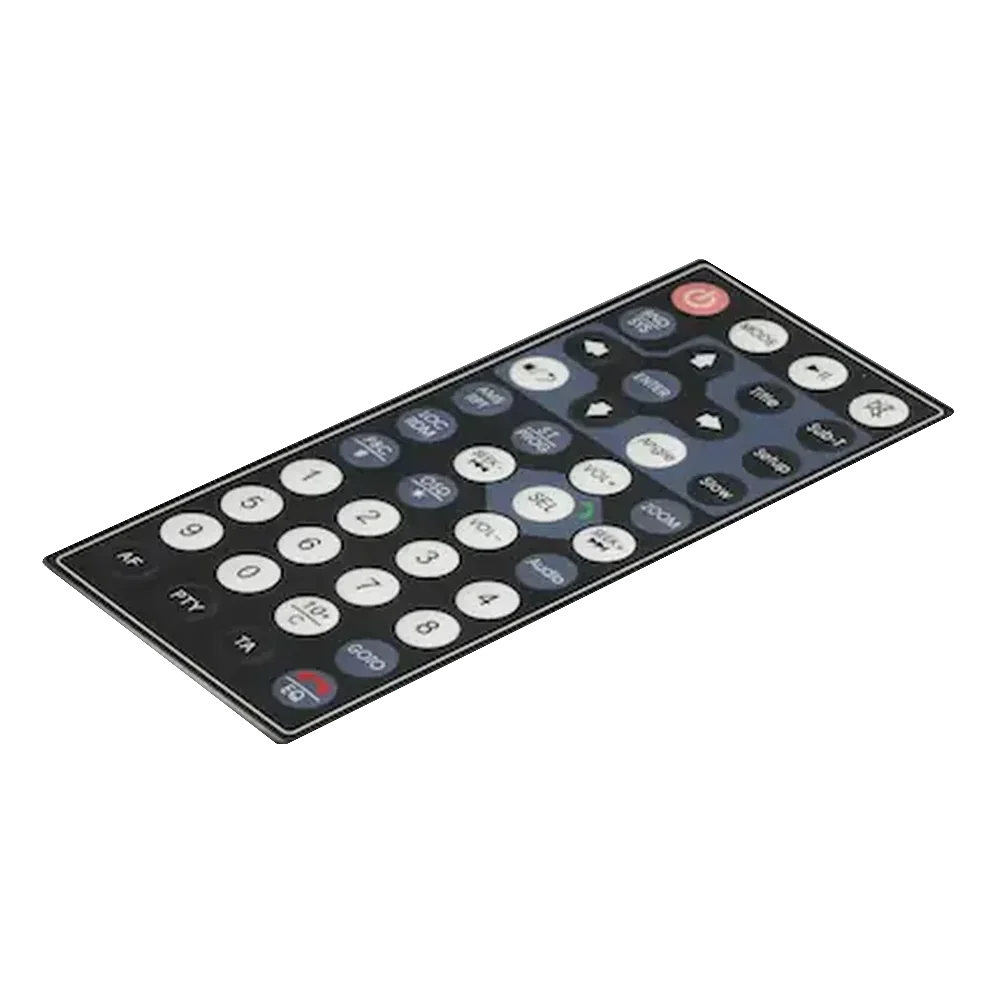
When specifying the front graphic layer for custom graphic overlays and tactile membrane switches, mechanical engineers almost always weigh two polymer substrates: Polycarbonate (PC, such as Sabic Lexan) and Biaxially Oriented Polyester (PET, such as MacDermid Alpha Autotex). On day one in an office environment, a 0.175 mm velvet-textured polycarbonate overlay and a 0.175 mm velvet-textured polyester overlay look and feel nearly identical.
Six months later on a hospital infusion pump, an industrial CNC lathe, or a commercial kitchen oven, their field survival rates diverge dramatically. In our failure-analysis laboratory, over 70% of premature overlay cracks around embossed tactile keys and chemical surface crazing trace back to specifying unstabilized polycarbonate in an application that demands polyester. Here is the complete materials engineering comparison from our Membrane Switch Materials Center.
1. Polymer Physics: Amorphous Polycarbonate vs. Semi-Crystalline Biaxially Oriented PET
To understand why polycarbonate cracks after 50,000 to 100,000 button presses while polyester effortlessly exceeds 1,000,000 to 5,000,000 actuations, look at their molecular architecture:
- Polycarbonate (
PC) Is an Amorphous Polymer: Its polymer chains are randomly entangled without a crystalline lattice. That makes PC exceptionally easy to die-cut, laser-cut, thermoform, and print on—and gives it high optical transmission (~88%–90%). However, when you heat-emboss a raised rim or pillow button into PC and flex it repeatedly over a snapping stainless steel dome, tensile micro-fissures nucleate along the embossed crease. Worse, exposure to alcohols, ketones, cutting oils, or hospital quaternary ammonium disinfectants triggers Environmental Stress Cracking (ESC) within weeks. - Hard-Coated Polyester (
PET, e.g., Autotex F150/F200/XE) Is Semi-Crystalline and Biaxially Stretched: During film extrusion, PET is mechanically stretched in both transverse and machine directions, aligning its crystalline polymer chains into a high-tensile web reinforced with a cross-linked chemical hard coat. The result is 10× to 50× higher flex endurance and near-total immunity to alcohols, gasoline, diesel, cutting fluids, bleach, and industrial detergents.
2. Engineering Material Comparison Matrix: PET vs. PC vs. PMMA/Glass
Use this quantitative reference table when calling out substrate materials on your engineering drawing:
|
Material Property |
Biaxially Oriented Polyester (PET — Autotex F150/F200/XE) |
Polycarbonate (PC — Lexan 8A35 / 8B35) |
Rigid Acrylic / PMMA (0.8–3.0 mm) & Tempered Glass |
|
Mechanical Flex Life (Over Metal Domes) |
|
|
Non-Flexing Rigid Lens |
|
Chemical & Solvent Resistance |
Excellent |
Poor to Moderate |
PMMA: Moderate (avoid high-concentration alcohol on cut edges) |
|
Standard Film Thicknesses |
0.125 mm (5 mil), |
0.125 mm (5 mil), 0.175 mm (7 mil), 0.250 mm (10 mil), 0.375 mm (15 mil), 0.50 mm. |
0.8 mm, 1.0 mm, 1.5 mm, 2.0 mm, 3.0 mm CNC-routed sheets. |
|
Continuous Operating Temperature |
-40 °C to +85 °C (up to +120 °C short-term with heat-stabilized PET). |
-40 °C to +100 °C (high heat deflection, UL 94 VTM-2 / V-0 grades available). |
PMMA: -30 °C to +80 °C |
|
UV Outdoor Weatherability |
Autotex XE Grade: >3,000 Hours QUV accelerated weathering without yellowing. |
Standard PC yellows under direct UV; requires UV-inhibited grade (Lexan HP92W). |
PMMA is naturally UV-stable outdoors; Glass is 100% UV-permanent. |
3. Matching Overlay Film Thickness to Metal Dome Actuation Force
Choosing the right polymer is only half the equation; the thickness (t) of your graphic overlay directly governs how crisp or muted the underlying metal dome feels to the user’s finger. If you laminate a heavy 0.25 mm (10 mil) overlay over a tiny 6.0 mm diameter, 180 gf metal dome, the stiff film bridges across the dome and absorbs the snap ratio—leaving the button feeling mushy and unresponsive.
0.125 mm – 0.150 mm(5–6 mil) Autotex PET: The gold standard for small tactile keys (6–8 mm dome diameter), tight rim/pillow embossing (0.30–0.40 mm height), and light actuation forces (180–250 gf).0.175 mm – 0.200 mm(7–8 mil) Autotex PET: The universal sweet spot for industrial, medical, and appliance tactile membrane switches using 8.4–12.0 mm stainless steel domes rated at 280–350 gf. Provides superior puncture resistance against fingernails and pens while preserving a crisp audible click.0.250 mm(10 mil) PET or0.250–0.375 mmPC: Best reserved for flat non-tactile membrane switches, capacitive touch overlays, or large control panels with wide optical LCD windows that need structural rigidity across an open bezel cutout.
|
Pre-RFQ DFM Checklist: 4 Material Selection Rules to Prevent Field Cracking • [ ] Always Specify PET (Not PC) Whenever Keys Are Embossed: Hydro-forming or heat-embossing a pillow, rim, or dome button creates permanent flexural stress at the perimeter crease—only biaxially oriented PET survives >1,000,000 cycles without cracking. • [ ] Prefer Pillow Embossing Over Sharp Rim Embossing in Harsh Environments: Smooth full-pad pillow embossing distributes finger and pen pressure evenly across the key face, whereas a narrow raised rim concentrates shear stress along two sharp edges. • [ ] Print Selective Gloss UV Window Varnish Over Textured PET Display Windows: You don’t need to choose a scratch-prone glossy overlay just to keep your LCD window clear! Specify a fine-matte/velvet PET overlay and let us screen-print selective clear UV gloss varnish over the display viewport to achieve >90% optical clarity. • [ ] Specify ‘Autotex XE’ for Unshaded Outdoor Equipment: Standard indoor PET and PC degrade under continuous UV-A/UV-B solar radiation; always note outdoor UV exposure on your drawing so we assign UV-stabilized Autotex XE film and exterior-grade inks. |
Frequently Asked Questions (FAQ)
Q1: Why do some manufacturers still quote Polycarbonate (PC) if Polyester (PET) lasts 10× longer?
Polycarbonate is slightly cheaper in raw sheet form and easier to die-cut with low-cost steel-rule dies. For flat custom graphic overlays, warning labels, or indoor equipment without flexing tactile domes, PC is a cost-effective choice. However, for any switch with embossed tactile keys or chemical wipe-downs, PET pays for itself many times over by eliminating warranty replacements.
Q2: How can I make an LCD window crystal clear on a matte/velvet textured PET overlay?
We apply a selective subsurface + top-surface UV optical clearing varnish inside the display window area. The refractive index of the UV window ink matches the textured PET surface, filling in the microscopic matte peaks and turning the window optically transparent while keeping the rest of the panel anti-glare and fingerprint-resistant.
Q3: What is the best overlay material if operators press buttons with tools or sharp objects?
Specify either 0.20–0.25 mm heavy-duty Autotex PET with un-embossed or smooth pillow-embossed keys, or upgrade to a Silicone-Membrane Hybrid Keypad where a 1.5–2.0 mm compression-molded LSR silicone actuator layer absorbs mechanical impact above the sealed membrane circuit.
Request a Free Material Swatch Kit or Stack-Up Consultation
Want to compare velvet vs. fine-matte Autotex PET, selective UV display windows, and tactile dome forces in your own hands? Visit our Materials for Membrane Switches hub or Request a Quote to receive physical sample swatches from our Dongguan cleanroom facility.
Ready to Start Your Project?
Tell us about your membrane switch, keypad, or graphic overlay requirements. Our engineering team will review your specifications and provide a detailed quote.