The capacitive touch panel manufacturing process starts with a released drawing and build route, then covers component fabrication or purchasing, applicable printing and bonding, electronics integration, inspection, and final release. There is no single recipe for every panel: printed PET sensors, copper flexible printed circuits (FPCs), and transparent glass sensors require different controls.
When sourcing custom capacitive touch panels, ask for a route-specific process plan identifying who performs each operation, what enters it, and which records demonstrate acceptance. Evaluate the delivered scope, not an assumption that one supplier makes every layer.
1. Release the Drawing and Manufacturing Route
Approve the product definition and the build sequence together. A signed artwork image does not define sensor fabrication, bonding, electronics, or inspection.
Issue a linked revision package covering artwork, dimensions, layer stack, bill of materials, sensor pattern, tail pinout, controller boundary, and acceptance criteria. The custom capacitive touch panel design guide covers the upstream design package; manufacturing release should add operation order, inspection hold points, tooling identifiers, and authorized process revisions.
Identify the sensor route explicitly:
Printed PET sensor. For this route, specify the polyester film, compatible conductive ink system, printed insulation where required, drying or curing sequence, protective layers, and connection method. Identify the printing method, intermediate layer processing, and when final cutting occurs. Keep decorative artwork separate from conductive patterns. The referenced supplier’s construction guide illustrates printed touch circuits combined with separate control boards; that architecture does not establish a particular supplier’s fabrication scope.
Copper FPC sensor. For an etched-copper construction, release the copper pattern, flexible substrate stack, coverlay openings, contact finish, stiffeners, and outline. Identify etching, any plated interconnections, coverlay lamination, contact finishing, and outline processing. Request the circuit fabricator’s electrical acceptance records. A printed-ink film and a copper FPC should not share an unspecified “flex sensor” purchase description.
For a transparent glass sensor, identify the conductor and patterning route, interconnect, optical requirements and controller compatibility. An ITO sensor may use indium tin oxide deposited on glass or plastic and subsequently patterned. A printed glass cover alone is not that sensor. Confirm whether the supplier receives a completed sensor or performs upstream fabrication.
Record prototype-to-production differences, including hand alignment, alternate tooling, and outsourced operations, before approving the production route.
2. Identify In-House and Purchased Components
Name the producing party and acceptance owner for every supplied item. The company issuing the quotation may not perform every operation.
Classify each item as in-house, subcontracted processing, purchased finished, customer-supplied, or excluded. Assign separate responsibilities for the cover, sensor, controller hardware, firmware and configuration, display, and host software. Programming a supplied binary is not the same responsibility as developing or validating it.
For each external handoff, specify the released files, receiving checks, rejection handling, and change-notification owner. For customer-supplied parts, agree identification, incoming condition, permitted handling, and replacement responsibility before assembly.
An order for graphic overlays should identify the printed face and adhesive scope without implying that sensing electronics are included. Conversely, a controller-equipped assembly needs an agreed programming file and functional acceptance boundary.
Compare quotations using the same scope matrix. A lower price that excludes sensor fabrication, firmware loading, or final testing is not directly comparable with an assembled-and-tested offer.
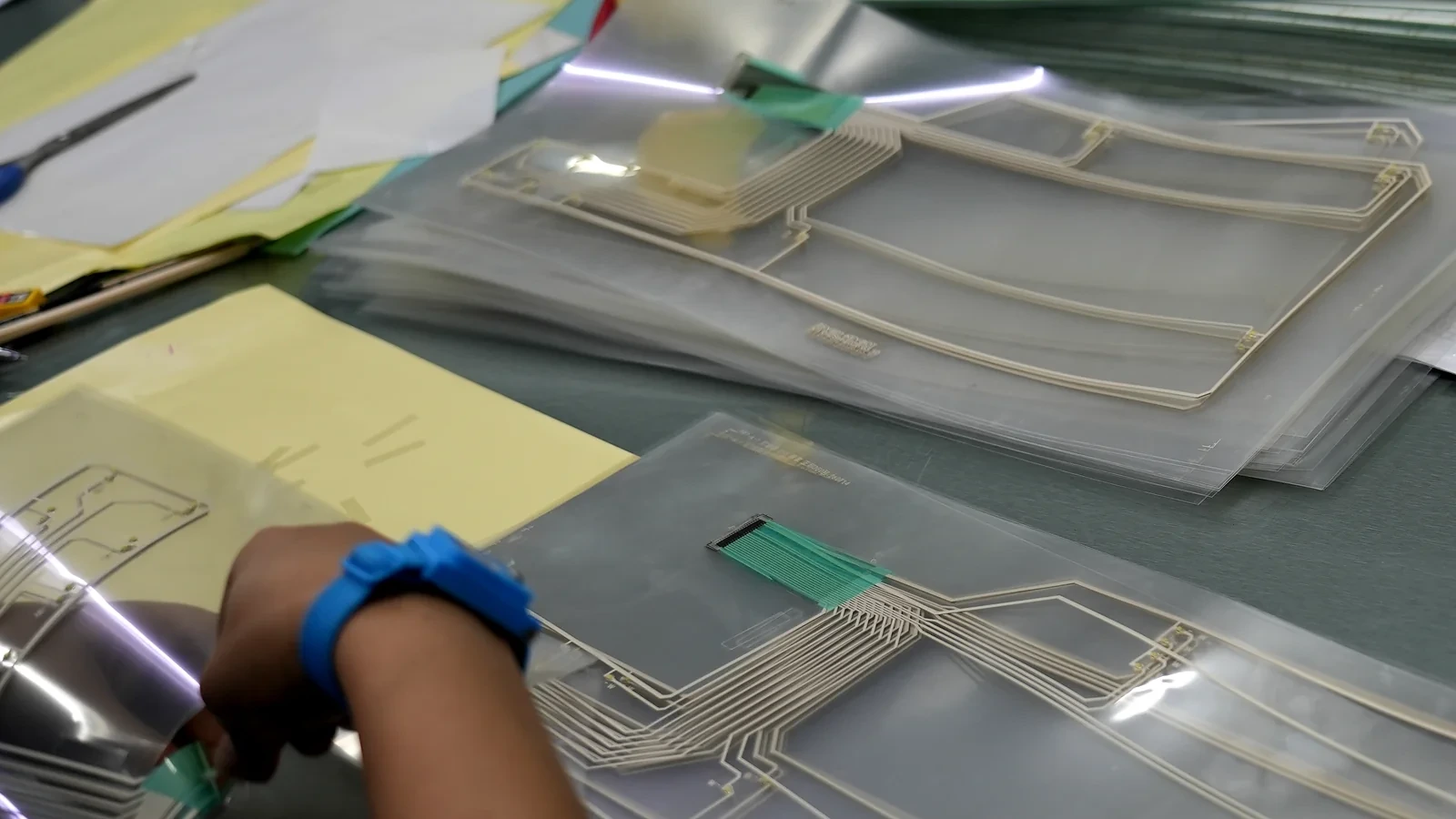
3. Control Printing, Cutting and Lamination
Inspect critical geometry and processing before subsequent layers conceal defects. Request first-off approval and defined rechecks after relevant tooling, setup, or material changes.
For printing, link the substrate and ink lots to the approved recipe and the selected material’s technical data sheet. Agree how drying or curing is verified, rather than recording only a machine setting. Check registration, conductor integrity, and relevant dimensions after the applicable processing steps. Do not prescribe one cure schedule for unidentified materials.
For cutting, inspect the outline, windows, tail exit, and edge condition against shared datums. Record tool identity and disposition of damaged features before bonding.
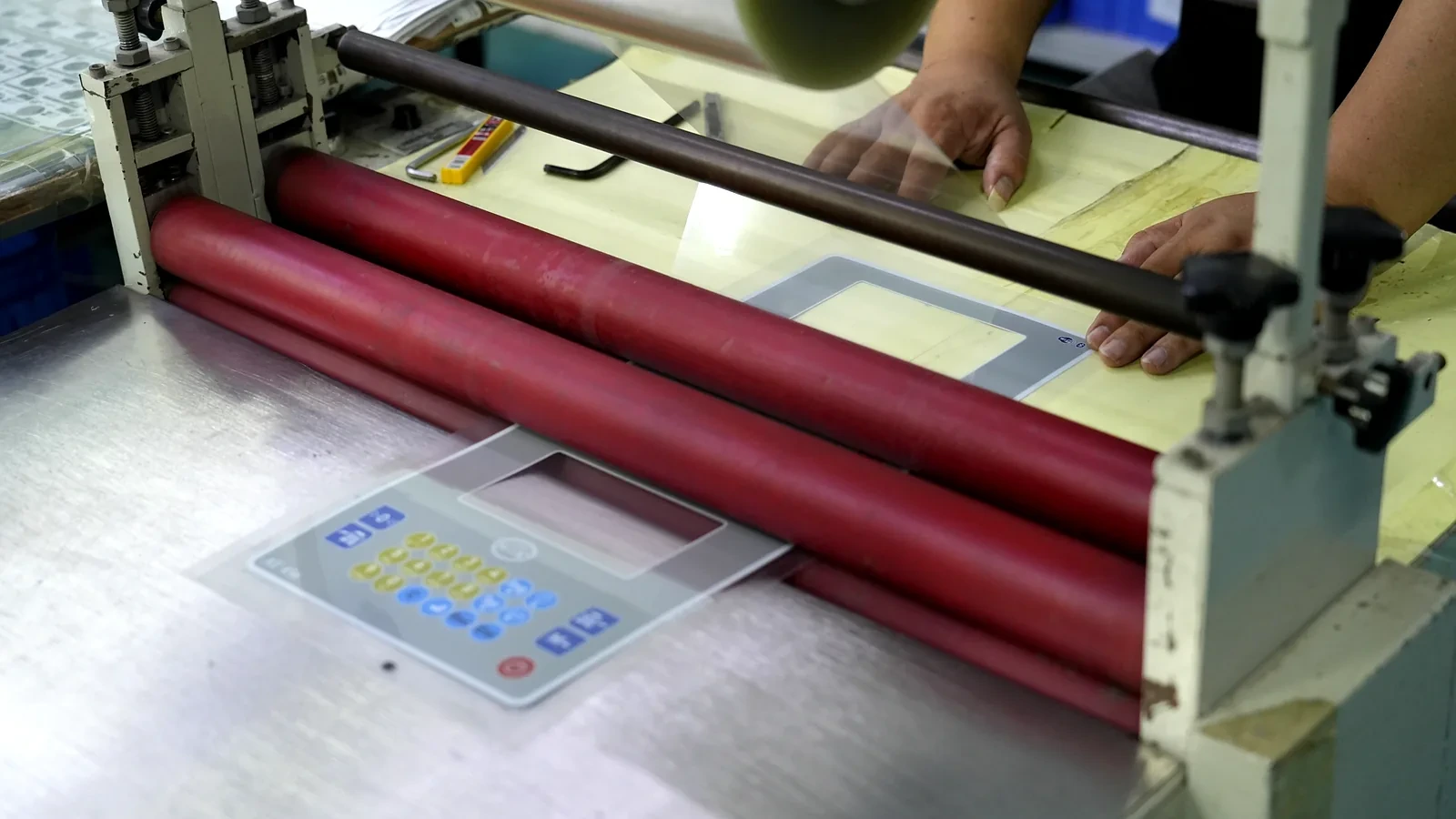
For lamination, define cleaning, liner removal, alignment, bond thickness and validated application conditions. Unintended air gaps can affect capacitive coupling. Inspect particles, bubbles, wrinkles and local separation against agreed criteria, and record the process recipe. Visual approval alone does not validate touch performance.
The following is an illustrative procurement control-plan template, not a completed factory record. Select the applicable sensor route and replace general checks with approved methods and limits.
| Process stage | Input documents | Acceptance checkpoints | Output records | In-house / external boundary to confirm |
|---|---|---|---|---|
| Production release | Drawings, BOM, route, inspection plan | Matching revisions; approved hold points | Release authorization; traveler | Who releases files to each site? |
| Incoming materials and parts | Purchase specification; approved source list | Identity, lot, condition, critical dimensions | Receiving results; supplier evidence | Raw material, finished part, or customer property? |
| Printed PET sensor, where selected | Conductor artwork; ink and film specifications | Registration, processed geometry, continuity, insulation | Print and cure record; electrical results | Who prints, processes, and terminates it? |
| Copper FPC sensor, where selected | Fabrication stack; copper data; netlist | Pattern, coverlay, contacts, opens and shorts | Fabrication lot; electrical acceptance | Who fabricates versus assembles the circuit? |
| Transparent glass sensor, where selected | Sensor specification; optical and interface requirements | Active-area orientation, optical defects, electrical acceptance | Sensor lot; inspection evidence | Who patterns the conductor and bonds the interconnect? |
| Cover printing and cutting | Artwork; outline; window and finish criteria | Registration, appearance, dimensions, edge condition | First-off and inspection results | Who prints and cuts or machines the cover? |
| Lamination and assembly | Stack drawing; adhesive specification; work instruction | Alignment, bond thickness, defects, tail position | Material lots; process and inspection record | Who bonds each interface? |
| Electronics and programming, if included | Assembly data; pinout; released binary/configuration | Connections, programming verification, communication | Board lot; file identity; fixture results | Who supplies, programs, tunes, and accepts? |
| Final release and packing | Test plan; deviation approvals; packing specification | Scope-specific results; closed failures; labels | Release report; lot-to-shipment link | Who authorizes shipment and retains records? |
4. Assemble and Inspect the Agreed Scope
Match inspection to the shipped assembly and its stated test configuration. Do not treat passive-sensor electrical checks as complete touch validation.
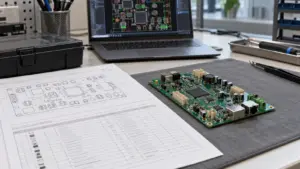
For passive sensors, agree continuity, isolation, pinout, and other construction-specific checks using suitable test limits. For controller-equipped assemblies, add programming verification, power-up, communication, and functional checks.
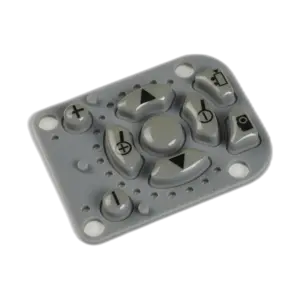
Keep test programs distinct. Custom capacitive keypad manufacturing needs checks of each required key’s press, hold, release, unintended neighboring activation, and corresponding host event where included. A coordinate projected-capacitive (PCAP) panel instead needs its agreed coordinate mapping, edges, corners, tracking, and multi-touch behavior. Use the relevant program, not a generic “touch passed” box.
Where diagnostics are available, retain touched and untouched measurements for the specified configuration. Assess signal-to-noise ratio and design margin with relevant noise sources active. Use the selected controller’s measurement methods and acceptance criteria; do not transfer another device’s numerical limits.
Record fixture revision, stimulus, grounding, controller configuration, firmware, and required display or lighting states. Correlate the production fixture with the approved assembly, and agree fixture checks using known reference conditions. Keep routine production screening separate from the project’s environmental and equipment-qualification evidence.
5. Trace Materials, Revisions and Final Release
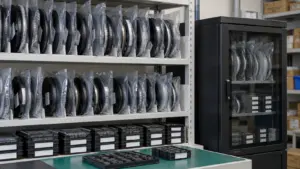
Release identifiable lots only after required evidence and deviations have been reviewed. Traceability should connect supplied material to the shipped configuration.
Link the traveler to incoming lots, sensor and board revisions, tooling, process records, programming-file identity, test-fixture revision, and inspection results. Preserve links when batches are split or combined. Agree record-retention responsibility and whether lot or individual-unit identification is required.
Keep initial failures, authorized rework, and retest results separately; a final pass should not erase the defect history. Record the disposition of rejected material and the person authorizing shipment.
For a material, sensor-source, process, or firmware change, document the affected characteristics, required requalification, approval, and first affected lot. Address obsolete stock and work in progress before the new revision enters production. Packaging approval should cover surface protection, liners, tail support, and traceable labels.
Frequently Asked Questions
Resolve these scope and evidence questions before approving the production order.
Can I order a sensor without a controller?
Define it as a passive sensor assembly, with agreed conductor, insulation, geometry, and connection checks. Assign a separate owner for controller integration and touch acceptance. A passive-sensor inspection report should not be presented as complete equipment validation.
Must every production unit receive individual touch tuning?
Do not assume individual tuning is required. Agree whether production uses a released configuration or a controlled calibration procedure. Record any permitted calibration range, and investigate outliers rather than adjusting settings until a defective assembly appears to pass.
Does outsourcing the glass sensor disqualify a supplier?
No. Evaluate the named manufacturing route, approved source, incoming acceptance, change-notification agreement, and defect-resolution responsibility. Request equivalent evidence from competing suppliers instead of treating an in-house label as proof of quality.
Is a supplier certificate enough for incoming acceptance?
A certificate can support material identity or conformity, but it does not replace every agreed receiving check. Specify which characteristics need supplier results, incoming measurements, or both, and link the evidence to the delivered lot.
Can a bubble-free panel be accepted without touch testing?
Visual inspection establishes only the agreed appearance result. Apply the electrical and functional checks for the purchased scope. Where the controller or host is customer-supplied, document who completes touch acceptance and with which assembly configuration.
What should happen after a failed final inspection?
Quarantine the affected units, retain the original failure record, and investigate the cause. Use only an approved repair or concession process. Record rework and repeat the affected inspections before an authorized person releases the units.
Which factory photos are useful during supplier review?
Request actual images of the selected sensor or print operation, alignment and lamination, and the relevant inspection fixture. Ask who performs each operation. Pair photographs with redacted travelers and inspection records; images alone do not establish process capability.
Review My Manufacturing Scope
Send the drawing and artwork revisions, proposed stack and sensor route, controller/configuration ownership, customer-supplied parts, prototype and production quantities, operating conditions, and required inspection records. Identify which operations and validation responsibilities need confirmation.
Ready to Start Your Project?
Tell us about your membrane switch, keypad, or graphic overlay requirements. Our engineering team will review your specifications and provide a detailed quote.