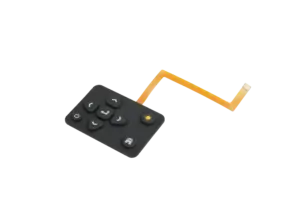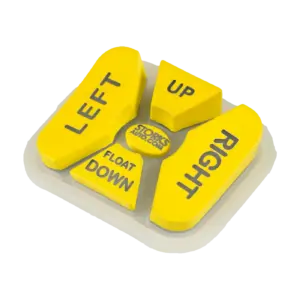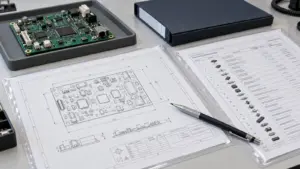
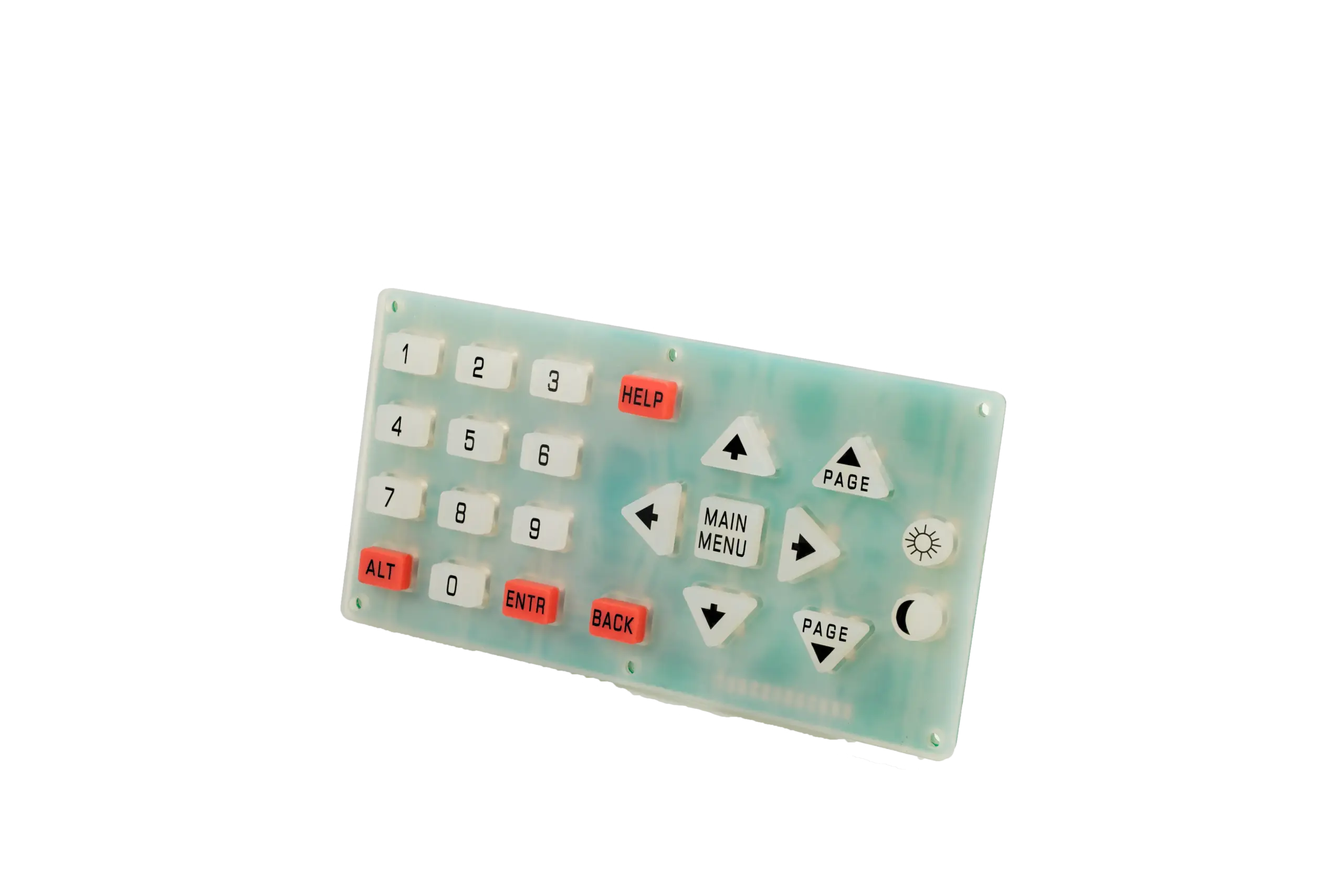
An off-the-shelf silicone keypad is the better choice when its existing size, key layout, mounting, electrical interface, legends, tactile behavior, and environmental limits already fit the equipment with little redesign. A custom silicone keypad becomes the stronger option when the interface must follow the product rather than forcing the product to follow a catalog part.
For OEM teams, the decision should be based on total project impact, not keypad unit price alone. A standard keypad can become expensive if it requires a new panel cutout, PCB relocation, harness adapter, firmware change, lighting compromise, or extra validation. A custom keypad may justify tooling when it removes those changes or combines several interface parts into one controlled assembly.
JASPER’s silicone rubber keypad design guide treats the keypad as part of an installed mechanical and electrical stack. That system view is also the right starting point for a custom-versus-standard purchasing decision.
- 1. Check What Can and Cannot Change in the Equipment
- 2. Compare Layout, Graphics and Mechanical Fit Together
- 3. Account for Tooling and Integration Costs
- Typical purchasing situations
- 4. Know the Main Triggers for Customization
- Unique layout or ergonomics
- Controlled tactile behavior
- Product-specific graphics or backlighting
- Electrical contact integration
- Sealing and enclosure integration
- Part consolidation
- 5. Review Availability and Revision Control
- 6. Decide What to Prototype First
- For an off-the-shelf keypad
- For a custom silicone keypad
- 7. Procurement Decision Checklist
- A standard keypad is a strong candidate when:
- Customization is triggered when:
- Information to collect for a custom review
- Discuss Your Interface Requirements
1. Check What Can and Cannot Change in the Equipment
Before comparing prices, divide the equipment into:
- Frozen interfaces — changes would trigger major redesign, tooling or revalidation.
- Adjustable interfaces — changes are still practical.
- Open requirements — the team has not decided them yet.
A keypad that is “close enough” by itself may be a poor choice if the surrounding product is already fixed.
| Equipment constraint | Standard keypad works when… | Custom becomes more likely when… |
|---|---|---|
| Panel and bezel | Existing size and mounting fit | Housing geometry or panel tooling is frozen |
| PCB | Contacts, LEDs and connector can align | Contact centers, board outline or support are fixed |
| Key layout | Existing matrix matches the workflow | Key grouping, spacing or shape is product-specific |
| Graphics | Stock/configurable legends are acceptable | Unique symbols, branding, languages or day/night legends are required |
| Feel | Published force/travel is acceptable | Force, travel, snap or edge-press behavior must be tuned |
| Electrical interface | Connector, matrix or bus is compatible | Pinout, contact method or signal architecture is fixed |
| Environment | Supplier limits fit the use case | Sealing, UV, cleaners, oils or glove use need project-specific design |
This avoids a common sourcing mistake: selecting a component that is inexpensive to buy but expensive to integrate.
2. Compare Layout, Graphics and Mechanical Fit Together
Standard silicone keypads can be very capable. Their advantage comes from using the geometry and interfaces that already exist.
The referenced supplier’s Series 96 conductive-rubber keypad family, for example, is based on established 3×4 and 4×4 formats, matrix circuitry, standard legend choices and defined mounting options. The referenced supplier’s PKP standard keypad family packages the silicone keypad with electronics, a defined connector, mounting hardware and CAN-based communication.
These are useful examples because they show both the benefit and the boundary of a standard solution. If the whole interface matches the OEM product, development effort can drop sharply. If the equipment must be changed to accept the standard keypad, the real comparison becomes:
standard keypad + equipment adaptation
versus
custom keypad + purpose-built integration.
Before approving a standard part, confirm:
- panel cutout and mounting direction;
- total stack height and rear clearance;
- key height, travel and return clearance;
- connector and cable exit;
- PCB support;
- seal path;
- service and replacement access;
- operator key spacing and graphics.
Any adapter plate, bracket, conversion PCB, harness or software mapping needed to make the standard part fit belongs in the purchasing decision.
3. Account for Tooling and Integration Costs
Do not compare only unit price. Compare the total work needed to make the equipment production-ready.
| Cost / effort category | Off-the-shelf route | Custom route |
|---|---|---|
| Keypad component | Existing catalog/configured part | Project-specific molded part or assembly |
| Keypad tooling | Usually none if used unchanged | Mold/tooling and possible fixtures |
| Enclosure | No change if geometry fits | Designed around intended interface |
| PCB | May need contact, LED or connector changes | Can be coordinated with keypad geometry |
| Harness / connector | Adapter may be required | Can follow the OEM interface |
| Firmware | May change for fixed key map or bus | Can retain preferred architecture if defined that way |
| Graphics / lighting | Limited to available options | Project-specific legends, coating and backlighting |
| Assembly | Low if drop-in; higher with adapters | Can fall if parts are consolidated |
| Validation | Final installed equipment still needs verification | Released stack requires project-specific validation |
| Revision control | Track manufacturer part/configuration | Track drawing, tool, material and approved sample |
Do not assign a universal break-even quantity. The economic point depends on how much of the equipment must change, how long the product will stay in production, and what the custom scope includes.
Typical purchasing situations
Early prototype with flexible mechanics: a standard keypad can quickly prove electronics and user flow. Do not assume the prototype architecture must become the production architecture.
Mature product with fixed enclosure and PCB: custom often becomes more rational if a standard part would force changes to released housing tools, board layout, cable routing or validation evidence.
New platform used across several products: compare whether one standard module can be reused broadly or whether a custom interface will preserve a common internal architecture while allowing product-specific key layouts and graphics.
4. Know the Main Triggers for Customization
Custom should be tied to a requirement, not simply a preference for a unique appearance.
Common triggers include:
Unique layout or ergonomics
Different key sizes, grouped functions, unusual pitch, gloved operation or physical separation between controls may require molded geometry developed around the operator.
Controlled tactile behavior
A silicone web acts as a molded spring. Force, travel and return depend on geometry, material, support and installation. If the OEM needs a measurable force-displacement target, the keypad geometry has to be controlled.
Product-specific graphics or backlighting
Custom molded color, printing, coating, laser-opened legends and LED alignment may need to be designed as one optical system.
Electrical contact integration
Carbon pills, conductive printing, metal-dome actuation or non-conductive actuators must align with the PCB or other switching element. Contact center, rest gap and board support cannot be treated independently.
Sealing and enclosure integration
A molded perimeter lip is only one part of a seal. If water, dust or cleaning exposure matters, review the full enclosure path, fasteners, cable exits and housing deflection.
Part consolidation
When purchasing wants fewer supplier interfaces, a silicone keypad assembly can combine the molded rubber, circuit, LEDs, connector, spacer, adhesive and functional test into one supply boundary.
5. Review Availability and Revision Control
A standard component avoids custom keypad tooling, but it creates dependence on the supplier’s part number and product lifecycle. Purchasing should record:
- exact manufacturer and part number;
- approved legend/configuration;
- current product status;
- approved sourcing route;
- datasheet and drawing revision;
- alternate parts, if any;
- change/discontinuation notification process;
- revalidation requirements for a replacement.
Do not assume “standard” means permanently available or automatically interchangeable.
A custom part needs a different control package:
- released 2D drawing and 3D model;
- tool number and revision;
- approved material and color;
- contact architecture;
- artwork and surface-process revision;
- mating PCB/enclosure revisions;
- approved sample or golden-sample register;
- inspection and functional-test criteria;
- change-notification and requalification rules.
JASPER’s tooling and prototyping guide emphasizes that a first molded sample is an engineering checkpoint, not automatic production approval. Tool ownership is therefore not the same as control of the released production configuration.
6. Decide What to Prototype First
Prototype the highest integration risk before making an irreversible commitment.
For an off-the-shelf keypad
Use the real or representative equipment to check:
- panel fit and operator access;
- mounting and rear clearance;
- connector, cable routing and key map;
- electrical/communication compatibility;
- service access;
- important environmental conditions;
- every adapter or product change required.
If the adapter list keeps growing, re-open the custom option.
For a custom silicone keypad
Use staged evidence:
- Geometry and architecture review — layout, circuit relationship, datums and force path.
- Form model where useful — reach, spacing and enclosure envelope only.
- Molded mechanical sample — position, force-displacement, return, wobble and contact timing.
- Decorated and powered assembly — graphics, coating, lighting, circuit, connector and housing.
- Production-representative validation — released tool/material/process state and agreed functional/environmental tests.
A 3D-printed form model can answer layout questions, but it cannot approve molded silicone feel or production tooling.
7. Procurement Decision Checklist
A standard keypad is a strong candidate when:
- footprint and mounting already fit;
- key count and layout match;
- available legends are acceptable;
- force and travel are acceptable;
- connector, matrix or communication interface is compatible;
- environmental specifications match the installed use case;
- no major enclosure or PCB redesign is required;
- supply status and revision controls are acceptable.
Customization is triggered when:
- key geometry must follow the product;
- panel, PCB or enclosure interfaces are frozen;
- graphics, lighting or coating are project-specific;
- contacts must align to a defined circuit;
- tactile response needs to be tuned;
- sealing must be integrated with the enclosure;
- a custom connector, tail, circuit or module boundary is required;
- several separate parts should be consolidated;
- adapting the standard part creates significant mechanical, electrical or software work.
Information to collect for a custom review
Send what is available:
- keypad layout or marked concept drawing;
- enclosure drawing, panel cutout or STEP model;
- PCB/FPC/PET contact layout;
- key count, approximate size and spacing;
- target force/travel or reference sample;
- contact method, if known;
- legends, colors, coating and lighting requirements;
- connector, tail or harness requirements;
- water, dust, UV, cleaners, oils, temperature and glove-use conditions;
- required validation or customer specifications;
- prototype quantity, annual volume and launch timing;
- frozen interfaces and open items marked TBD.
Unknown items do not need to be invented. Mark them TBD so they can be resolved before tooling.
Frequently Asked Questions
Are off-the-shelf silicone keypads always cheaper?
No. They avoid project-specific keypad tooling when used unchanged, but equipment changes can outweigh that advantage. Compare total integration cost, not only keypad price.
When should an OEM start with a standard keypad?
When the product architecture is still flexible, or when an existing keypad already matches the required layout, interface, mounting and environment.
When does custom become easier than adapting a standard part?
When the enclosure, PCB, operator layout, graphics, tactile response, lighting, sealing or connector must stay product-specific and several other parts would otherwise need redesign.
Does a custom silicone keypad require custom electronics?
No. A custom keymat can operate a customer PCB, membrane circuit, metal domes or discrete switches. Define the supplied boundary before tooling.
What should be approved before custom tooling release?
Freeze the key layout, critical datums, mating circuit relationship, contact architecture, target tactile behavior, graphics/lighting concept, enclosure interfaces and sample-approval evidence.
Can a standard keypad be the benchmark for a custom design?
Yes. It can be a useful ergonomic or tactile reference, but final acceptance should use measurable requirements where possible.
Discuss Your Interface Requirements
If you are deciding between a standard keypad, a custom molded keymat or a complete keypad assembly, send the information that already exists: drawings, photos, panel dimensions, PCB/contact layout, expected quantities, environment, graphics, lighting, connector details and frozen mechanical constraints.
Review the custom silicone rubber keypad options for molded keypad structures, or request a keypad engineering review with unresolved items clearly marked TBD.
Ready to Start Your Project?
Tell us about your membrane switch, keypad, or graphic overlay requirements. Our engineering team will review your specifications and provide a detailed quote.