
PRINTED ELECTROCHEMICAL SENSOR CIRCUITS
Custom Screen-Printed Biosensor Electrodes
JASPER manufactures screen-printed biosensor electrodes to customer-defined working, counter and reference patterns, inks, substrate and test criteria.
JASPER's default scope is the printed and converted electrode circuit. Reagent deposition, membrane chemistry, fluid handling, calibration, analytical performance, clinical interpretation and regulatory release remain outside scope unless explicitly quoted and evidenced.
- Working / counter / reference patterns
- Flexible printed sensor circuits
- Project-defined test coupons
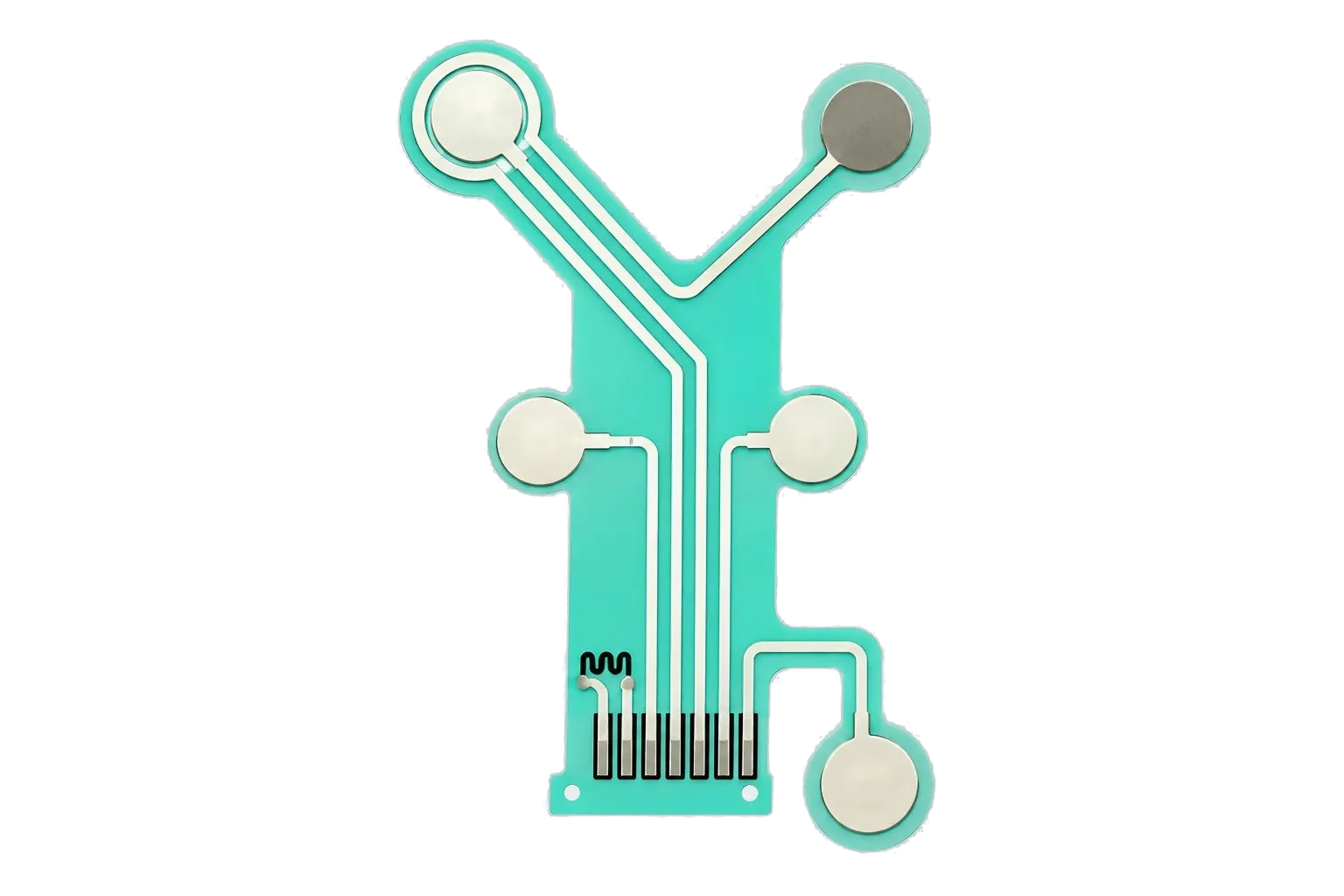
ELECTRODE PLATFORM BOUNDARY
Separate the printable electrode platform from the complete assay
A screen-printed electrochemical sensor can contain several functional layers beyond the conductive pattern. Defining the manufacturing boundary prevents an electrode printer from being mistaken for the owner of reagent chemistry, sample preparation or diagnostic performance.
JASPER can manufacture to
- Customer-released working, counter, reference and contact-pad artwork
- Approved silver, Ag/AgCl, carbon, dielectric or other printable systems
- Flexible substrate printing, cure sequencing and layer registration
- Dielectric windows, die cutting, lamination, tail contacts and conversion
- Prototype lots, test coupons and repeat builds to documented criteria
The device team defines and validates
- Target analyte, sensing mechanism and electrochemical architecture
- Reagent, enzyme, membrane, mediator and sample-interface formulation
- Fluid path, sample volume, conditioning, calibration and electronics
- Sensitivity, selectivity, range, stability and analytical test method
- Clinical claims, risk management, labeling and finished-product release
DESIGN ROUTES
Lock the electrode architecture before adding assay layers
Electrode count is only the beginning. Each printed region needs a documented material, function, exposed window, connection and relationship to the sample path or downstream assembly.
01 / THREE-ELECTRODE CELL
Working, counter and reference pattern
02 / MULTI-WORKING ARRAY
Several sensing sites on one circuit
03 / WEARABLE OR FLEXIBLE
Flexible biosensor electrode platform
FUNCTION-TO-LAYER CONTROL
Give every printed area a named function and acceptance rule
Artwork reviews become faster when the legend identifies which shapes are working electrodes, reference regions, counter electrodes, routed conductors, connector contacts and dielectric windows.
FUNCTION MAP
Name each electrode and channel
MATERIAL MAP
Tie every layer to an approved ink
WINDOW MAP
Control exposed and insulated geometry
TEST MAP
Separate print checks from assay results
CONTROLLED PROJECT FLOW
Develop the printed electrode platform before assay integration
- 01
Define functions
Share electrode roles, material map, exposed windows, connector layout, downstream layers and scope boundary.
- 02
Review print DFM
Check features, overlaps, registration, cure sequence, dielectric windows, tail contacts and conversion tolerances.
- 03
Build controlled coupons
Produce samples from one approved revision for customer electrochemical, fluidic, electronics and assay evaluation.
- 04
Close acceptance
Resolve artwork, materials, process records, coupon results, deviations and production test requirements.
- 05
Repeat the platform
Manufacture against released artwork, BOM, process route, inspection plan and approved material controls.
RFQ INPUTS
What to send a biosensor electrode manufacturer
Mark the boundary between the printed electrode platform and the assay. That distinction determines materials, contamination controls, handling, test coupons and responsibility for analytical evidence.
Send the Current Revision- Working, counter, reference and connector artwork
- Functional legend linking each geometry to its role
- Approved ink, substrate and dielectric specifications
- Layer order, cure limits, overlaps and exposed windows
- Fluidic, adhesive, spacer or membrane interface drawing
- Tail, stiffener, connector and mating-electronics details
- Production test, coupon and documentation requirements
- Prototype quantity, annual forecast and assay-development stage
BUYER QUESTIONS
Screen-printed biosensor electrode FAQ
The printed electrode is one controlled platform inside a complete sensor. Analytical and clinical claims require the finished system and its validation evidence.
Can JASPER manufacture screen-printed working, counter and reference electrodes?
JASPER can review and manufacture customer-defined multi-electrode patterns when the artwork, approved inks, substrate, print sequence, conversion and acceptance criteria fit our capability.
Can several working electrodes be printed on one flexible circuit?
Yes, a released design may contain multiple working or sensing sites with shared or separate auxiliary electrodes. Function, isolation, cross-talk and analytical performance remain customer validation responsibilities.
Does JASPER deposit enzymes, reagents or membranes?
Those processes are outside the default printed-electrode scope. They are included only when explicitly reviewed, quoted and supported by the required process and material evidence.
Can the biosensor electrode be made on flexible film?
Flexible substrates can be considered when their surface, dimensional behavior, cure limit, conversion and downstream assay processes fit the approved design.
Can JASPER guarantee sensitivity, selectivity or detection range?
No generic guarantee is made. Those outcomes depend on electrode chemistry, geometry, reagent system, fluidics, electronics, calibration, sample matrix and the customer's validated test method.
What production tests can be quoted?
Visual, dimensional, continuity, resistance or customer-defined coupon checks may be quoted with documented methods and limits. They do not replace assay or finished-sensor validation.
Who owns the biosensor regulatory and clinical claims?
The finished-device owner controls intended use, assay design, analytical and clinical validation, risk management, labeling, regulatory submissions and product release.
START WITH EVIDENCE
Have a biosensor function map and printed-layer artwork?
Send the electrode roles, approved inks, substrate, exposed windows, connector, downstream assay interfaces, test-coupon needs and forecast. JASPER will review the printable platform and make the scope boundary explicit.