
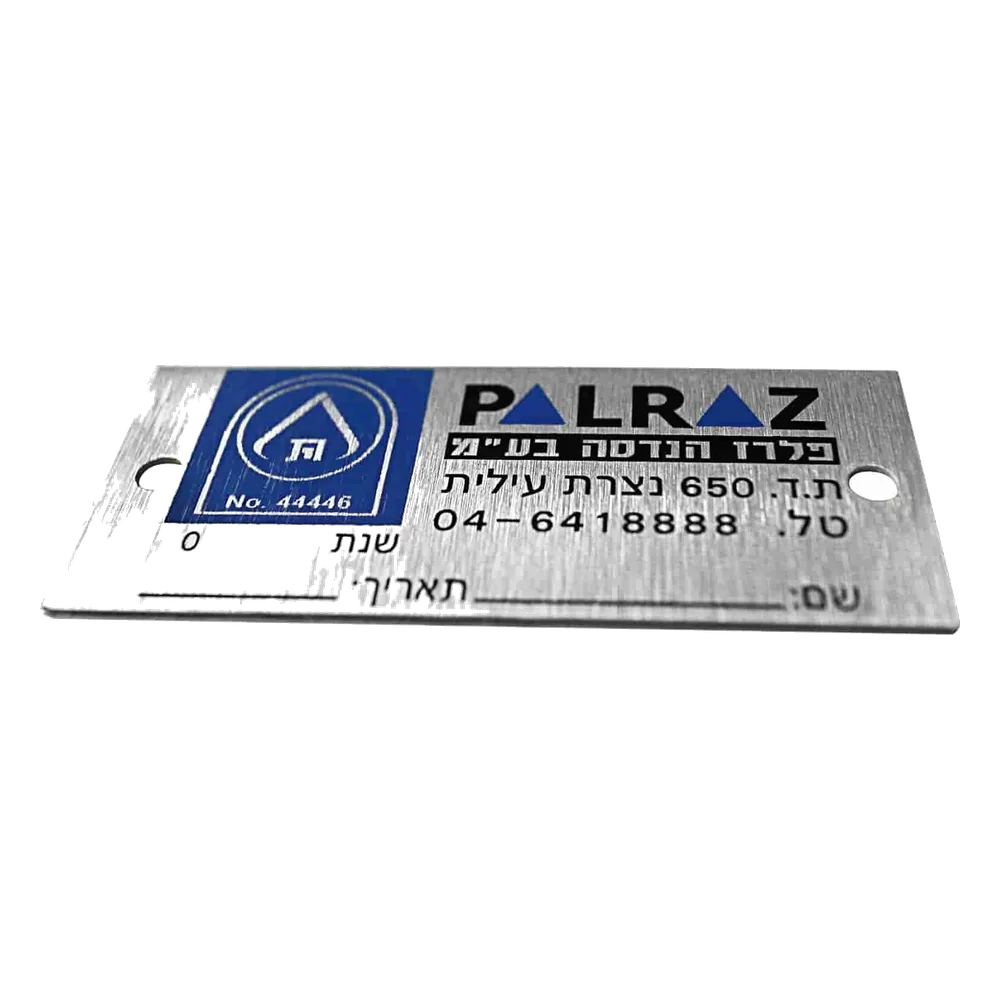
エッチング・アルマイト・アルミ/ステンレス/真鍮
金属銘板 - エッチングおよび陽極酸化アルミニウム、ステンレス鋼、真鍮
マーキングがエッチング、陽極酸化処理、または金属に溶着された硬質金属 ID プレートは、塩分、溶剤、熱、摩耗に耐えるように作られています。
JASPER は、OEM 機器用のカスタム金属銘板を作成します。エッチングおよび陽極酸化アルミニウム板、ステンレス鋼および真鍮の銘板、シリアル番号および定格プレート、資産タグ、およびコントロール パネル ID です。
JASPERのインターフェース部品を採用するOEM
家族の永続的かつ厳格な終焉
印刷したラベルが長持ちしない場合は、金属を切り込みます。
金属銘板は、アルミニウム、ステンレス鋼、真鍮などの硬い板であり、その上にマーキングは印刷されていません。エッチング、陽極酸化、または金属に溶融されます。何か問題が発生するまでは、その違いは小さいように思えます。印刷されたラベルを強くこすると、汚れとともに印刷が剥がれてしまいます。エッチングされたプレートを擦っても、ただ磨いているだけです。テキストはずっと表面の下にありました。
したがって、永続性がすべてのテーマです。印刷されたグラフィックはその上のレイヤーです。エッチングまたは陽極酸化されたマークは金属の一部であり、プレートを研磨しない限り、読み取り可能な状態を保ちます。
This is also where it parts ways with the rest of the family. A label nameplate is flexible printed film with adhesive behind it. A doming label is that same label with a resin dome on top. Metal is the odd one out: solid, rigid, usually screwed or riveted down, and specified when the environment is rough enough that plastic just will not survive it.
Quick Answer
金属銘板とは何ですか?
金属銘板は、陽極酸化アルミニウム、ステンレス鋼、または真鍮で作られた剛性の ID プレートで、マークが金属にエッチング、陽極酸化、スクリーン印刷またはデジタル印刷、またはレーザー加工されています。塩水噴霧、溶剤、摩耗、または長年の紫外線にさらされても、印刷されたラベルが消えてしまうような場所でも読み取り続けます。どの金属を選ぶかは環境に左右されます。最悪の場合には陽極酸化アルミニウム、熱や海洋作業にはステンレス、見た目をよくする必要がある場合には真鍮を選択します。ジョブは、シリアル プレート、定格プレート、資産タグ、機器 ID、コントロール パネル、警告プレートなどの通常の産業用のもので、多くの場合、MIL-I-45208、UL、または ISO 9001 に基づいて構築されます。短いバージョン: これは、印刷されたラベルが製品の寿命に達しない場合に指定するものです。
材料とプロセスのオプション
どの金属をどのようにマークするかという 2 つの決定を 1 つで行うことができます。
We confirm both, plus finish and mounting, before quoting — and we check whether the part is really metal rather than a printed label nameplate.
| Choice | Typical options | Design note |
|---|---|---|
| Metal | Anodized aluminum, stainless steel, brass | Aluminum is light, non-magnetic, and most corrosion-resistant when anodized; stainless takes heat and marine duty; brass is decorative. |
| Aluminum alloy | 1100, 3003, 5052, 6061, and photosensitive stock | Alloy is chosen by forming, bending, and durability needs; photosensitive stock suits MetalPhoto imaging. |
| Thickness | .003" to .25" | Thin foil-gauge plates for flat surfaces; thick plates for rugged, screwed-down ID. |
| Chemical etching | Etch depth .0015" to .008"; no-fill or color-fill with baked enamel | Etching cuts the design into the metal, so it stays legible even after the surface color wears away. |
| Anodizing | Type I (chromic, aerospace), Type II (sulfuric, most common), Type III (hardcoat, military), photosensitive (MetalPhoto) | Anodizing adds corrosion resistance and locks in ink and dye; photosensitive gives the most durable variable data and barcodes. |
| Printing / marking | Screen printing, digital full-color, laser engraving | Screen and digital add color graphics; laser and etching give permanent monochrome marks and variable data. |
| Finish and protection | No-fill natural metal, color fill, protective coatings or films against scratches, solvents, and UV | Coatings extend outdoor life; etched-and-filled marks need the least protection. |
| Mounting | Screw or rivet holes, studs, heavy-duty adhesive | Mounting is chosen by surface, vibration, and whether the plate is permanent or serviceable. |
| 規格対応 | MIL-I-45208, UL, ISO 9001; IUID barcodes and serialized data | Standards and traceability marks are matched to the target market and contract. |
Etched vs printed
Why buyers cut the mark into the metal.
When failure is not an option, the mark cannot be a layer sitting on top. It has to be the metal. Chemical etching takes care of that: controlled acids eat the design into the surface, somewhere between .0015" and .008" deep, and the recess gets filled with baked enamel. The graphic ends up locked below the surface, so even after the top wears down, it still reads.
That is the whole reason buyers pay for etched metal instead of a printed tag. Salt spray and sun fade ink. Grit and friction scratch a surface print off. Hydraulic fluid, fuel, solvent, a high-pressure washdown — any of them will lift a printed graphic eventually. What it costs you is money and time, since metal runs through more process than a label, so you spec it when the part has to last, not when it has to be cheap.
Material route comparison
Metal, label, doming, acrylic, and glass each win on something different.
A metal nameplate is the rigid, permanent end of the lineup. The other routes win on flexibility, cost, or looks.
Metal nameplate
Rigid etched or anodized aluminum, stainless, or brass; for permanent ID in harsh environments.
Label nameplate
A flexible label nameplate in polycarbonate or polyester when the part needs a printed adhesive label, not a plate.
Doming label
A doming label for a glossy 3D resin brand emblem.
Acrylic / glass
A rigid acrylic panel or glass nameplate when the front is a clear or printed panel with windows.
Design checks
The metal, the marking, and the environment.
A metal nameplate quote turns on all three. We work through the stack before quoting.
- Metal and alloy: aluminum, stainless, or brass, by environment and budget
- Thickness (.003"–.25") and plate size and shape
- Marking method: chemical etch, anodize, MetalPhoto, screen, digital, or laser
- Etch depth, no-fill or color fill, and protective coating
- Variable data: serial numbers, barcodes, IUID, sequential ranges
- Mounting: screw or rivet holes, studs, or adhesive
- Environment: salt, chemicals, UV, heat, abrasion, washdown
- Standards: MIL-I-45208, UL, ISO 9001, or contract requirements
What to send
Send vector artwork — an Adobe Illustrator file, an EPS, or a press-ready PDF — with the plate outline, hole positions, and any variable-data fields called out.
If a printed label or a resin-domed emblem would serve the application better than metal, we will say so before tooling.
見積もりを依頼Metal nameplate questions
What is an etched metal nameplate?
It is a rigid metal plate with the design cut into the metal by a controlled chemical process. Acids eat away layers — usually .0015" to .008" deep — to leave recessed text or graphics, which then get filled with baked enamel or left as bare metal. Since the mark sits below the surface, wear can dull the plate without erasing what it says, and that is exactly why etched plates end up on harsh-environment equipment.
Aluminum, stainless steel, or brass — which metal should I use?
The environment decides. Anodized aluminum is the most corrosion-resistant and the default for asset tags, equipment ID, and control panels — light, non-magnetic, and happy in salt and grit. Stainless is the one for heat and seawater, so it goes on outdoor and heavy-machinery tags. Brass looks premium and holds off ordinary rust, but it tarnishes, so save it for decorative plates, awards, and medallions rather than hard industrial duty.
How is a metal nameplate different from a printed label?
On a printed label the graphics sit on the surface of a flexible film, held on with adhesive. On a metal nameplate the marking is etched into or fused with rigid metal, then usually mounted with screws, rivets, or heavy adhesive. The label is cheaper, lighter, and faster; the metal plate is permanent and survives salt, solvents, heat, and abrasion that would destroy a printed label. Choose metal when durability, not cost, drives the spec.
Continue the front-surface material review
Graphic overlays
Head back to the グラフィックオーバーレイ hub to weigh every printed front-surface option.
Review graphic overlays →Label nameplate
See the flexible printed label route when permanent metal is more than the job needs.
Review label nameplates →Doming label
Compare a rigid plate with a glossy 3D resin brand emblem.
Review doming labels →Graphic overlay materials
Weigh metal, PET, PC, acrylic, glass, and resin trade-offs in one place.
Review materials →Get a metal nameplate reviewed before tooling
Send the artwork, the plate outline, the hole positions, and the environment the part has to survive. We will confirm the metal and alloy, the marking method, the finish and protection, and the mounting, and tell you whether metal is the right route — or whether a flat label nameplate or a doming label fits the job better.
Start RFQ ReviewStill weighing materials? Start with our graphic overlay materials reference.