
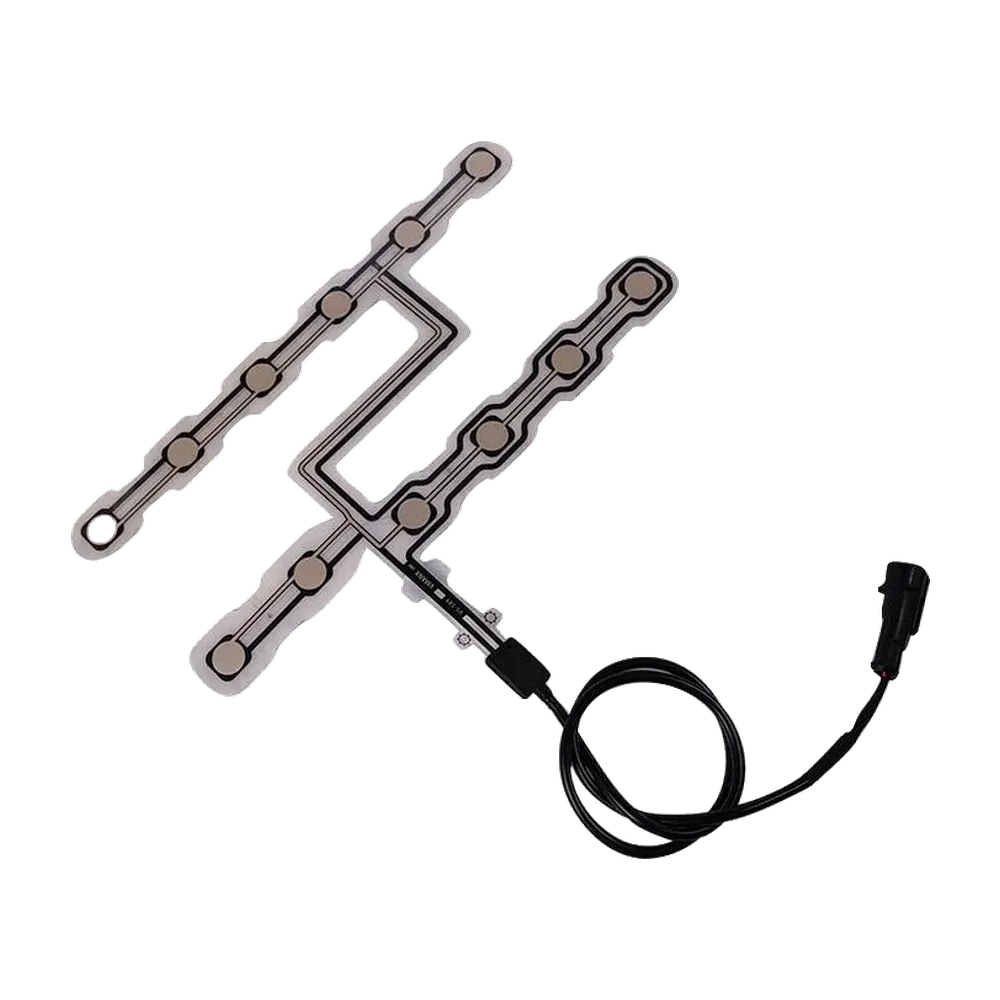
車載シート検知のカスタム対応
フレキシブルメンブレンシート圧力センサー
OEM シート プログラム用の印刷層、スペーサー、カスタム テールから構築されたメンブレン スタイルの柔軟なシート圧力センサー。
JASPERのインターフェース部品を採用するOEM





Quick Answer
フレキシブルメンブレン圧力センサーは、層状のメンブレン回路設計を通じて圧力を検出する、薄くて柔軟なセンサー構造です。自動車シートでは、このタイプのセンサーをクッション領域の内側または下に配置して、シート圧力検出、座席占有検出、シートベルトリマインダー入力をサポートできます。
JASPER Electronics にとって、フレキシブル メンブレン圧力センサーは、メンブレン スイッチ、フレキシブル回路、薄膜製造作業の自然な拡張です。正確な材料スタック、感知方法、ケーブル出力、およびシーリング方法は、シート設計、力要件、および検証計画を通じて確認する必要があります。
Opening Copy
JASPER Electronics は、形状、厚さ、配線、再現可能な信号動作が重要なプロジェクト向けに、フレキシブルなメンブレンおよび薄膜インターフェイス製品を製造しています。柔軟な膜シート圧力センサーは、車のシート環境でも同じ製造ロジックを使用します。センサーはクッション構造の内側に設置され、シートの形状に従い、目標の圧力条件に達したときに定義された出力を提供する必要があります。
JASPER は、一般的な産業用圧力トランスデューサーではなく、カスタム膜シート圧力センサーを評価するエンジニアリング チームをサポートします。当社が焦点を当てているのは、柔軟なカーシート圧力センサーの形式です。薄型、軽量、クッションに合わせた形状で、確認済みの取り付け位置、トリガー条件、ケーブルルート、コネクター、湿気への曝露に基づいて設計されています。
カーシートの膜圧力センサーのプロジェクトが、カタログ項目を 1 つ選択するだけで解決されることはほとんどありません。シートフォーム、トリムカバー、サポート構造、乗員の状態、および電子インターフェースはすべて、必要な感知ゾーンを変更する可能性があります。そのため、私たちの作業は、最終的な膜層構造を定義する前に、図面、サンプル、エンジニアリングノートから始まります。
メンブレンセンサーの構造
メンブレンシート圧力センサーは通常、層状の薄膜構造として構築されます。正確なスタックは確認された材料スタックと回路設計によって異なりますが、動作コンセプトは一貫しています。設計された感知ゾーンの圧力によって電気的状態が変化するか、設計された接触経路が閉じるように柔軟な層が配置されています。
| Structure area | Typical role in a membrane seat pressure sensor | JASPER engineering note |
|---|---|---|
| Flexible film layer | Provides the thin, bendable carrier for the sensor shape | Material must be confirmed by seat environment, assembly method, and validation plan |
| Conductive / sensing layer | Creates the pressure-sensitive electrical path depending on design | We avoid assuming ink, metal, or circuit format before the stack is confirmed |
| Spacer / adhesive structure | Controls separation, bonding, and pressure response depending on design | The spacer geometry can affect trigger behavior and repeatability |
| Sensing zone | Defines the active area that reacts to cushion pressure | Shape and location should match seat foam and occupant load path |
| Cable tail | Routes the output away from the cushion area | Cable exit direction should be checked against seat frame movement and harness path |
| Connector output | Connects the sensor to the customer-side electronic system | Connector type should be supplied by the customer or selected during prototype review |
シートで使用する場合は、薄膜シート圧力センサーをクッション アセンブリの一部として設計する必要があります。フラットベンチ上で動作するセンサーは、フォーム、トリム、加熱層、換気チャネル、または成形された支持面の下に設置された後では、動作が異なる場合があります。したがって、感知領域をロックする前にシートの構造を確認してください。
フレキシブルメンブレンセンサーがカーシートに適合する理由
柔軟な膜シート センサーは、センサーを薄く、成形し、クッションの形状に沿って配線できるため、自動車のシート プロジェクトに適合します。メリットはセンサー自体だけではありません。利点は、膜の設計をシートシステムに適合させることができることです。
| Requirement in car seat integration | Why a flexible membrane sensor helps | What to confirm before production |
|---|---|---|
| Thin profile | A thin film seat pressure sensor can sit inside the cushion stack without adding a bulky mechanical part | Available installation thickness and compression path |
| Flexibility | The membrane format can follow curved or soft seat areas better than a rigid component | Bend area, fixed area, and unsupported area |
| Custom sensing zones | The active area can be shaped around the occupant load path | Seat foam drawing, target sensing position, and trigger condition |
| Cushion integration | The sensor can be planned for under-cushion, in-cushion, or surface-adjacent placement depending on design | Foam groove, trim layer, and assembly method |
| Cable routing | The tail and cable direction can be designed to leave the cushion safely | Harness route, strain relief, and connector location |
| OEM shape customization | The outline can be matched to a specific seat platform rather than a catalog pad | CAD drawing, sample seat, or marked installation sketch |
これが、膜シート占有センサーがカスタム自動車シート システム、商用車シート、および乗客検出プロジェクトに役立つ理由です。メンブレン形式により、設計チームはまず形状を制御し、次に動作を検知できるようになります。
カスタム製造オプション
JASPER customizes flexible membrane seat pressure sensor projects around the confirmed seat design. The options below are normally defined during prototype development and sample validation.
| Custom option | What can be adjusted | Information needed from the customer |
|---|---|---|
| Custom shape | Sensor outline, corner shape, cutout, and cushion-fit geometry | Seat drawing, marked installation area, or sample |
| Sensing area | Single zone or defined pressure-sensitive area layout | Target occupant position and load path |
| Trigger force | Pressure condition required to activate the sensor | Target trigger condition and test method |
| 層構造 | Film, sensing, spacer, adhesive, and backing arrangement depending on design | Confirmed material stack and circuit requirement |
| Cable length | Cable route from sensor body to customer-side harness | Seat frame route and connector location |
| Connector | Terminal or connector interface for the electronic system | Connector drawing, mating part, or harness specification |
| Waterproof or moisture-resistant design | Edge sealing, cable exit protection, and moisture-control approach depending on design | Exposure condition and validation requirement |
| Sample validation | Prototype check against the actual seat cushion and electronics | Seat sample, test fixture, and pass/fail condition |
| OEM/ODM production | Repeatable production based on approved drawings and samples | Approved drawing, BOM, inspection criteria, and forecast |
A flexible seat occupancy sensor should not be finalized only from a short product name or product photo. For JASPER, the safer process is drawing review, sensing-zone definition, sample build, seat-fit check, signal check, and then OEM/ODM production planning.
用途
A flexible membrane seat pressure sensor can be used in seat systems where a thin pressure-sensitive seat mat or membrane contact structure is preferred over a rigid device. The exact safety logic and vehicle electronics remain the responsibility of the customer-side system design.
Common project scopes include:
– Seat occupancy detection for passenger or driver seats – Seat belt reminder systems that need a seat presence input – Passenger detection in custom seating layouts – Commercial vehicle seats, bus seats, or shuttle seats – Custom automotive seating systems with non-standard cushion geometry – Film type seat sensor projects where the sensor outline must match the seat pad
JASPER does not position the product as a generic industrial pressure sensor. Our manufacturing scope is the flexible membrane seat sensor format for automotive seat pressure and occupancy detection projects.
技術メモ
To design a flexible membrane pressure sensor for a car seat, JASPER needs the seat and system details before we confirm the final structure. The best RFQ package includes mechanical, electrical, and validation information.
| Engineering input | Why it matters |
|---|---|
| Installation position | Defines whether the sensor sits under foam, inside foam, near trim, or near the support surface |
| Seat foam / cushion structure | Foam softness, groove position, and cushion stack can change trigger behavior |
| Trigger condition | The target pressure or occupant condition drives sensing zone and layer design |
| Required signal type | The customer-side circuit must match the sensor output concept |
| Cable route | Cable exit direction affects assembly, movement, and strain relief |
| Connector spec | The connector must match the seat harness or control module interface |
| Environmental exposure | Moisture, cleaning, sweat, and seat ventilation exposure affect sealing decisions |
| Drawing or sample | A CAD file or physical sample reduces guesswork during prototype design |
If the structure is not confirmed, we will describe it as depending on confirmed material stack and circuit design. That wording is intentional. It prevents the project from locking into an unsupported material claim before the actual seat sample, target force, and electrical interface are reviewed.
FAQ
What is a flexible membrane pressure sensor?
A flexible membrane pressure sensor is a thin, flexible layered sensor that detects pressure through a membrane circuit structure. In car seat projects, it can be designed as a membrane seat pressure sensor or thin film seat occupancy sensor for cushion-area integration.
Why use a flexible membrane sensor in a car seat?
A flexible membrane sensor fits a car seat because it can be thin, shaped, and routed around the cushion structure. It can support seat occupancy detection or seat belt reminder input while leaving the exact sensing zone, trigger condition, cable, connector, and layer structure open for customization.
Can JASPER customize the membrane sensor shape and sensing area?
Yes. JASPER can customize the membrane sensor outline, sensing area, trigger condition, layer structure, cable length, connector, and moisture-resistant design depending on confirmed material stack and circuit design. For best results, send the seat drawing, installation position, target trigger condition, and connector requirement.
Request a Flexible Membrane Seat Sensor Quote
Need a flexible membrane seat pressure sensor for a custom automotive seat project?
Send JASPER your seat drawing, sample photo, target sensing area, trigger condition, cable route, and connector specification. We will review the structure and prepare a custom membrane sensor proposal.
Related seat sensor products
カーシート着座センサー
Back to the seat sensor hub to compare all seven routes.
Back to hub →カーシート圧力センサー
Pressure-sensing assembly matched to your seat electronics.
Review →シートベルトリマインダーセンサー
Occupancy input paired with belt-buckle status for SBR logic.
Review →見積もりを依頼
Send your seat drawing, sensing zone, cable route, and connector.
Start RFQ →Request a custom flexible membrane seat pressure sensor quote
Send the seat drawing, installation position, sensing zone, cable route, connector requirement, and sample schedule. We will review the build and come back with materials, approach, and quote.
Request a Custom Seat Sensor Quote