
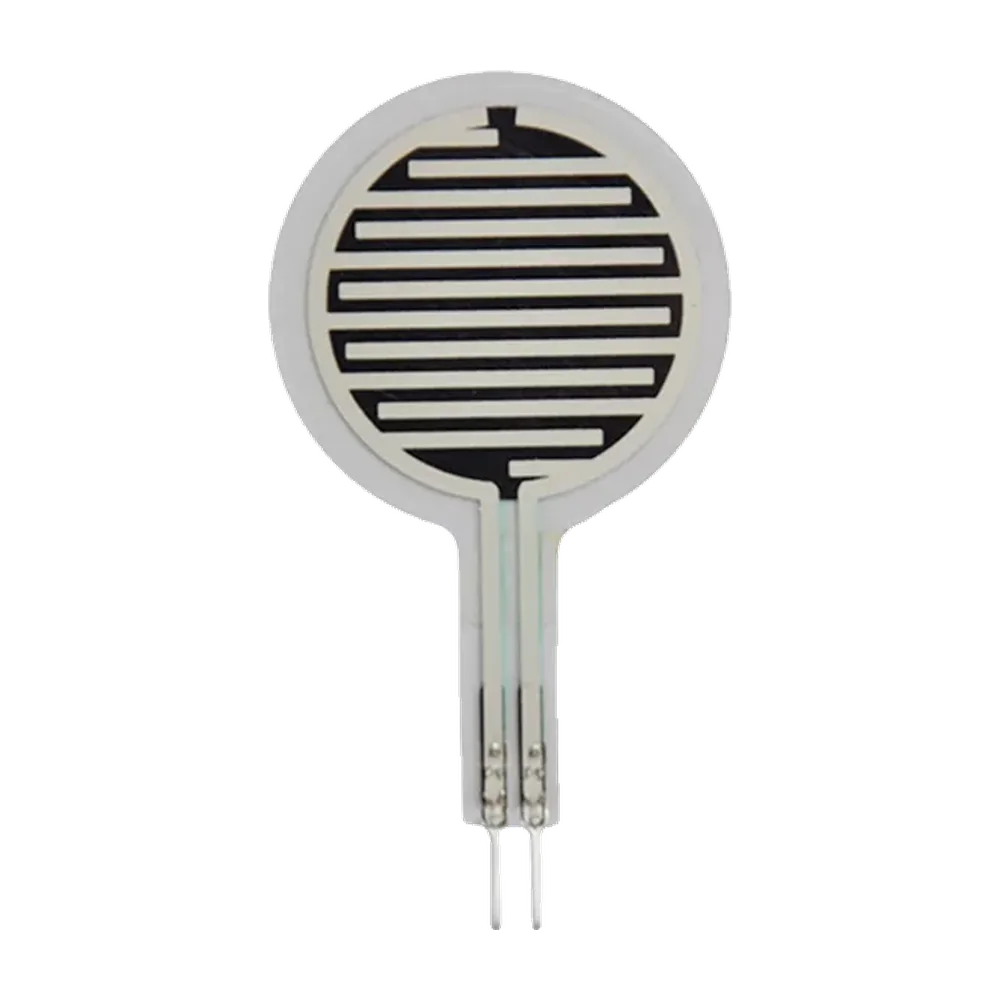
Personalizado automotive seat sensing
Sensor FSR de presion de asiento
Ruta de sensor de presion de asiento sensible a fuerza, acotada de forma conservadora a su principio de sensado confirmado y plan de validacion de asiento.
OEMs que integran nuestras piezas de interfaz





Respuesta rapida
Un sensor FSR de presion de asiento es un diseno flexible de sensor de presion que usa tecnologia de resistor sensible a fuerza cuando el principio confirmado es force sensing resistor. En ese tipo de diseno, la salida del sensor es evaluada por la electronica del vehiculo o asiento para apoyar deteccion de presion de asiento, deteccion de ocupacion, presencia de pasajero o logica de recordatorio de cinturon.
En proyectos JASPER Electronics, no tratamos cada proyecto de ocupacion de asiento como FSR por defecto. Revisamos plano, estructura del cojin, comportamiento de senal objetivo, requisito de fuerza de disparo, plan de conector y necesidades de muestra de validacion antes de recomendar un sensor tipo FSR, un sensor de presion de membrana por contacto u otra estructura flexible.
Texto inicial
JASPER Electronics apoya proyectos personalizados de sensor de presion de asiento automotriz para sistemas de asiento OEM, sistemas SBR, deteccion de presencia de pasajero y aplicaciones relacionadas. Cuando un proyecto especifica tecnologia force-sensing resistor, podemos evaluar una estructura de sensor de presion tipo FSR frente al area sensible, fuerza de disparo, salida electrica, conector y posicion de instalacion requeridos.
Si el principio de sensado confirmado no es FSR, mantenemos la discusion de diseno conservadora. Some seat projects only need an occupied/unoccupied signal, so a contact-type pressure pad or flexible membrane pressure sensor may be the better fit. Other projects may need a more analog pressure-response behavior, in which case an FSR-type design can be reviewed during engineering sampling.
Our role is to help the buyer translate the seat structure and signal requirement into a manufacturable sensor design. We do not claim a final FSR structure until the engineering review confirms the sensing principle, sensor stack, output requirement, and validation direction.
How FSR Seat Pressure Sensing Works
In an FSR-type design, the sensing area is built so applied force can produce a measurable resistive output behavior. The vehicle seat system does not use the sensor as a standalone safety decision; it reads the sensor signal through the connected electronics and interprets that signal according to the customer’s control logic, calibration plan, and validation process.
A simplified FSR-type seat pressure sensing sequence is:
1. Seat load is applied — An occupant, test load, or seat cushion pressure applies force to the defined sensing area. 2. The FSR-type sensing element responds — If the confirmed sensing principle is FSR, the force-sensitive resistor element provides a force-related electrical behavior for the connected circuit. 3. The electronics read the signal — The customer’s ECU, seat module, or test fixture interprets the output according to the agreed signal requirement. 4. The system decides the seat state — The final system may classify the seat as occupied, unoccupied, or within a project-specific pressure condition, depending on the final sensor structure.
JASPER does not publish generic resistance values because FSR-type behavior depends on geometry, sensing area, material selection, circuit design, seat foam compression, installation position, and calibration method. A project that needs only a binary occupied/unoccupied signal may not need an FSR-type structure at all.
FSR vs Contact-Type Seat Sensor
FSR-type and contact-type seat sensors can both be useful in automotive seat pressure projects. The right choice depends on whether the system needs pressure-related output behavior or only a clear switching state.
| Comparison point | FSR-type seat pressure sensor | Contact-type seat sensor |
|---|---|---|
| Sensing principle | Force-sensitive resistor behavior, if the confirmed sensing principle is FSR | Mechanical contact or membrane switch closure under defined pressure |
| Output behavior | Can support force-related signal behavior when designed and calibrated for that purpose | Typically supports occupied/unoccupied or open/closed signal logic |
| Design complexity | Usually requires closer review of sensing area, circuit, response curve, and electronics | Usually simpler when the system only needs a switching threshold |
| Personalizadoization needs | Sensing zone layout, trigger force, output requirement, connector, and validation method need early alignment | Contact location, spacer opening, actuation point, lead routing, and connector need early alignment |
| When to choose | Choose when the seat system needs FSR-type pressure-response behavior and the electronics can read it | Choose when the seat system only needs a stable occupied/unoccupied signal |
We do not treat the contact-type option as a lower-grade solution. For many seat belt reminder or passenger presence projects, a well-designed membrane pressure contact can be simpler to validate, easier to integrate, and enough for the intended signal.
Personalizadoization Options
JASPER reviews each FSR-type seat pressure sensor project from the seat structure outward. The sensor must fit the cushion area, wiring route, connector plan, and the electrical behavior expected by the customer’s system.
| Personalizadoization item | What we review before recommendation |
|---|---|
| Sensing area | Seat cushion position, pressure zone size, and whether one zone or multiple zones are needed |
| Trigger force | The pressure condition that should cause the system to recognize the seat state |
| Output requirement | Whether the project needs binary switching behavior, FSR-type force-related behavior, or another signal plan |
| Flexible sensor shape | Sensor outline, cutouts, corners, tail direction, and fit under the seat cushion |
| Cable length | Harness route from the sensor position to the seat module or connector point |
| Connector | Personalizadoer-specified connector, terminal, pitch, locking method, and assembly direction |
| Integration position | Placement under foam, near the seat cover, in a pressure pad area, or in another confirmed seat structure |
| Validation samples | Prototype quantity, drawing revision, test fixture plan, and sample feedback loop |
For early RFQ review, we prefer to receive a seat drawing, sensor outline target, installation position, signal requirement, connector requirement, and expected test condition. If those details are not ready, we can still start with an application description and mark the open points for engineering review.
Aplicaciones
Seat occupancy detection
An FSR seat occupancy sensor may be reviewed when the project requires a flexible seat sensor that supports passenger presence or pressure-related evaluation. If FSR is not confirmed, JASPER can also review a contact-type or membrane pressure structure for the same seat occupancy goal.
Seat belt reminder systems
Seat belt reminder systems often need to know whether a passenger is seated before the warning logic is active. If the confirmed sensing principle is FSR, an FSR-type seat pressure sensor can be part of that input path. If the project only needs an occupied/unoccupied signal, a contact-type membrane sensor may also fit.
Passenger presence detection
Passenger presence detection can require a sensor that fits under the cushion without changing the seating feel. JASPER reviews the sensor thickness target, wiring route, trigger force, and signal behavior before recommending an FSR-type or non-FSR structure.
Personalizado automotive seat systems
Personalizado automotive seat systems may include bus seats, passenger seats, test seats, specialty vehicle seats, and aftermarket seating modules. The sensing principle should be confirmed by engineering review before the page copy, drawing, quotation, and sample plan describe the design as FSR.
Technical Accuracy Note
FSR must be confirmed during engineering review. A project should not be described as a force-sensing resistor design only because it belongs to the seat occupancy sensor category.
If the project only needs an occupied/unoccupied signal, a contact-type seat sensor or flexible membrane pressure sensor may also fit. That route can reduce unnecessary complexity when analog force-related behavior is not required.
JASPER reviews the drawing, signal requirement, seat structure, sensing area, trigger force, lead route, and connector before recommending the sensor design. The final sensor structure depends on those inputs and the validation sample result.
Preguntas frecuentes
Que es un sensor FSR de presion de asiento?
An FSR seat pressure sensor is a flexible seat pressure sensor that uses force-sensing resistor technology when the confirmed sensing principle is FSR. In an FSR-type design, applied seat pressure is converted into a force-related electrical behavior for the connected electronics to evaluate.
Is every seat occupancy sensor an FSR sensor?
No. A seat occupancy sensor can use FSR, contact-type membrane sensing, capacitive sensing, load-based sensing, or another structure. If the system only needs an occupied/unoccupied signal, a contact-type or membrane pressure sensor may be enough. FSR should be confirmed before the project is described as FSR.
Can JASPER customize an FSR-type seat pressure sensor?
Yes, when the project requirement supports an FSR-type design. JASPER can review sensing area, trigger force, flexible sensor shape, output requirement, cable length, connector, installation position, and validation samples. If FSR is not the right structure, we may recommend another flexible seat pressure sensor design.
CTA
Send JASPER Electronics the seat drawing, target sensing area, signal requirement, connector requirement, and sample quantity through /request-a-quote/. We will review whether an FSR-type seat pressure sensor, contact-type seat sensor, or another flexible membrane pressure sensor structure fits the project.
Related Links
– /products/car-seat-occupancy-sensor/ – /products/car-seat-occupancy-sensor/flexible-membrane-seat-pressure-sensor/ – /products/car-seat-occupancy-sensor/car-seat-pressure-sensor/
Related seat sensor products
Sensor de ocupacion de asiento
Volver al hub de sensores de asiento para comparar las siete rutas.
Back to hub →Sensor de presion de asiento
Pressure-sensing assembly matched to your seat electronics.
Review →Sensor recordatorio de cinturon
Occupancy input paired with belt-buckle status for SBR logic.
Review →Solicitar cotizacion
Envie el plano del asiento, zona de deteccion, ruta del cable y conector.
Start RFQ →Solicitar cotizacion de sensor FSR de presion de asiento personalizado
Envie el plano del asiento, posicion de instalacion, zona de deteccion, ruta del cable, requisito de conector y calendario de muestras. Revisaremos la construccion y responderemos con materiales, enfoque y cotizacion.
Solicitar cotizacion de sensor de asiento