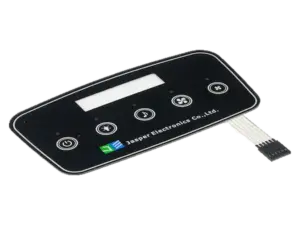
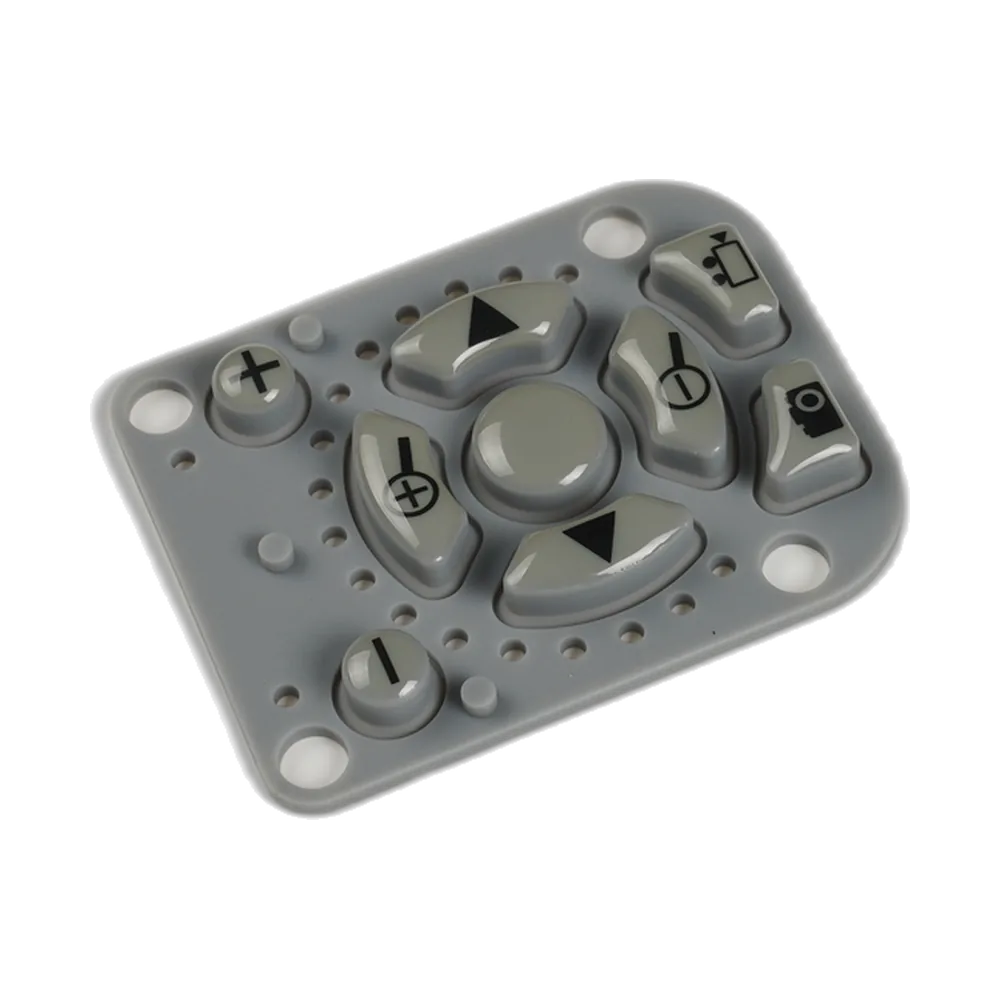
A silicone keypad should not be specified as simply “chemical resistant.” Cleaning compatibility depends on the exact product, concentration, temperature, contact method, contact time, wipe procedure, frequency, and assembly state. The molded silicone may tolerate a fluid while a printed legend softens, a clear coat loses adhesion, an adhesive edge swells, or residue reaches the electrical contact area.
For OEM teams, the practical approach is to convert a general chemical-resistance request into a controlled exposure matrix, then test the production-intent keypad stack before approving a cleaning instruction. If the project is still defining the keypad architecture, start with the custom silicone rubber keypads product family and keep chemical exposure in the design inputs rather than treating it as a final cosmetic check.
Silicone-rubber chemical resistance depends on the formulation and the liquid involved. Crosslink density, filler type and filler content can affect the response. These material-level factors support a project-specific compatibility review; they do not qualify a decorated keypad or complete HMI assembly without testing the actual construction and exposure conditions.
- Define the Cleaner and the Real Exposure Conditions
- Cleaning Condition Template
- Assess the Complete Keypad Stack, Not Only the Silicone
- Match the Test to the Field Exposure
- Define Repeated Wipe or Contact Tests Before Testing
- Inspect Appearance, Dimensions, and Function
- Turn Test Results into an Approved Cleaning Instruction
- What to Send for a Cleaning-Compatibility Review
Define the Cleaner and the Real Exposure Conditions
“Alcohol resistant,” “disinfectant safe,” or “oil resistant” is not enough information for a drawing or RFQ. Two products sold for similar cleaning tasks can use different solvent systems, surfactants, oxidizers, fragrances, oils, or additives. A product formulation can also change over time.
Create one controlled row for every chemical or cleaning product that can reach the keypad. Use the commercial product name and manufacturer when known, plus the current SDS or technical-data revision where available. If a cleaner has not been selected, mark it TBD rather than substituting a convenient laboratory liquid and calling the result final.
Cleaning Condition Template
| Field | What to record |
|---|---|
| Exposure ID | Unique test/specification identifier |
| Product | Commercial cleaner, process fluid, oil, hand-care product, or other declared medium |
| Manufacturer / SDS revision | Supplier identity and document revision if available |
| Purpose | Routine cleaning, disinfection process, maintenance, spill, operator contamination, process exposure |
| Concentration | As supplied or actual use dilution; include dilution water requirements if relevant |
| Temperature | Fluid and/or part temperature during exposure |
| Contact mode | Wipe, spray, splash, droplet, residue, immersion, or another defined condition |
| Contact time per event | Time the surface remains wet or exposed before rinse, wipe, or drying |
| Wipe method | Wipe material, wetness condition, stroke pattern, number of passes, and applied method if controlled |
| Frequency | Events per shift/day/week or another real service interval |
| Rinse / recovery | Rinse fluid, secondary wipe, air dry, forced dry, dwell/recovery time |
| Sequential exposure | Cleaner followed by oil, cleaner after abrasion, mixed products, or other realistic sequence |
| Expected service duration | Project-defined use period or total exposure basis |
| Approval status | Approved, conditional, failed, or TBD |
| Notes | Storage, cleaner substitution rules, edge exposure, enclosure state, operator PPE, or other constraints |
This table is deliberately more detailed than a generic compatibility chart. The same chemical can produce a different result when concentration, temperature, wet time, wiping action, or exposure frequency changes.
Assess the Complete Keypad Stack, Not Only the Silicone
Supplier data for silicone rubber describes a material family. A production keypad is a system. Depending on the design, the exposed and hidden elements may include molded silicone, pigment, printed ink, opaque color layers, laser-opened legends, protective coating, primer, adhesive, conductive carbon contacts, PCB or FPC surfaces, LEDs, connector materials, sealing features, and the enclosure.
JASPER’s existing legend-and-coating guide already treats the surface as a stack and requires cleaner exposure to be defined by product, concentration, contact method, time, frequency, temperature, and recovery. This topic extends the same discipline through the rest of the keypad.
| Element | Why chemical exposure matters | Typical observations |
|---|---|---|
| Molded silicone body | Fluid uptake or chemical attack can change dimensions or mechanical response | Swelling, softening, hardening, cracking, mass/dimension change, slow return |
| Pigment / molded color | Chemical contact can change appearance even when the rubber remains functional | Staining, whitening, color shift |
| Printed legend or color layer | Thin decorative layers may be more vulnerable than the rubber below | Fading, smear, edge lift, loss of readability |
| Protective coating | A topcoat can reduce direct exposure but is not a universal barrier | Tack, gloss change, cracking, delamination, loss of adhesion |
| Primer / adhesive / spacer | Fluids can wick into edges or attack a bonded interface | Edge lift, bond loss, dimensional shift, residue trapping |
| Conductive contact area | Cleaner should not be assumed harmless if it reaches the switching interface | Residue, intermittent contact, resistance change, contamination |
| PCB / FPC / connector | A complete assembly can fail electrically even if the keypad surface looks acceptable | Leakage path, corrosion evidence, continuity or connector issues |
| Seal and housing interface | Real cleaning can drive fluid toward seams under wiping or spray pressure | Wicking, trapped liquid, loss of sealing function |
For modules that include circuit, spacer, adhesive, lighting, or connectors, review chemical exposure on the silicone keypad assemblies boundary rather than qualifying the loose rubber mat and assuming the assembled product behaves the same way.
Match the Test to the Field Exposure
There is no single “chemical resistance test” that answers every keypad question.
For the base elastomer, ISO 1817:2026 describes methods for evaluating vulcanized or thermoplastic rubber before and after immersion in test liquids. ASTM D471 likewise covers comparative evaluation of rubber and rubber-like compositions exposed to liquids and notes that accelerated testing does not automatically correlate directly with service performance because real conditions vary. These methods can help structure material comparisons, but an immersion result alone does not approve a repeated cleaning wipe on a decorated, flexing key.
For components or equipment exposed to accidental fluids, IEC 60068-2-74 provides a fluid-contamination test framework and explicitly distinguishes accidental contact from continuous immersion service. That makes it useful as a reference family for some assembly-level contamination questions, but the relevant specification still has to select the actual fluid, severity, specimen state, and pass criteria.
A useful keypad validation plan therefore separates at least three specimen levels:
- Material or flat coupons for early comparison of rubber, coating, ink, adhesive, or other candidate systems.
- Decorated molded keys to capture curvature, texture, laser edges, flexing, and coating adhesion on the real substrate.
- Production-intent assemblies to capture seams, adhesive edges, conductive contacts, PCB/FPC, connectors, lighting, and enclosure interactions.
A coupon can screen materials. It cannot approve the complete keypad.
Define Repeated Wipe or Contact Tests Before Testing
Repeated cleaning combines chemistry with mechanical action. The wiping material can abrade a legend, push liquid toward a seam, or expose an already worn coating to fresh cleaner. For that reason, the test method should reproduce the field mechanism instead of using an arbitrary cycle count.
A controlled sequence can be written as:
baseline inspection → defined cleaning/contact event → defined rinse/dry/recovery → visual and dimensional checks → functional check → repeat to the project-defined exposure basis → final inspection and comparison with controls
Record the sample revision, material and finish stack, assembly state, cleaner lot or revision where practical, fixture or wipe method, operator or equipment method, temperature, recovery time, and any deviations.
When wear and cleaning interact in service, sequence them that way. For example, if users operate the keys throughout the day and the panel is cleaned afterward, pristine-only chemical exposure may miss a failure that begins at a polished legend edge or a flex-cracked coating. The existing JASPER laser-etched legend and coating guide can be used for the surface-layer portion of that validation.
Inspect Appearance, Dimensions, and Function
A pass/fail decision should not rely on a single visual check. Decide before testing which properties matter to the device and how they will be compared.
| Check category | Possible measurement or observation | Why it matters |
|---|---|---|
| Appearance | Color, gloss, stain, haze, legend readability, edge lift, cracks | A surface can remain functional but fail the product’s visual requirement |
| Dimensions | Key height, critical width, seal feature, local swelling | Swelling can change fit, clearance, or contact timing |
| Mass | Pre/post mass where relevant to an immersion or uptake study | Helps quantify fluid uptake for suitable specimen types |
| Surface condition | Tack, drag, residue, texture, softening | Can affect cleaning, contamination pickup, and operator feel |
| Coating / legend integrity | Adhesion, cracking, delamination, laser-edge condition | Surface failure can accelerate later wear or expose lower layers |
| Tactile behavior | Actuation force, release force, travel, return, sticking | Chemical exposure can become a functional problem even without visible damage |
| Electrical function | Continuity, contact resistance, intermittent switching | Residue or ingress can affect the switching interface |
| Lighting | Day/night readability, haze, light leak, color change | Backlit stacks can fail visually before the rubber fails mechanically |
| Assembly / seal | Edge wicking, trapped fluid, adhesive lift, ingress evidence | Confirms whether the cleaning process is compatible with the real module |
The acceptance limits should come from the product requirement, drawing, validation plan, or approved reference—not from a generic web chart. Keep passed and failed samples traceable, and retain before/after photographs when appearance is part of the decision.
Turn Test Results into an Approved Cleaning Instruction
Testing has limited value if the production drawing, service manual, or customer cleaning instruction still says only “use a mild cleaner.”
For every approved cleaner, document:
- exact product or controlled chemical definition;
- permitted concentration or dilution method;
- maximum or defined use temperature;
- wipe, spray, splash, or other permitted application method;
- wet/contact time;
- wipe/rinse/dry procedure;
- allowed frequency or service basis;
- areas that must not be flooded or immersed;
- prohibited products or chemical families where known;
- whether cleaner substitution requires engineering review; and
- the keypad/material/finish revision represented by the approval.
If a commercial cleaner changes formulation, or if the keypad changes silicone compound, ink, coating, primer, adhesive, cure, contact construction, or assembly boundary, determine whether the existing approval still applies before carrying the result forward.
Cleaning, disinfection, and sterilization should also remain separate requirements. A keypad that survives a cleaning fluid has not automatically been shown to meet a disinfection or sterilization process. If the device has a defined hygiene or sterilization objective, validate that process and its material effects explicitly.
What to Send for a Cleaning-Compatibility Review
For an engineering and sourcing review, provide the keypad drawing or sample, device use, expected quantity, assembly boundary, graphics and coating stack, circuit/contact construction, sealing concept, and the real chemical exposure list. For each cleaner or fluid, include product name, manufacturer, SDS/TDS when available, concentration, temperature, application method, wet time, frequency, rinse/dry procedure, and any sequential exposures.
Also provide the acceptance requirements that matter: appearance, dimensions, key feel, contact resistance, legend readability, adhesion, backlighting, ingress, or other product-specific criteria. Unknown items can be marked TBD so they remain visible instead of being silently assumed.
Use the request a keypad engineering review form to submit the available drawing, sample information, expected volume, environmental requirements, and open items. Chemical compatibility should be approved from representative evidence, not from the word “silicone” alone.
Frequently Asked Questions
Is a silicone keypad resistant to alcohol cleaners?
Some silicone-rubber supplier literature shows relatively good resistance to certain polar liquids, including alcohols, compared with more swelling-prone non-polar hydrocarbons. That does not approve an alcohol cleaner for a finished keypad. The actual silicone grade, pigment, ink, coating, adhesive, contact area, concentration, wet time, temperature, and wipe frequency still need review.
Can a protective coating make any cleaner safe?
No. A coating can reduce direct contact with underlying color or legend layers, but the coating itself has a chemistry, cure state, thickness, flexibility, adhesion interface, and wear path. Cleaner exposure must be validated on the complete production-intent surface stack.
Is an immersion test enough for a wipe-clean keypad?
Usually not by itself. Immersion can be useful for material comparison, but repeated wiping adds abrasion, directional force, edge exposure, drying, and recovery cycles. The final qualification method should represent how the product is actually cleaned.
What if the customer has not selected the cleaner yet?
Record the cleaner as TBD and, if useful, perform clearly labeled development screening with agreed representative fluids. Do not convert a screening fluid into a final approved cleaning instruction until the real product, concentration, and use method are defined.
When should chemical compatibility be retested?
Review retest needs when the silicone compound, pigment, surface preparation, ink, coating, primer, adhesive, conductive contact, circuit finish, enclosure interface, cure process, cleaner formulation, concentration, or cleaning procedure changes. The decision should be based on whether the change can affect the validated exposure path.
Does cleaning compatibility prove disinfection or sterilization compatibility?
No. Cleaning compatibility addresses whether the keypad tolerates a defined cleaning exposure. Disinfection or sterilization adds a different process objective and may use different chemicals, temperatures, dwell times, or equipment. Validate those requirements separately when they apply.
Ready to Start Your Project?
Tell us about your membrane switch, keypad, or graphic overlay requirements. Our engineering team will review your specifications and provide a detailed quote.