A silicone rubber datasheet can help define the thermal capability of the molded material, but it does not automatically define the operating temperature of a finished silicone keypad assembly.
The usable range of the final interface depends on the complete configuration: silicone grade, key geometry, conductive contact, coating or legend system, adhesive, PCB or FPC, LEDs, connector, housing support, preload, sealing, and the electrical function that must still work at temperature. It also depends on duration, number of thermal cycles, powered state, actuation during exposure, and post-test acceptance.
For an OEM project, ask:
What temperature can this specific keypad configuration operate, store, or briefly withstand while still meeting its defined functional criteria?
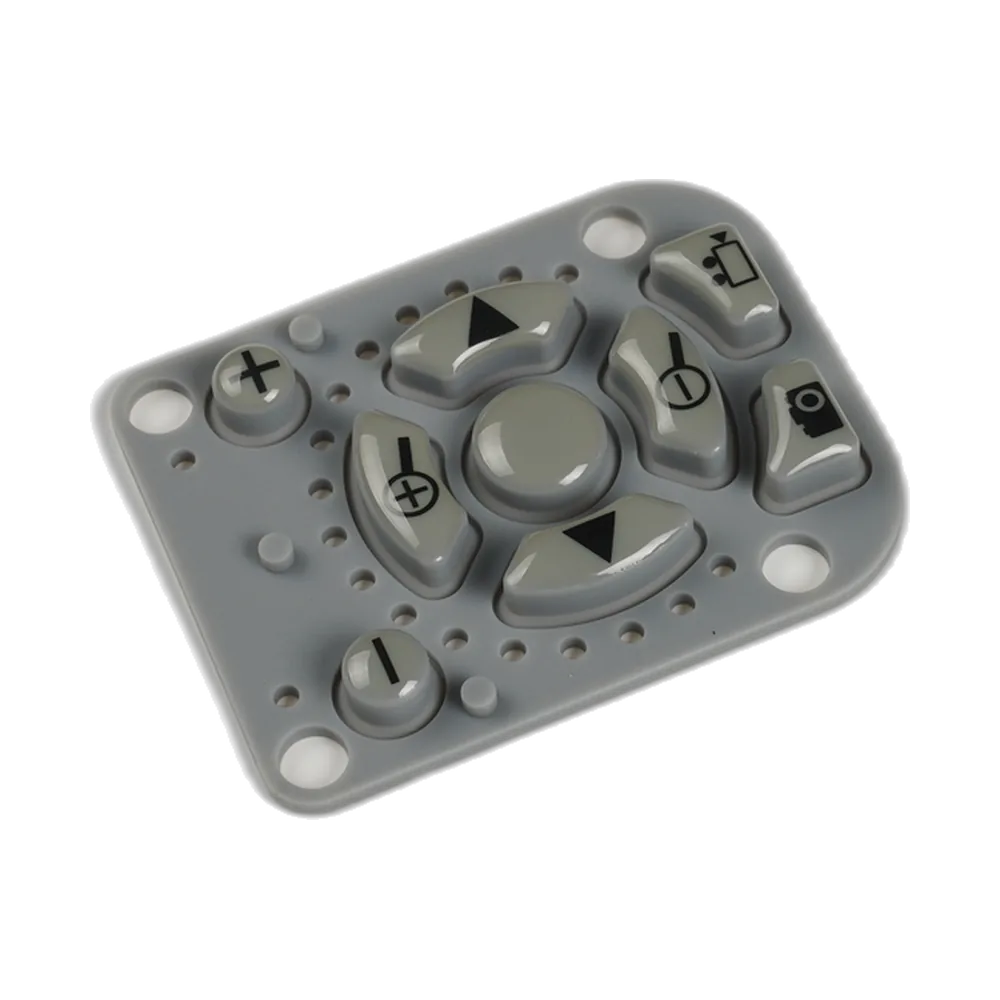
For product-family review, see JASPER’s custom silicone rubber keypads. If the supplied scope includes the circuit, LEDs, connector, adhesive, or other hardware, review it as a silicone keypad assembly, not as a loose molded rubber part.
- Material Temperature Data Is Not an Assembly Rating
- Separate Operating, Storage, and Transient Exposure
- Operating temperature
- Storage temperature
- Transient exposure
- Identify the Temperature-Sensitive Components
- Molded silicone and return webs
- Conductive contacts and circuit interface
- Legends and coatings
- Adhesives and bonded layers
- PCB, FPC, LEDs, connectors, and electronics
- Temperature-Boundary Matrix
- Check Feel and Contact Behavior at Temperature
- Plan Thermal Cycling and Post-Test Inspection
- State the Tested Configuration and Limits
- Review Your Environmental Requirements
Material Temperature Data Is Not an Assembly Rating
Material suppliers themselves show why a single generic number is unsafe.
A published specification for one liquid silicone rubber grade gives a range of −55 °C to +210 °C and recommends heat stabilizers above 180 °C. Those figures apply to that specific material grade and its stated conditions, not to every silicone formulation or a finished keypad. Obtain the selected compound’s data and qualify the complete assembly separately.
Distinguish long-term service, extended high-temperature exposure and short-duration excursions. Formulations can behave differently under these conditions. Evaluate the actual material grade and exposure duration instead of treating a silicone-family description as an installed-keypad temperature rating.
These references are useful for material screening. They do not tell you whether a coated key will still return correctly, whether a carbon contact will meet the circuit threshold, or whether an adhesive, LED, connector, or circuit layer will remain acceptable.
JASPER’s existing Silicone Rubber and Contact Materials page already separates the molded rubber, contact system, coating, circuit interface, sealing, and assembly. Temperature qualification should follow the same layered logic.
Separate Operating, Storage, and Transient Exposure
Operating temperature
Operating temperature means the keypad must perform its intended function at temperature. Acceptance can include force-displacement behavior, key return, electrical closure, indicator function, coating condition, and installed fit.
If the product will be powered, scanned, illuminated, or repeatedly actuated at temperature, the validation sample should reproduce that state.
Storage temperature
Storage is different. The product may be unpowered and unused, and the requirement may be to pass inspection after exposure and recovery.
Define the packed or unpacked state, loose keypad or complete assembly, duration, recovery condition, and required post-storage checks.
Transient exposure
A short excursion should not be written as continuous service. State the peak temperature, permitted duration, number or frequency of excursions, powered state, mechanical preload, and required checks during and after exposure.
Identify the Temperature-Sensitive Components
Molded silicone and return webs
Temperature can change stiffness, return behavior, compression response, and aging. The key must still move through the intended travel and return without creating a new functional failure.
For tactile designs, compare force-displacement behavior at the required temperature using the same fixture, press point, support, speed, and electrical state. JASPER’s silicone keypad design guide already recommends controlling temperature and conditioning when measuring key feel.
Conductive contacts and circuit interface
A carbon pill, printed conductive contact, metal dome, or actuator must be checked as an assembled electrical interface. Depending on the circuit, verify closure point, closed-path resistance or switching threshold, repeatability, open-state recovery, and timing or bounce where relevant.
A contact can remain physically attached and still fail the electrical acceptance rule.
Legends and coatings
A molded silicone body may tolerate a condition that causes a coating to soften, crack, lose adhesion, or change appearance.
Approve the decorative stack as a system: molded surface, preparation or primer, color layers, protective coating, cure, laser process where applicable, and final key geometry. JASPER’s laser legend and coating guide treats coating performance as part of the finished keypad, not as a generic material property.
Adhesives and bonded layers
An adhesive may attach a spacer, circuit, gasket, carrier, or other module part. Review the exact adhesive specification, substrate pair, bond load, dwell time, and temperature condition. Do not replace this with a generic “high-temperature adhesive” label.
PCB, FPC, LEDs, connectors, and electronics
When the keypad is supplied as a module, the electronics may set the practical limit. Review released part-number ratings for the circuit materials, LEDs, resistors, connectors, cable materials, and other mounted components.
Ambient temperature also may differ from the local temperature of powered components because of self-heating.
Temperature-Boundary Matrix
The following is a design-review framework, not JASPER test data.
| Evidence layer | What supplier data may tell you | State to define | Possible assembly limitation | Functional acceptance |
|---|---|---|---|---|
| Molded silicone compound | Grade-specific thermal or aging data | Continuous, storage, peak; free or compressed | Stiffness, return, aging, permanent set | Force, travel, return, dimensions, cracking |
| Conductive contact / actuator | Material or component properties | Actuated/static; powered/unpowered | Contact force, resistance, overlap | Closure, threshold/resistance, repeatability |
| Legend / coating stack | Cure, adhesion, flexibility data | Static heat, flexing, recovery | Softening, cracking, adhesion loss | Appearance, adhesion, readability |
| Adhesive / bonded layer | Product-specific service data | Dwell, substrate pair, bonded load | Creep, edge lift, delamination | Bond integrity, alignment |
| PCB / FPC / LED / connector | Component or laminate rating | Powered state, duty cycle | Lowest-rated component, self-heating | Electrical and optical function |
| Complete assembly | Production-intent BOM and geometry | Operating, storage, transient, cycles | Preload, fit, differential movement | Full key, electrical, visual, fit and seal checks |
The final operating-temperature claim should be based on the tested assembly and its pass criteria, not the highest number found in one row.
Check Feel and Contact Behavior at Temperature
Record a controlled baseline before environmental exposure:
- keypad and assembly revision;
- material, contact, coating, adhesive, circuit, and enclosure state;
- test fixture and support;
- press location and rate;
- force-displacement curve;
- electrical result;
- visual and dimensional condition.
Then repeat the relevant functional checks at the required temperature.
At low temperature, watch for increased or altered actuation force, slower return, rubbing against housing clearances, changed contact behavior, or cracking in non-silicone layers.
At high temperature, watch for force drift, delayed return under preload, coating or adhesive softening, bond movement, contact drift, backlight/electronic changes, or permanent deformation after recovery.
Do not assume the same failure mode will control both ends of the range.
Plan Thermal Cycling and Post-Test Inspection
Steady cold, steady dry heat, and repeated temperature change answer different questions.
IEC 60068-2-1:2025 covers cold tests for components, equipment, and other articles in use, transport, or storage. IEC 60068-2-2:2025 covers dry heat. IEC 60068-2-14:2023 addresses specified changes in ambient temperature. These public IEC descriptions are useful for selecting the test family, but they do not replace a project-defined severity, dwell, transfer/ramp, sample state, cycle count, or pass/fail rule.
Sources:
- IEC 60068-2-1:2025 — Cold
- IEC 60068-2-2:2025 — Dry heat
- IEC 60068-2-14:2023 — Change of temperature
A practical check sequence is:
| Stage | Mechanical | Electrical | Surface / optical | Assembly |
|---|---|---|---|---|
| Before test | Baseline force, travel, return | Baseline closure / threshold | Legend, coating, backlight baseline | Fit, preload, bond edges |
| At low temperature | Actuate representative keys | Verify switching | Check visible damage | Check rubbing and support |
| At high temperature | Repeat force and return | Verify switching and powered functions | Check softening or lift | Check creep and position |
| After recovery | Repeat baseline method | Repeat baseline electrical test | Inspect adhesion and appearance | Check permanent set and bond integrity |
Use the same key groups, fixture, measurement method, and acceptance rules before and after the exposure.
State the Tested Configuration and Limits
A temperature specification is incomplete if it does not identify the tested configuration.
Record:
- loose keypad, decorated keypad, or complete assembly;
- drawing and revision;
- silicone material and contact construction;
- coating, ink, and adhesive specifications;
- PCB/FPC and populated component revision;
- housing, support, fasteners, and compression state;
- operating, storage, and transient conditions;
- exposure duration and cycle count where applicable;
- powered or unpowered state;
- key actuation during exposure;
- recovery condition;
- mechanical, electrical, cosmetic, and assembly acceptance criteria.
This prevents material qualification from being reused as evidence for a later assembly that contains different coatings, adhesives, electronics, or housing constraints.
Frequently Asked Questions
What is the normal operating temperature of a silicone keypad?
There is no single responsible number for all silicone keypads. The molded silicone grade has supplier data, but the finished range also depends on the contact system, coating, adhesive, circuit, LEDs, connector, enclosure, duty cycle, and required function.
Can I use the silicone supplier’s maximum temperature as the keypad rating?
No. A material datasheet supports that material under its stated conditions. It does not automatically qualify the assembled keypad.
Can storage temperature be wider than operating temperature?
It can be, if storage and operation are clearly separated and the post-storage recovery and acceptance checks are defined.
Should key force be measured at the temperature extremes?
Yes when tactile performance at those temperatures matters. Use a controlled force-displacement method with production-intent support and assembly.
Do I need thermal cycling as well as steady high- and low-temperature tests?
Use thermal cycling when repeated temperature change is a credible field condition or a project requirement. Define the cycle profile, specimen state, cycle count, recovery, and pass criteria rather than citing a standard number without a validation plan.
What should I send for a temperature review?
Send the keypad drawing or sample, assembly section, circuit information, environment, operating/storage/transient temperatures and durations, powered state, duty cycle, coatings and adhesives if known, required standards, quantities, and mechanical/electrical acceptance criteria. Unknown items can be marked TBD.
Review Your Environmental Requirements
For a useful engineering and quotation review, submit:
- 2D drawing, 3D model, assembly section, or physical sample;
- device use and environment;
- prototype quantity and expected production volume;
- operating, storage, and transient temperature requirements;
- exposure duration and expected thermal cycling;
- powered, illuminated, and actuation state at temperature;
- circuit carrier, LEDs, connector, and other supplied electronics;
- legend, coating, adhesive, sealing, and cleaning requirements;
- press/release and electrical acceptance criteria;
- applicable customer or industry test requirements;
- unknown requirements marked TBD.
Use the request a keypad engineering review form to send the project package.
Ready to Start Your Project?
Tell us about your membrane switch, keypad, or graphic overlay requirements. Our engineering team will review your specifications and provide a detailed quote.