
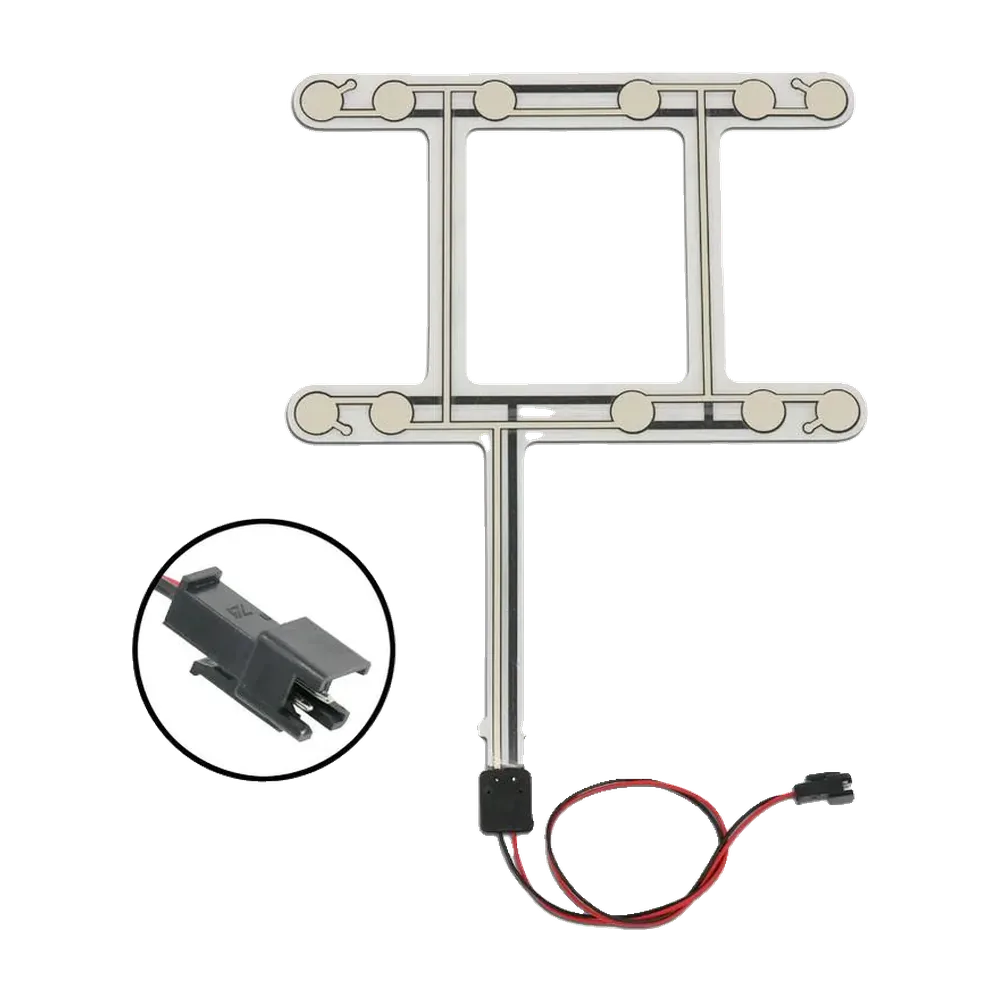
Personalizado automotive seat sensing
Sensor de ocupacion de asiento de pasajero
Personalizado sensor de ocupacion de asiento del pasajeros for front and rear seats, with sensing zone and threshold matched to the seat cushion.
OEMs que integran nuestras piezas de interfaz





Respuesta rapida
A sensor de ocupacion de asiento del pasajero is a pressure-sensitive seat mat or membrane sensor used to detect whether a passenger seat is occupied. En un proyecto de asiento de vehiculo, el sensor suele colocarse bajo la espuma, dentro del stack del cojin, bajo la tapiceria o dentro de un modulo personalizado para que el sistema reconozca presencia de pasajero.
En JASPER Electronics fabricamos disenos personalizados de sensor de asiento de pasajero para proyectos OEM y asientos personalizados. Nuestro trabajo se enfoca en deteccion de pasajero basada en presion, deteccion de presencia de pasajero, soporte de recordatorio de cinturon e integracion de mat de asiento. Definimos area sensible, condicion de disparo, forma del sensor, ruta de cable, conector, ajuste al cojin, proteccion contra humedad y metodo de validacion de muestra desde el plano o muestra del cliente.
Texto inicial
JASPER Electronics fabrica sensores personalizados de presion y membrana para aplicaciones de asiento automotriz. Para un proyecto de sensor de ocupacion de asiento de pasajero, empezamos con el plano del asiento, seccion del cojin, condicion esperada de deteccion, ruta de arnes, requisito de conector y calendario de muestras. The product can also be described as a passenger seat sensor, passenger detection sensor, passenger presence sensor, passenger presence detection sensor, or passenger seat presence sensor.
Apoyamos la evaluacion de proyectos para asientos delanteros de pasajero, traseros passenger seats, commercial vehicle passenger seats, and custom vehicle seats. The same product family can support a seat belt reminder system when the customer’s seat electronics need an occupied-seat signal and buckle status input. JASPER supplies the custom sensing component; the final control logic belongs to the customer’s vehicle or seat system design.
A public reference such as HowStuffWorks’ article on Occupant Classification Systems shows how broad OCS discussions can include pressure sensors, control units, and vehicle-level logic. This JASPER page is narrower. We discuss the custom pressure or membrane seat mat that fits into the passenger seat structure.
Passenger Seat Detection Use Cases
Passenger seat detection is not one package shape. A front passenger seat, rear passenger seat, commercial seat, and custom seating module can place the load path in different areas of the cushion. That is why JASPER treats the sensor outline and sensing zone as project-specific engineering items.
| Use case | Detection objective | Typical seat position | JASPER design focus | Personalizadoer input needed |
|---|---|---|---|---|
| Front passenger seat | Detect whether the front passenger seat is occupied | Under foam, inside cushion, or below upholstery | Sensing zone matched to the main passenger load path | Seat drawing, cushion section, cable exit side, connector data |
| Rear passenger seat | Detect passenger presence on a rear seat location | Rear bench, split rear cushion, or module seat | Personalizado outline for cushion geometry and trim process | Seat layout, target seating zone, harness route, assembly limits |
| Commercial vehicle passenger seat | Support passenger detection in work vehicles, taxi projects, or specialty cabins | Single passenger seat or repeated seat module | Durable routing, clear exit tail, and sample fit check | Seat sample, installation photo, connector requirement, validation plan |
| Personalizado seating system | Detect occupancy in a non-standard vehicle seat | Personalizado cushion, removable module, or project-specific seat | Shape, sensing area, cable route, and protection defined from package limits | 2D/3D drawing, marked photo, expected signal behavior, sample schedule |
The row labels above are application examples, not fixed catalogue models. For each RFQ, JASPER checks the real seat structure before confirming the passenger detection sensor layout.
Pressure-Based Detection Scope
JASPER focuses on pressure-based, membrane-based, and seat mat sensor designs. The passenger presence sensor works by responding to load or contact in a defined sensing area. When a person sits on the passenger seat, cushion compression changes the condition at the sensor area; the confirmed circuit design then provides the signal behavior required by the customer’s seat project.
JASPER does not discuss camera or radar occupant detection. It also does not define vehicle-level occupant classification logic. A public technical reference, Google Patents US20060192417A1, describes a seat occupation detection mat with pressure-sensitive sensor elements arranged between mat films. We use that reference only for general terminology. JASPER’s final material stack, circuit structure, and validation plan must come from the customer’s seat drawing and sample review.
For OEM engineers, the practical question is not only “does the sensor detect a person?” The better question is: where does the passenger load reach the cushion, what area should be sensed, what occupied-seat condition should trigger the output, and where can the cable leave the seat without folding stress?
Personalizadoization Options
JASPER can customize a car passenger detection sensor around the physical seat package. JASPER normally confirms these design items before prototype sampling.
| Project stage | sensing area | trigger condition | sensor shape | cable route | connector | seat cushion fit | moisture protection | sample validation |
|---|---|---|---|---|---|---|---|---|
| RFQ review | Target passenger load zone | Occupied-seat condition described by the customer | Top-view outline or available package area | Exit side and harness direction | Mating connector, pin need, or reference drawing | Foam thickness, trim process, cushion stack | Exposure risk and cleaning condition | Seat sample, marked photo, or drawing review |
| Design proposal | Defined sensing window | Project-specific activation concept without unsupported numbers | Personalizado mat or pad geometry | Tail length, bend area, and strain relief | Connector selection or customer-specified part | Fit check against cushion boundary and forbidden zones | Protection structure selected after exposure review | Prototype layout for approval |
| Prototype check | Confirmed contact area in real seat | Detection behavior checked in the sample seat | Shape revised if the cushion load path changes | Cable exit revised if assembly stress appears | Connector fit checked with harness | Seating surface and cushion compression reviewed | Handling and assembly exposure reviewed | Sample feedback used for drawing revision |
We do not publish one universal trigger value for a sensor de ocupacion de asiento del pasajero. Seat foam density, cushion thickness, upholstery tension, occupant load path, and assembly process can change the useful activation condition. The sample seat is the best validation tool.
Integration Notes
Seat foam compression controls how pressure reaches the sensing layer. A thin cushion, thick foam block, sculpted bolster, or deep upholstery seam can shift the load path away from the expected sensing area. For that reason, JASPER asks for a cushion section drawing or physical seat sample before locking the sensor shape.
The occupant load threshold is a project concept, not a number we should guess on a web page. The customer can define the occupied-seat condition, the validation method, and the system input requirement. JASPER then adjusts the passenger seat detection sensor geometry and contact area through drawing review and sample testing.
Cable exit position deserves early attention. A good sensor mat can still fail a fit review if the tail exits into a hinge, metal bracket, foam groove, or trim pull direction. We normally ask the seat team to mark the harness route, connector location, bend points, and available strain-relief area.
For seat belt reminder use, the sensor de ocupacion de asiento del pasajero can provide the occupied-seat condition while the buckle sensor provides belt latch status. The SBR logic can then compare passenger presence with buckle state according to the customer’s system design. JASPER supplies the custom seat mat sensor; the final warning logic is outside the scope of this product page.
The fastest RFQ package includes 5 items: seat drawing, installation position, target sensing area, cable route, and connector requirement. A physical seat sample helps when the foam compression path is difficult to judge from CAD.
Preguntas frecuentes
Que es un sensor de ocupacion de asiento del pasajero?
Un sensor de ocupacion de asiento de pasajero es un mat de asiento sensible a presion o sensor de membrana usado para detectar si un asiento de pasajero esta ocupado. It is usually installed under seat foam, inside the cushion, below upholstery, or inside a custom seat module, depending on the passenger seat structure.
Un sensor de ocupacion de asiento es lo mismo que una camara o radar de deteccion?
No. This JASPER covers pressure-based passenger detection using a membrane sensor or seat mat inside the cushion. A camera or radar occupant detection system uses a different sensing method and belongs to a different system category. We focus on custom pressure, membrane, and seat mat sensor manufacturing.
Can JASPER customize passenger seat sensors for different seat structures?
Yes. JASPER can customize passenger seat sensors for different seat foam, cushion, upholstery, cable routing, connector, and sensing-zone requirements. We review the customer’s seat drawing or sample, define the sensor outline and cable exit, build prototype samples, and revise the drawing after seat validation.
Request a Passenger Seat Sensor Quote
If your team is developing a custom sensor de ocupacion de asiento del pasajero for an OEM or custom seating project, send the seat drawing, target passenger detection area, installation position, cable route, connector requirement, and sample schedule.
Related Links
| Related page | URL |
|---|---|
| Sensor de ocupacion de asiento | /products/car-seat-occupancy-sensor/ |
| Manta sensora de ocupacion de asiento | /products/car-seat-occupancy-sensor/seat-occupancy-sensor-mat/ |
| Sensor recordatorio de cinturon | /products/car-seat-occupancy-sensor/seat-belt-reminder-sensor/ |
Related seat sensor products
Sensor de ocupacion de asiento
Volver al hub de sensores de asiento para comparar las siete rutas.
Back to hub →Sensor de presion de asiento
Pressure-sensing assembly matched to your seat electronics.
Review →Sensor recordatorio de cinturon
Occupancy input paired with belt-buckle status for SBR logic.
Review →Solicitar cotizacion
Envie el plano del asiento, zona de deteccion, ruta del cable y conector.
Start RFQ →Solicitar cotizacion de sensor de asiento del pasajero
Envie el plano del asiento, posicion de instalacion, zona de deteccion, ruta del cable, requisito de conector y calendario de muestras. Revisaremos la construccion y responderemos con materiales, enfoque y cotizacion.
Solicitar cotizacion de sensor de asiento