
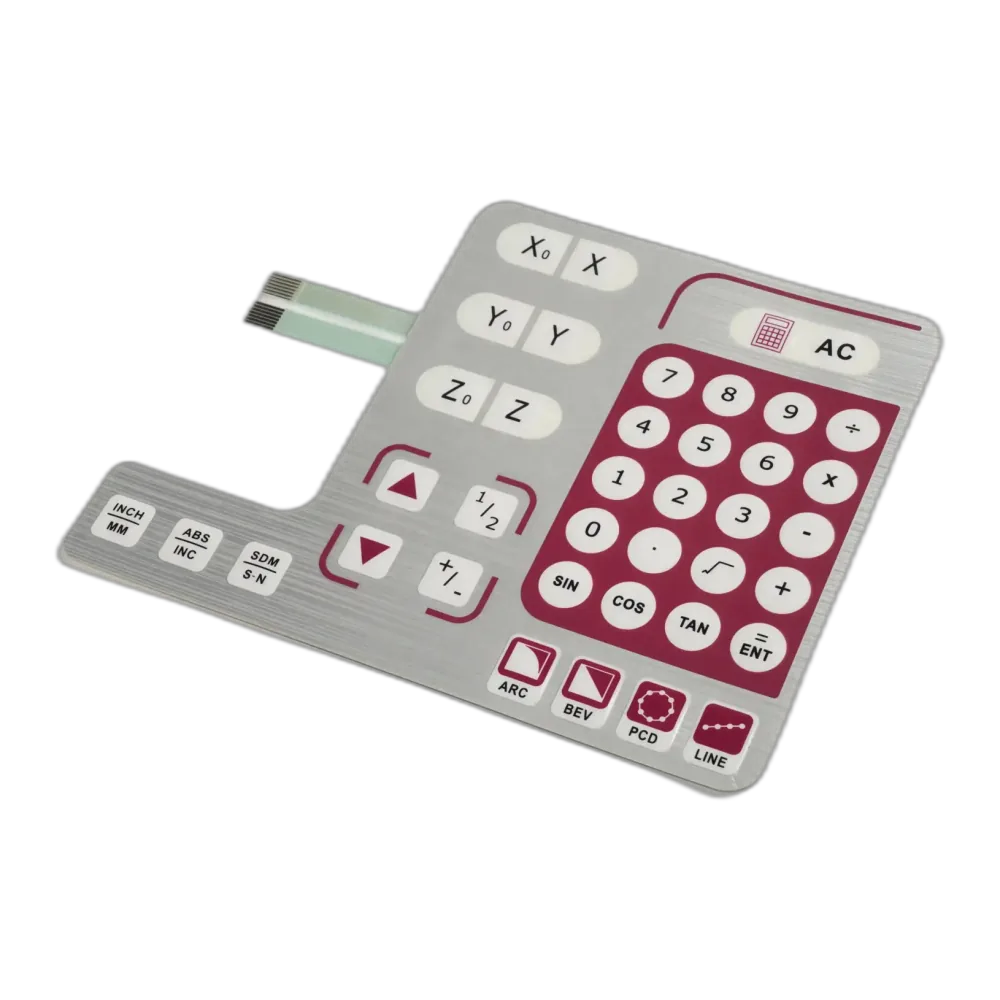
メンブレンキーパッド:印刷操作面とフレキシブル接続部
メンブレンスイッチは、表示されたキー領域を押して装置を操作する薄型の電気スイッチアセンブリです。印刷グラフィック、電気接点、回路層、粘着材を組み合わせて薄い操作面を構成します。キーを押すと回路が閉じ、離すと通常は再び開きます。装置のコントローラがこの変化を検出して、ユーザーの指示に応答します。
見える表面は電源、設定、ナビゲーションなどの機能を示し、その下の回路がスイッチ動作を担います。そのため、メンブレンスイッチは単なる印刷ラベルではなく、機能を持つ入力デバイスです。
設計者や購買担当者にとって、構造を理解することはパネル図面を実現可能な仕様に落とし込む助けになります。このガイドでは、動作原理、材料と回路の選択肢、カスタム設計を依頼する前の検討事項を説明します。
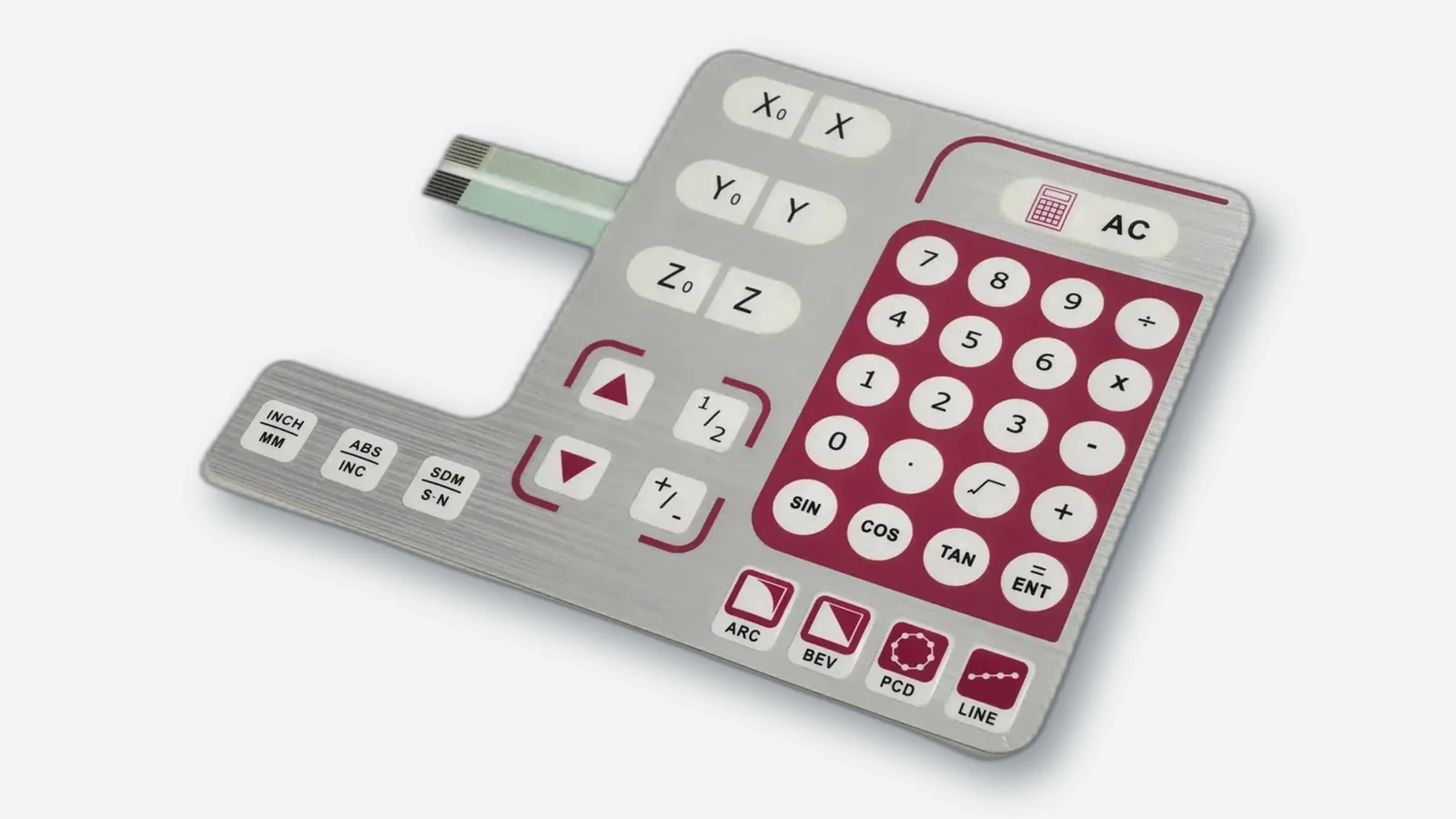
メンブレンスイッチはどのように動作するか
一般的なメンブレンスイッチの多くは、押している間だけ閉じる常開接点を使用します。印刷接点式では、スペーサーが導電面同士を離して保持します。柔軟なキー領域を押すと両面が接触し、導通します。力を除くと再び離れます。通常は機械の電力負荷を直接開閉するのではなく、低電圧・低電流の制御信号を提供します。
クリック感のあるメンブレンスイッチ
タクタイルメンブレンスイッチは、押した際に明確なクリック感を生じます。一般的にはステンレス製のメタルドームまたは成形ポリエステルドームがこの感触を生みます。メタルドーム構造では、ドームが変形して回路接点を橋絡し、離すと元の形状に戻ります。この触覚応答が操作の手応えを伝えます。
クリック感のないメンブレンスイッチ
ノンタクタイルメンブレンスイッチは、明確なクリック感なしに接点を閉じます。装置側で光、音、画面表示により入力を確認できます。タクタイル、ノンタクタイルのどちらも制御入力に使えます。違いは操作感であり、電気的機能の有無ではありません。
電気信号と装置コントローラ
接点が提供するのは入力信号であり、通信インターフェースではありません。検出回路を備え、接点の閉成を解釈し、装置の動作を決めるのはコントローラです。印刷キーパッド単体がUSBやCANなどのデジタルプロトコルを出力するわけではなく、追加の電子回路が必要です。
許容検出電圧・電流、閉回路時の最大抵抗、開回路時に必要な絶縁を指定してください。これらはドームだけでなく、テール、印刷配線、接点、コネクタを通る経路全体に適合する必要があります。LEDの電源と制御接続も別途回路定義が必要です。
マトリクス配線とゴースト入力
マトリクスはキーを行と列の間に接続し、コントローラが交点を識別する方式です。例えば4 × 4マトリクスは、照明などの追加接続を除けば、8本の行・列線で16個のキー位置を扱えます。接続本数を減らせる一方、走査ロジックと複数キー操作への対応が必要です。
走査方式によっては、複数の同時押しが曖昧な電流経路を作り、押していないキーを検出することがあります。これがゴースト入力です。マトリクス、走査方法、必要な分離ダイオードを選ぶ前に、許容する同時押しを定義してください。曖昧な組み合わせを拒否するファームウェアと、その組み合わせを正しく扱えるハードウェアは同じではありません。
接点のチャタリングと除去処理
接点が閉じる際、安定するまで短時間の開閉を繰り返すことがあります。チャタリング除去がなければ、1回の押下を複数回と数える可能性があります。除去処理はコントローラやインターフェース回路が担い、印刷グラフィックが提供するものではありません。
接点挙動を測定し、短押し、長押し、解放への必要な応答を保ちながらチャタリングを排除する検出時間を設定します。他製品の固定遅延をそのまま流用することは、受入試験にはなりません。

メンブレンスイッチを構成する層
すべての設計に共通する層数はありません。印刷接点型、メタルドーム型、PCBを用いる操作部では構成が異なります。次の表は一般的な構成要素を示すもので、全製品に必須の積層構成ではありません。
| 層・構成要素 | 主な役割 |
|---|---|
| グラフィックオーバーレイ | 文字、記号、色、ブランドを表示します。エンボスキーや透明窓を含む場合があります。 |
| オーバーレイ用粘着層 | 印刷表面を下層に接合します。 |
| ドーム保持層または上部接点層 | 設計に応じて、タクタイルドームを位置保持するか可動接点を担います。 |
| スペーサー | 接点間隔を維持し、スイッチ動作の空間を確保します。 |
| 回路層 | キー、表示部、電気接続部の間に導電経路を形成します。 |
| 背面粘着層 | アセンブリを取付面に固定します。 |
| 追加の支持層・機能層 | 必要に応じて、剛性支持、照明、電気的シールドを提供します。 |
具体的な配列は、スイッチ機構と指定された追加機能によって変わります。
各層は一体として機能しなければなりません。オーバーレイ、スペーサー、支持面が完成キーの感触に影響するため、ドームの選定だけでは全体の操作力は決まりません。フレキシブルテールでも基板側端子でも、接続部には筐体内の空間が必要です。
図面には、ドーム、LED、窓、補強部周辺の局所的な厚さ変化も示します。公称総厚だけでは、筐体がキーを誤って押したり動作を妨げたりしないか判断できません。機械設計でシール面、部品スペース、コネクタ出口を確保してください。
- グラフィックオーバーレイ
- オーバーレイ粘着層
- ドーム保持層と金属ドーム
- スペーサーと動作空間
- 接点を備えた回路
- 背面粘着層
メンブレンスイッチに使われる材料
材料ごとに役割が異なります。オーバーレイは使用者と環境に接し、回路は信号を伝え、粘着材は各層と筐体をつなぎます。ポリマー名だけではなく、使用する層における具体的な材料グレードを比較してください。
ポリエステルとポリカーボネートのオーバーレイ
ポリエステル(PET)とポリカーボネート(PC)は、グラフィックオーバーレイの材料として広く使われます。どちらも印刷グラフィック、窓、各種表面仕上げに対応できます。選定では材料名だけでなく、キー部の繰り返し屈曲、外観、洗浄剤への曝露、必要な仕上げを考慮します。
ハードコート付きフィルムは、耐摩耗性、耐薬品性、各種テクスチャを提供できます。ただし性能はフィルムとコーティングの具体的な組み合わせに依存します。屋内パネル用材料を、長期屋外使用に自動的に適用してはいけません。
| 材料と役割 | 選定の目安 | 確認事項 |
|---|---|---|
| PETオーバーレイ | 繰り返し曲がるキー領域、テクスチャ付きまたは透明の保護面 | 厚さ、エンボス形状、ハードコート、洗浄適合性、指定されたUV曝露 |
| PCオーバーレイ | 選定グレードと仕上げが適する透明窓・グラフィック | 実際の屈曲負荷、耐薬品性、傷防止、屋外適性 |
| 熱安定化されたPET回路フィルム | 薄型積層キーパッドの印刷導電パターン | インク密着性、印刷・硬化条件との適合、寸法安定性、部品接合工程 |
| ポリイミドFPC基材 | エッチング銅配線とはんだ接続 | 屈曲部、カバーレイ、補強板、部品支持、コネクタ接続仕様 |
PETとPCはいずれもハードコート付き操作面フィルムとして入手できますが、材料名だけで特定の屋外性能や洗浄耐性が保証されるわけではありません。熱安定化PET回路フィルムやポリイミドFPC基材と、表面オーバーレイの材料を混同しないでください。
表面仕上げと窓
操作領域と表示窓では、必要な光学特性が異なる場合があります。テクスチャ仕上げはキー周辺に適する一方、表示窓ではより高い透明性が必要なことがあります。照明部では、直接透過させるのか、輝点を抑えるため拡散させるのかを指定します。
代表的な使用条件で点灯サンプルを確認してください。窓の透明性、インク処理、LED配置は、使用者が見る明るさと均一性に影響します。
導電材料
印刷フィルム回路では一般に、銀導体を使用し、選択した接点部分にカーボンを併用する場合があります。FPCやリジッドPCBでは銅導体を使用します。配線、部品接続、機械的な形態から適切な回路技術を選定します。
粘着材
感圧粘着材は内部の各層を接合し、スイッチを装置に固定します。実際の接合面、その凹凸と表面エネルギー、環境曝露に基づいて選びます。平滑な金属面で機能する粘着接合が、凹凸のある樹脂筐体でも同じ性能を示すとは限りません。
メンブレンスイッチの主な種類
種類は、独立した設計項目として捉えると整理できます。回路、操作感、照明、保護、組込みをそれぞれ選び、その組み合わせを限られた空間で製造・取付できるか確認します。
メンブレンスイッチは回路構造、クリック感、シール、照明などで分類できます。分類は重なり合うため、1つのアセンブリにFPC回路、タクタイルキー、周囲シール、LEDバックライトを組み合わせることもあります。
| 分類項目 | 主な選択肢 | 選定時の問い |
|---|---|---|
| 回路構造 | 銀印刷/PET、銅FPC、リジッドPCB | どのような配線、部品接合、機械的支持が必要か。 |
| クリック感 | メタルドーム、成形ポリエステルドーム、ノンタクタイル接点 | 操作者にどのような感触を与え、入力をどう確認するか。 |
| 照明 | 直接LED、LED+LGF、EL、光ファイバーによる配光 | どの領域を照らし、どれだけの空間と電源を使えるか。 |
| 環境・電気的保護 | 周囲シール、筐体シール、EMI/RFI/ESD対策 | 装置に取り付けた状態で、どの曝露と電気的妨害に耐える必要があるか。 |
| 機械・電子部品の組込み | 平面オーバーレイ、シリコーンハイブリッド、背板、コネクタ、内蔵部品 | どの部品をキーパッド側に含め、どれを装置側に残すか。 |
これらの名称は置き換え可能なものではありません。防水FPCスイッチは、タクタイルかつLEDバックライト付きにもできます。「カスタム」は仕様を決める過程を示し、別の電気的スイッチ機構ではありません。
銀印刷フレキシブル回路のメンブレンスイッチ
銀印刷フレキシブル回路のメンブレンスイッチは、柔軟なポリエステル上に銀導電インクを印刷します。薄さと経済的な生産を重視する比較的シンプルな操作パネルで一般的です。ただし、回路の複雑さ、使用条件、電子部品の接合方法によって適否が変わります。
FPCメンブレンスイッチ
FPCメンブレンスイッチは、一般にポリイミドフィルム上の銅導体を用いたフレキシブルプリント回路を使用します。細かな配線や部品のはんだ接続に対応し、コンパクトな操作部で複雑な回路が必要な場合の候補になります。柔軟であっても、曲げ位置、コネクタ支持、組立制約の確認は必要です。
PCBメンブレンスイッチ
PCBメンブレンスイッチは、スイッチアセンブリの一部にリジッドプリント基板を使用します。基板は機械的支持を担い、部品やコネクタを実装できます。剛性のある回路基盤が有利な場合に適しますが、厚さの余裕と取付構造を確認する必要があります。
メタルドーム、ポリエステルドーム、ノンタクタイル構造
メタルドーム構造は、独立したばね金属部品でクリック感と電気接点を提供します。明確な手応えが操作確認を助ける場合に有効です。ドーム位置、保持方法、接点形状、支持層の管理が必要です。
ポリドームは成形されたポリエステルドームであり、印刷キー表示を盛り上げただけのものではありません。導電型では成形フィルムの印刷接点が回路を閉じます。柔らかなクリック感や別置きドーム部品の削減につながる場合がありますが、金型、成形形状、使用中の感触変化を評価する必要があります。メタルドームとポリドームはいずれも、タクタイル方式の選択肢です。
ノンタクタイルの印刷接点構造は、スナップ機構を使用しません。光、音、画面による確認で十分な操作部に適しています。静かな操作面にできますが、入力を受け付けたかを使用者が把握できる必要があります。「ノンタクタイル」と「静電容量式」は同じではありません。
防水・密閉型メンブレンスイッチ
防水メンブレンスイッチでは、シール設計全体を検討する必要があります。連続した表面オーバーレイは前面を保護しますが、露出した端部、開口、接続部は浸入経路になり得ます。周囲シール、適切な粘着材、筐体設計を一体で考えます。
IP等級は、指定条件における筐体の侵入保護を示します。メンブレン表面があるだけで等級を仮定してはいけません。想定曝露を定義し、実際の取付状態で対象アセンブリの保護を確認します。
シールド付きメンブレンスイッチ
シールド構造では導電シールドと、装置の接地・シャーシ設計に対応した明確な接続を追加します。設計に応じて電磁干渉(EMI)、無線周波干渉(RFI)、静電気放電(ESD)に対応します。終端接続を指定していないシールド要求は不十分です。
シールド範囲、表示開口、テール経路、接続の連続性をコントローラ回路と併せて検討します。装置に組み込んで評価してください。シールド層だけでEMC適合が成立するわけではありません。
シリコーンゴム・ハイブリッドキーパッド
成形シリコーンのキートップやカバーを、メンブレン回路とタクタイル層の上に配置できます。立体キーや密閉形状の前面と、選んだ電気構造を組み合わせる方式です。グリップ、キー分離、包み込むカバーが重要な場合に役立ちますが、成形形状、金型、力の伝達について追加検討が必要です。
すべてのシリコーンキーパッドがメンブレンスイッチではありません。独立したゴムキーパッドが導電ピルでPCBに接触する場合もあります。見積もり範囲がゴム成形品のみか、回路を含むか、積層・取付済みの完成操作部かを確認してください。
バックライト付きメンブレンスイッチ
バックライト付きメンブレンスイッチは、キーの文字や選択した領域を照らします。キーの横に小さな状態表示灯を付けることとは異なります。LEDは、狭い領域を直接照らすほか、導光フィルムと組み合わせて広い領域に光を配ることができます。LGFは光を分配する部材であり、独立した光源ではありません。
ELバックライトではエレクトロルミネッセンス発光層を使います。薄く広い面を照らせますが、適合する駆動回路が必要です。技術名だけで選ばず、均一性、厚さ、電源、想定使用条件を含めた照明システム全体で比較します。
| 照明方式 | 適する用途 | 主なトレードオフ・確認点 |
|---|---|---|
| 直接LED照明 | 個別の表示灯や小さな照明領域 | 配置、拡散、輝点、駆動電流、部品支持 |
| LEDと導光フィルム(LGF) | 奥行きが限られた前面で、指定した文字や記号へ配光 | 光の取り出し、マスク、光学的分離、LED結合空間 |
| エレクトロルミネッセンス(EL)発光層 | 薄型で広く光を分布させる照明領域 | 対応ドライバ、電源組込み、経時的な輝度変化、電気ノイズ |
| 別光源を使う光ファイバーパネル | 特殊な配置や離れた光源からの結合が有効な設計 | 光源結合、ファイバー経路、積層、均一性、供給対応 |
照明は層構成、電源要求、見た目を変えますが、基本的な接点原理は変えません。
光ファイバーバックライトは、別の光源からの光をファイバーで分配します。これも配光方式であり、自力で発光する層ではありません。既存設計では供給が継続する交換品とLED/LGF代替案を比較し、新規設計では光学構成全体と供給支援を確認してから指定します。
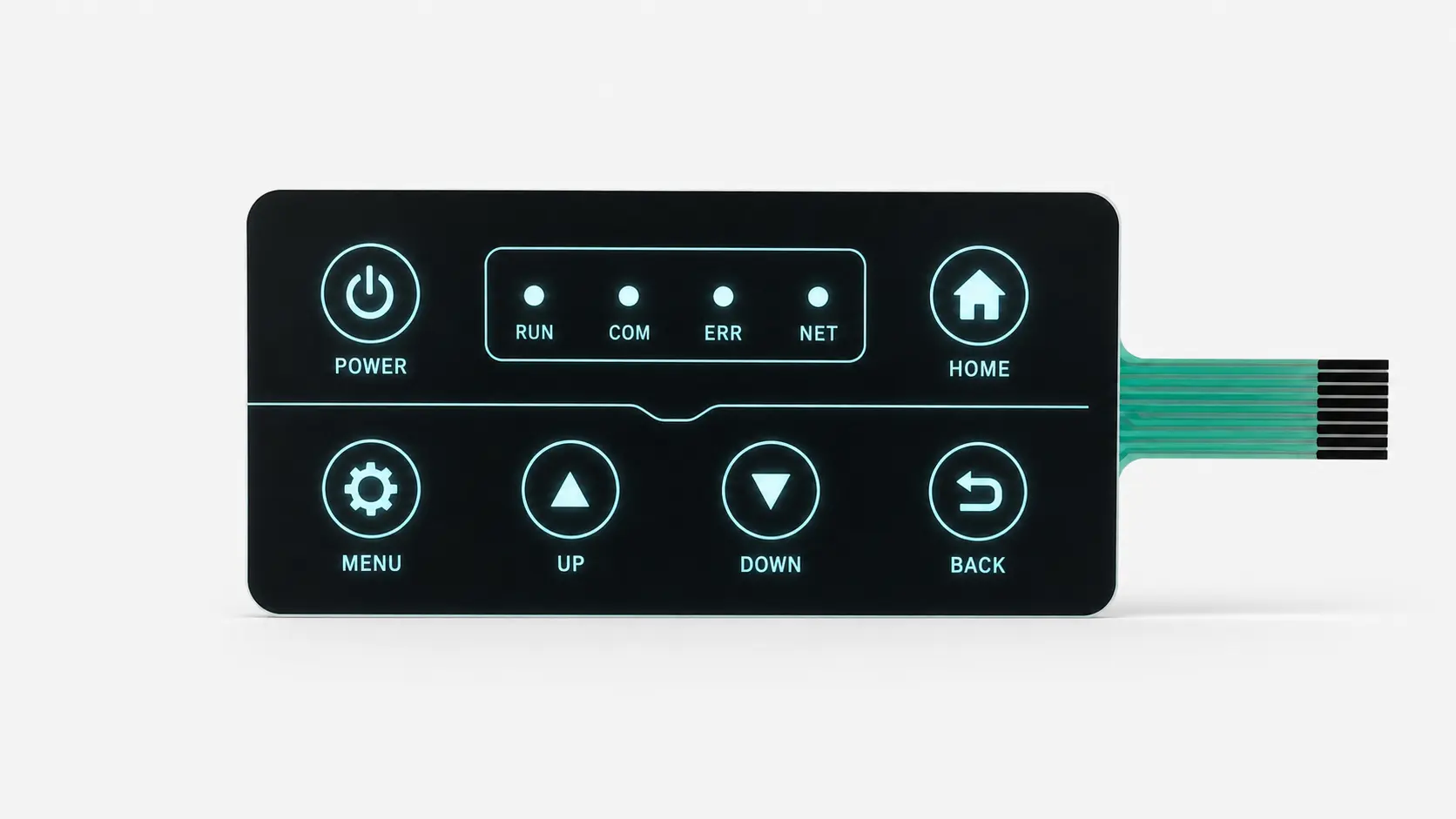
一体化アセンブリと関連するタッチ技術
メンブレンスイッチは、剛性背板、表示窓、コネクタ、抵抗、LED、追加回路などと一緒に供給できます。これらはアセンブリの付加機能として定義してください。コントローラの組込みは電気インターフェースと試験範囲を変えますが、単なる接点シート自体をデジタル通信デバイスにするものではありません。
静電容量式操作部は静電容量の変化を検出するため、適切な検出回路が必要です。センサーの設計・調整ではカバー厚、湿気、手袋を考慮します。抵抗膜式タッチスクリーンは、圧力で接触する抵抗層を使ってタッチ位置を測定します。
これらは関連するHMI技術であり、本ガイドで扱う機械的に作動するメンブレンスイッチの下位分類ではありません。同じ前面アセンブリに組み込めますが、検出、応答、回路、検証の要件は異なります。
メンブレンスイッチの利点と制約
主な利点
メンブレンスイッチは、印刷表示と電気入力をコンパクトにまとめられます。薄型のため奥行きが限られた装置に適し、形状、色、文字を機能に合わせて調整できます。連続した前面は、多数の独立キーの周囲を清掃するよりも日常の拭き取りを容易にします。
設計に応じて、タクタイルキー、窓、表示灯、バックライト、シールドを組み込めます。各機能を独立した部品として扱うのではなく、前面機能をまとめて検討できます。
設計上の制約
一般にキーのストロークは短く、多くの独立押しボタンとは操作感が異なります。固定された印刷レイアウトは、ソフトウェアで操作項目を変える画面ほど柔軟ではありません。照明、支持部、部品を追加すると厚さと複雑さが増すこともあります。
密閉性、耐薬品性、耐久性は、すべてのメンブレンスイッチに自動的に備わる特性ではなく、検証すべき設計要件として扱います。基本構造が単純に見えても、材料適合性と試作評価は重要です。
保守性と故障の影響
接着された多層構造では、接点やLED単体の修理が難しい場合があります。交換単位、テールコネクタへのアクセス、交換用グラフィックや部品の入手性を考慮してください。筐体分解が保守費用の大半を占めるなら、部品単価の安さだけでは有利になりません。
通常の操作入力と安全関連機能も区別します。「STOP」と表示されたキーだけで、スイッチ、コントローラ、機械が検証済みの非常停止システムになるわけではありません。
メンブレンスイッチと機械式スイッチの違い
ここでいう「機械式スイッチ」は独立した押しボタンやキースイッチを指します。通常のメンブレンスイッチも機械的な動きで作動します。したがって、比較すべきなのは「動く方式」と「動かない方式」ではなく、操作インターフェース全体の構成です。
| 検討項目 | メンブレンスイッチの操作面 | 独立押しボタンの操作面 |
|---|---|---|
| 前面 | 連続した印刷オーバーレイを使うことが多い | パネル内に独立した操作子を配置 |
| キーストローク | 通常は短い | さまざま。長いストロークも選択可能 |
| グラフィック | オーバーレイに一体化 | 別の文字板やラベルが必要な場合がある |
| 密閉性 | オーバーレイ、端部、取付方法に依存 | 各スイッチとパネル取付構造に依存 |
どちらが常に優れるということではありません。必要な操作感、パネル空間、清掃性、取付方法を比較してください。
切替メニューや複雑な情報表示が中心なら、タッチスクリーンも選択肢です。二者択一ではなく、物理キーと組み合わせることもできます。
電力回路を直接遮断する必要がある場合は、適切な定格の開閉機器とシステム構成を選んでください。低電流のメンブレン入力はその制御指令を出せますが、前面の見た目が負荷遮断能力を証明するわけではありません。
メンブレンスイッチの使用分野
装置に明確な操作項目があり、コンパクトで表示付きの入力面が必要な場面に適します。仕様を決めるのは用途です。業界名より、清掃、手袋、照明、水、振動、不特定多数の利用条件が重要な場合があります。
医療機器と実験室機器
診断装置、モニタリング機器、実験室の操作部などに使われます。頻繁に清掃する装置では「清掃しやすい」だけでなく、洗浄剤、曝露条件、必要な表示の読みやすさを明確にし、材料を評価できるようにします。
医療機器
モニターや診断装置では、通常の入力と誤操作時の影響が大きい入力を区別します。キー間隔、表示、クリック感、装置側の応答を確認します。清掃性と使いやすさは、指定の手袋・清掃手順で完成パネルを評価する必要があります。
拭き取り消毒と蒸気滅菌は異なる曝露です。オートクレーブ処理が必要な部品では、すべてのフィルム、粘着材、コネクタ、実装部品について、その処理に対応する構造と検証計画が必要です。拭ける表面だけでは十分ではありません。
実験室機器
分析装置、はかり、卓上機器では、操作部周辺の実際の試薬、こぼれる場所、洗浄剤を把握します。タクタイルキー、透明表示窓、必要な表示灯に合う回路を組み合わせる方法があります。新品だけでなく、代表的な薬品曝露後の表示、キー動作、接着状態を確認してください。
産業用制御装置と計測機器
産業機器ではモード選択、設定入力、所定の操作にメンブレン操作面を使います。汚染物、温度、取付空間、操作者の使い方を設計レビューに含めます。手袋を使う用途は図案だけで判断せず、完成試作品を代表的な手袋で操作して評価します。
業務用・民生用機器
家電や業務機器でもメンブレンキーパッドが使われます。固定された操作項目を、なじみのある記号やブランド表示と1枚の前面にまとめられます。ただし実際の使用条件に合わせる必要があり、キー配置が似ているだけで屋内保護機器と屋外入退室パネルを同じ仕様にはできません。
用途別の構成・検証マトリクス
以下は技術的な選定例であり、固定の処方や、1社がすべての用途を供給するという主張ではありません。各構成案を装置の実際の要求と照合する必要があります。
| 装置の例 | 主な設計上の懸念 | 評価する構成 | 検証の優先事項 |
|---|---|---|---|
| 医療モニター・診断装置 | 頻繁な清掃と曖昧さのない入力 | タクタイルキー、見やすい窓、適合するオーバーレイとシール | 指定清掃サイクル、手袋、操作確認、電気動作 |
| 実験室の分析装置・はかり | 試薬の飛散と表示の視認性 | 薬品に適合する前面フィルム、保護窓、適切なPET/FPC/PCB回路 | 実際の試薬接触、読みやすさ、キー応答、粘着状態 |
| 産業機械の操作部 | 手袋、油、汚れ、振動 | 明確なクリック感、周囲シール、テールと部品の支持 | 手袋操作、汚染物曝露、振動、取付後の操作感 |
| 試験・計測機器 | 表示器と敏感な回路の近くにある小型操作部 | 微細配線FPCまたは支持されたPCB、表示灯、必要なシールド | 電気的しきい値、信号干渉、窓の透明性、コネクタ適合 |
| 家電 | 蒸気、油脂、繰り返し清掃、限られた奥行き | 清掃可能なオーバーレイ下の印刷PET回路など適合する回路 | パネルの熱・湿度、洗浄適合性、繰り返し動作 |
| 業務用POS端末 | 繁忙環境での繰り返し入力と清掃 | 明確なキー区分、読みやすい表示、適切なクリック感 | 繰り返し使用パターン、摩耗、清掃、接続信頼性 |
| キオスク・自動販売機 | 不特定多数の操作、液体こぼれ、周囲光の変化 | 保護されたキーパッド、端部シール、有効な場合の照明 | 液体経路、衝撃・摩耗、視認性、保守アクセス |
| フィットネス機器・トレッドミル | 汗、清掃、運動中の操作 | 大きく識別しやすい操作部、クリック感、確実な固定 | 必要に応じた濡れた指・手袋、誤押下、振動、使用頻度 |
| 美容・エステ機器 | 施術剤、頻繁な清掃、モードの識別 | 適合する表面材料、操作項目の区分、明確な状態表示灯 | 指定クリーム・消毒剤、残留物、表示コントラスト、入力確認 |
| 船舶・屋外の操作部 | 日光、塩分、雨、パネル端部の水 | 屋外適性を確認した材料、全体の密閉、接続支持 | UV・風雨、塩分条件、侵入、昼夜の視認性 |
| プール・スパ設備 | 継続する湿気、水処理薬品、温暖な環境 | 密閉前面または保護端子付きシリコーンハイブリッド | 指定水質、結露、熱曝露、取付状態の密閉性 |
| 防犯・入退室操作部 | 繰り返し数値入力、摩耗、入口の風雨 | 耐摩耗表示、タクタイルキー、定義された同時押し動作 | 摩耗後の読みやすさ、許容組合せ、ESD、設置環境 |
| 車両の補助機器 | 振動、温度変化、手袋操作 | 支持された回路・コネクタ、タクタイル操作、適切な前面シール | 車両取付荷重、温度サイクル、操作アクセス、電気的妨害 |
| 農業機械 | 粉じん、泥、薬品、日光、洗浄水 | 大きく見やすい操作部、適合材料、密閉取付・接続 | 実際の薬品、洗浄手順、振動、作業手袋での操作 |
医療、産業、家電、フィットネス、船舶、スパの例は、文献にあるメンブレンキーパッド用途を基にしています。構成と試験の欄はその設計原則を条件に当てはめたもので、性能等級ではありません。
操作の目的にインターフェースを合わせる
固定された識別しやすい操作部が有効なら、メンブレンキーパッドを検討します。公共キオスクで高い耐衝撃性が必要なら、保護パネルや別の操作子構造を評価します。画面の機能が頻繁に変わる場合、固定印刷表示には補助画面が必要になることがあります。
トレッドミル、機械、車両機器など、意図しない作動が問題になるシステムでは、操作系と保護機能全体を評価します。タクタイルメンブレンスイッチの選定は、その設計作業の一部にすぎません。
メンブレンスイッチの製造方法
製造は、寸法、図案、回路要件、積層案の技術レビューから始まります。印刷フィルム方式では、グラフィックと導電パターンをそれぞれの材料に印刷し、必要に応じて硬化させます。
各層を所定形状に切り、部品を配置し、位置合わせして積層します。印刷キー領域が接点、ドーム、窓と一致する必要があるため、位置精度が重要です。FPCやPCBを使う設計では、銀印刷だけに頼らず、それぞれの回路製造・部品実装工程を使います。
生産検査では通常、外観、寸法、導通、指定キーやLEDの動作を確認します。認定評価では繰り返し操作や環境曝露も扱う場合があります。全数で行う検査と、検証時にサンプルで行う評価を合意してください。
製造・受入の確認項目
| 工程 | 管理する内容 | 有用な受入記録 |
|---|---|---|
| 設計リリース | 図案、ピン配列、積層、公差、部品表 | 重要寸法と試験要求を含む承認済み改訂版 |
| 受入材料 | フィルム・粘着材のグレード、回路と部品の識別 | 承認仕様に対応する追跡可能な材料・部品記録 |
| 印刷・回路準備 | 位置合わせ、配線導通、絶縁分離、硬化 | 工程に適した検査記録または電気試験結果 |
| 切断・成形 | キー、窓、テール、シールの形状 | 図面に対する寸法・外観確認 |
| 部品配置・積層 | ドーム・LEDの位置、清浄度、一貫した積層組立 | 管理された組立手順と指定検査ポイント |
| 最終試験・梱包 | キー割当て、断線・短絡、LED、外観、取扱い保護 | 合意した試験範囲、不良判定基準、ロット識別 |
外観が良好でも、ピン配列の誤りや断続的な接続不良がある可能性があります。逆に、導通検査では密閉性や長期の操作感は証明できません。受入記録は、実際に確認した事項に対応させてください。
一般的な不具合と取付時の管理
| 症状 | 調査すべき可能性 | 予防・検証の要点 |
|---|---|---|
| 端部の浮き・気泡 | 汚染、接触面積不足、不適切な粘着材と基材の組合せ | 表面処理、適切な粘着材、貼付工程、接着評価 |
| キーの断続不良・断線 | テール損傷、コネクタ不適合、配線への応力 | テール保護、曲げ管理、コネクタ嵌合、取付状態の電気試験 |
| 操作感のばらつき・消失 | 位置ずれ、不適切な層形状、支持不足の押下 | 位置合わせ、ドームとオーバーレイの関係、取付支持、操作力測定 |
| LEDの故障・断続点灯 | 取扱い、屈曲、環境応力による部品接続の損傷 | 部品領域の支持と適切な接合方法 |
| 液体曝露後の意図しない入力 | 漏れ、汚染、保護されていない経路からの水の浸入 | シール連続性、端子保護、絶縁確認、曝露試験 |
| 文字の退色・損傷 | 摩耗、不適切な清掃、屋外に不適合なフィルム | 確認済み仕上げと代表的な摩耗・薬品・耐候評価 |
これらは診断上の可能性であり、外観だけによる遠隔診断ではありません。材料や部品を交換する前に、電気的に故障を追跡し、取付構造を確認します。
指定された清潔で乾燥した取付面に、粘着材メーカーが定める施工条件、圧力、接着力形成時間に従って貼り付けます。剥離紙は必要になるまで残します。テールに鋭い折れを作らず、筐体端部から保護し、コネクタを支持します。不適合なコネクタに無理に差し込んだり、貼付済み部品を繰り返し剥がして貼り直したりしないでください。

適切なカスタムメンブレンスイッチの選び方
入力動作、環境、取付、受入基準を一体で定義します。測定可能な要求から始め、それを満たす構成を比較してください。
使用環境を定義する
水、粉じん、温度、日光、洗浄剤への曝露を説明します。時折の水滴と繰り返し洗浄・浸水を区別してください。「産業用グレード」のような広い表現より、具体条件の方が密閉と材料の選定に役立ちます。
完成状態の操作感を評価する
クリック感の要否を指定し、操作力、ストローク、キー寸法、使用頻度を検討します。ドーム単体の荷重定格が、完成オーバーレイ越しの操作力になるとは限りません。代表的な取付支持面に積層スイッチを置いて、感触を承認してください。
回路と接続を合わせる
キー機能、ピン割当て、表示灯、コントローラ接続を定義します。マトリクスで接続数を減らせても、読み取り回路との適合が必要です。回路を確定する前に、コネクタ、テール方向、取付空間を確認します。
閉回路抵抗、開回路絶縁、検出電圧・電流、LED駆動条件、同時押しの可否を記録します。ZIF接続では、接点面、ピッチ、嵌合厚、補強板、挿入方向、保持要求を実際のコネクタ図面と合わせます。極数だけが一致しても、機械的・電気的適合は保証されません。
使用負荷と検証計画を決める
想定使用から案件固有の繰り返し回数を算出します。例えば1営業日200回 × 年間250日 × 5年間なら、対象キーは250,000回です。これは使用回数の推定であり、試験済みのスイッチ寿命ではありません。評価要件には、適切な設計余裕と環境曝露を加えます。
実際に使うアセンブリを試験し、支持、押す位置、力、電気条件、故障基準を記録します。合意した曝露の前後で操作感と電気性能を比較します。ドーム単体の試験結果は参考になりますが、オーバーレイ、接着部、テール、キーパッド全体の耐久性を示すものではありません。
| 検証領域 | 指定・測定する内容 | 参照規格の適用範囲 |
|---|---|---|
| 機械動作 | 操作・接点荷重、ストローク、再現性、復帰 | 治具、支持、押下位置、電気的閉成の判定基準を記載 |
| 電気機能 | キー割当て、閉抵抗、開絶縁、チャタリング | 案件に適したチャタリング測定方法を合意。ASTM F1661-09(2015)は2024年に代替なしで廃止された旧参照規格 |
| 繰り返し操作 | 回数、速度、負荷、試験前後の性能 | ASTM F1578は接点閉成サイクルの試験方法であり、共通の寿命定格ではない |
| 侵入保護 | 対象となる粉じん・水曝露と取付済みアセンブリ | IEC 60529は筐体保護を分類。試験対象の境界を明示 |
| ESD耐性 | 試験箇所、装置構成、厳しさ、許容動作 | IEC 61000-4-2は装置試験方法を規定。製品に適した要求を選択 |
| 薬品、耐候、接着 | 薬品名、濃度、接触時間、温度、UV、接合条件 | 用途に適した方法と合否基準を合意 |
合意した規格版を使い、相違点を記録します。IEC 61000-4-2:2025では、適切な装置試験や厳しさの選択を関連する製品委員会に委ねています。特定の部品試験に合格しても、医療機器、車両システム、機械全体が認証されたことにはなりません。
取付と検証を確認する
背面粘着材を選ぶ際は、実際の筐体材質、表面凹凸、組立手順を確認します。表面への接触が粘着性能の中心となるため、材料名だけでは接合条件を十分に表せません。
続いて試作品でキー動作、表示の読みやすさ、照明、嵌合を確認します。生産移行前に電気性能と環境要求の受入基準を定義します。これにより、見た目の印象ではなく仕様への適合でサンプルを承認できます。
実用的な仕様検討の例
頻繁に使う6個のキー、2個の状態表示LED、表示窓を備え、日常的に拭き取り清掃するラボ用機器を考えます。まず洗浄剤と必要なキーの操作感を記録します。次に、銀印刷回路で電気的なレイアウトを満たせるか、部品接続のためにFPCやPCB構造が適しているかを検討します。
サンプル承認では、実際の筐体への嵌合、窓の読みやすさ、LEDの見え方、取付後のキー応答を確認します。量産発注の前に、合意した構造と試験基準を記録します。
これは仕様検討の一例であり、すべてのラボ用機器に同じ材料を推奨するものではありません。外観のパネル設計を、機器の電気・機械・環境要求と結び付けることが目的です。
メンブレンスイッチの見積もりに必要な情報
インターフェースの外観、接続、動作を伝える図面一式を準備します。最初に整理するとよい項目は次のとおりです。
- 機械情報:外形寸法、許容厚さ、キー位置、取付面、筐体の詳細。
- グラフィックと操作:版下、色、窓の要件、表面仕上げ、タクタイル感の希望、照明の要件。
- 電気情報:回路図またはピン配置、コネクタ仕様、テールの位置と長さ、LEDの要件。
- プロジェクト要件:使用環境、検証基準、試作数量、想定量産数量、希望納期。
未決定の項目は、未確認の仕様で埋めず、設計上の検討事項として明示します。提案を同じ条件で比較できるよう、見積もりの前提、含まれる金型・治具、サンプル範囲、試験範囲の記載を求めます。
単価以外のコスト要因
| コスト要因 | 見積もりに影響する理由 |
|---|---|
| パネル寸法と形状 | 材料使用量、切断、生産時の有効な面付けが変わる |
| 回路方式と配線密度 | 回路製造、配線、部品実装の要件が変わる |
| ドーム、エンボス、成形部品 | 成形、配置、専用金型・治具、組立工程が増える |
| 照明と窓 | 光源、光学層、遮光、駆動要件、外観受入確認が加わる |
| 密封、シールド、取付 | 材料、接続部、取付上の制約が増える |
| 試作と試験の範囲 | 治具、サンプル数量、適格性確認、文書化の範囲が変わる |
金型・治具費、試作費、継続発注時の単価、適格性確認費を分けて提示してもらいます。版下の所有権、図面改訂、承認済み代替品、保守時の交換アセンブリも定義します。印刷された前面パネルだけでなく、使用可能で試験済みのインターフェースとしてコストを比較します。
メンブレンスイッチのよくある質問
以下では、メンブレンスイッチの設計と調達に関する代表的な質問に答えます。
メンブレンスイッチの寿命はどのくらいですか?
すべてのメンブレンスイッチに共通する寿命値はありません。提案された構造に関係する操作寿命の試験根拠と試験条件を確認してください。繰返し押下試験と環境評価は異なるリスクを扱います。どちらも根拠のない一般的な耐久性の主張で代用できません。
グラフィックオーバーレイとメンブレンスイッチは同じですか?
いいえ。グラフィックオーバーレイは目に見える表示と前面表層を担います。メンブレンスイッチには電気的なスイッチ構造も含まれます。オーバーレイは単体でも供給できるため、「パネル」の依頼では、回路や機能するキーが必要かを明確にしてください。
メンブレンスイッチは屋外で使用できますか?
はい。ただし、曝露条件に合う材料と構造を選ぶ必要があります。紫外線、湿気、温度変化、取付状態全体の密封を検討してください。前面を拭き取れるという理由だけで、屋内向けの設計が屋外にも適していると判断してはいけません。
カスタムメンブレンスイッチの価格に影響する要素は何ですか?
回路技術、パネル寸法、照明、部品、構造の複雑さが設計と価格に影響します。同じ図面、数量、金型・治具要件、検証範囲で見積もりを比較してください。提案されるアセンブリが異なれば、単価の安さだけでは有効な比較になりません。
金属ドーム式とポリドーム式は、どちらもタクタイル型ですか?
はい。金属ドームは独立したばね金属接点を使い、ポリドームは成形したポリエステル構造と、それに対応する接点構成を使います。どちらもクリック感を生み出せます。ドームの材質名だけでなく、完成品の操作感、金型・治具、積層形状、試験済みの使用条件を比較してください。
メンブレンスイッチにデバウンスは必要ですか?
通常、1回の物理的な押下を意図した1回のイベントとして扱うため、制御側で接点バウンスを除去する仕組みが必要です。実測した接点動作と必要な応答時間を確認してください。デバウンスではマトリクスのゴースティングは解決できません。これは走査方式と同時押下によって生じる別の曖昧性です。
バックライトと防水シールを両立できますか?
はい、両立できます。LEDなどの光源、光学層、シール経路、電気端末を同一アセンブリ内で整合させる必要があります。積層後の照明品質とキーの操作感を確認し、想定した取付構造で規定の侵入保護性能を検証してください。
静電容量式タッチパネルはメンブレンスイッチですか?
このガイドで扱う機械的に作動するスイッチという意味では異なります。静電容量式パネルは、キー接点の閉成ではなく静電容量の変化を検出します。フィルム、グラフィック、筐体をメンブレンキーと共有する場合はありますが、検出回路と検証方法は異なります。
機器に適したメンブレンスイッチを選ぶ
操作者に必要な機能から始め、使用環境、回路、フィードバック、取付の要件を定義します。各層を独立して選ぶのではなく、1つのインターフェースとして検討します。
有用な仕様は、外観設計を測定可能な要件と実行可能な検証計画に結び付けます。これにより、機器開発チームと製造会社の双方が、より明確な開発の基準を共有できます。
ご計画中のカスタムメンブレンスイッチについて、図面、回路要件、用途の詳細、予定数量をお送りください。設計レビューとお見積もりを承ります。
参考資料と関連文献
このガイドで引用した技術資料です。
- Epec Engineered Technologies — メンブレンスイッチ回路設計のベストプラクティス。
- Butler Technologies — メンブレンスイッチ。
- Epec Engineered Technologies — メンブレンスイッチの設計。
- Butler Technologies — メンブレンスイッチのドーム解説。
- Butler Technologies — タクタイル型と非タクタイル型メンブレンスイッチ。
- Microchip — AN3407:マトリクスキーパッドの動作原理。
- Texas Instruments — LM8330の複数キー対応とスイッチングダイオード、公式技術サポート。
- ASTM International — F1661-09(2015):メンブレンスイッチの接点バウンス時間の測定(2024年廃止、後継規格なし)。
- Butler Technologies — メンブレンスイッチの構成部品と層。
- Epec Engineered Technologies — キーパッドの操作力を理解する。
- Butler Technologies — グラフィックオーバーレイとメンブレンスイッチの設計。
- MacDermid Alpha — 2Dインターフェース向けハードコートフィルム。
- MacDermid Alpha — Autostat熱安定化ポリエステル回路フィルム。
- Epec Engineered Technologies — メンブレンスイッチ設計におけるPET回路とFPC回路の使い分け。
- Epec Engineered Technologies — バックライトLED用インターフェース窓の透過性。
- 3M — 接合と組立:粘着材の選定と表面条件。
- Butler Technologies — 金属ドーム式とポリドーム式メンブレンスイッチの技術比較。
- Epec Engineered Technologies — ユーザーインターフェースの設計で考慮する環境要因。
- International Electrotechnical Commission — IEC 60529:筐体による保護等級(IPコード)。
- Epec Engineered Technologies — メンブレンスイッチ。
- International Electrotechnical Commission — IEC 61000-4-2:2025:静電気放電イミュニティ試験。
- Epec Engineered Technologies — 用途に適したHMIの選択。
- Epec Engineered Technologies — シリコーンゴムキーパッドと代替タクタイル層。
- Epec Engineered Technologies — 導光フィルム技術。
- Epec Engineered Technologies — ELバックライト。
- Lumitex — 光ファイバーパネルのデータシート。
- Microchip — AN2934:静電容量式タッチにおけるカバーの影響。
- Microchip — Atmel AVR3002:耐湿性を考慮したQTouch設計。
- Texas Instruments — TSC2102データシート:抵抗膜式タッチスクリーンの動作。
- Butler Technologies — メンブレンスイッチの設計と機能ガイド。
- Butler Technologies — 用途に応じたメンブレンスイッチと機械式スイッチの比較。
- Butler Technologies — メンブレンスイッチとタッチスクリーンの比較。
- Epec Engineered Technologies — メンブレンスイッチの総厚を減らす。
- Butler Technologies — メンブレンスイッチ回路設計のベストプラクティス。
- Epec Engineered Technologies — 高信頼性用途向けメンブレンスイッチの設計。
- Epec Engineered Technologies — 滅菌・オートクレーブ用途のメンブレンスイッチ材料。
- Butler Technologies — メンブレンスイッチの設計。
- Epec Engineered Technologies — 船舶・水中用途の防水キーパッドインターフェース。
- Epec Engineered Technologies — 高信頼性HMI機器の適切なコスト低減:スパ用コントローラーの分析。
- Butler Technologies — メンブレンスイッチの製造方法。
- 3M — Converter 市場 Selection Guide:粘着材の選定と表面への接触。
- ASTM International — F1578-24:メンブレンスイッチの接点閉成サイクル試験。
- Epec Engineered Technologies — ユーザーインターフェースの品質保証能力。
- Epec Engineered Technologies — 過酷な環境向けメンブレンスイッチ設計の改善。