
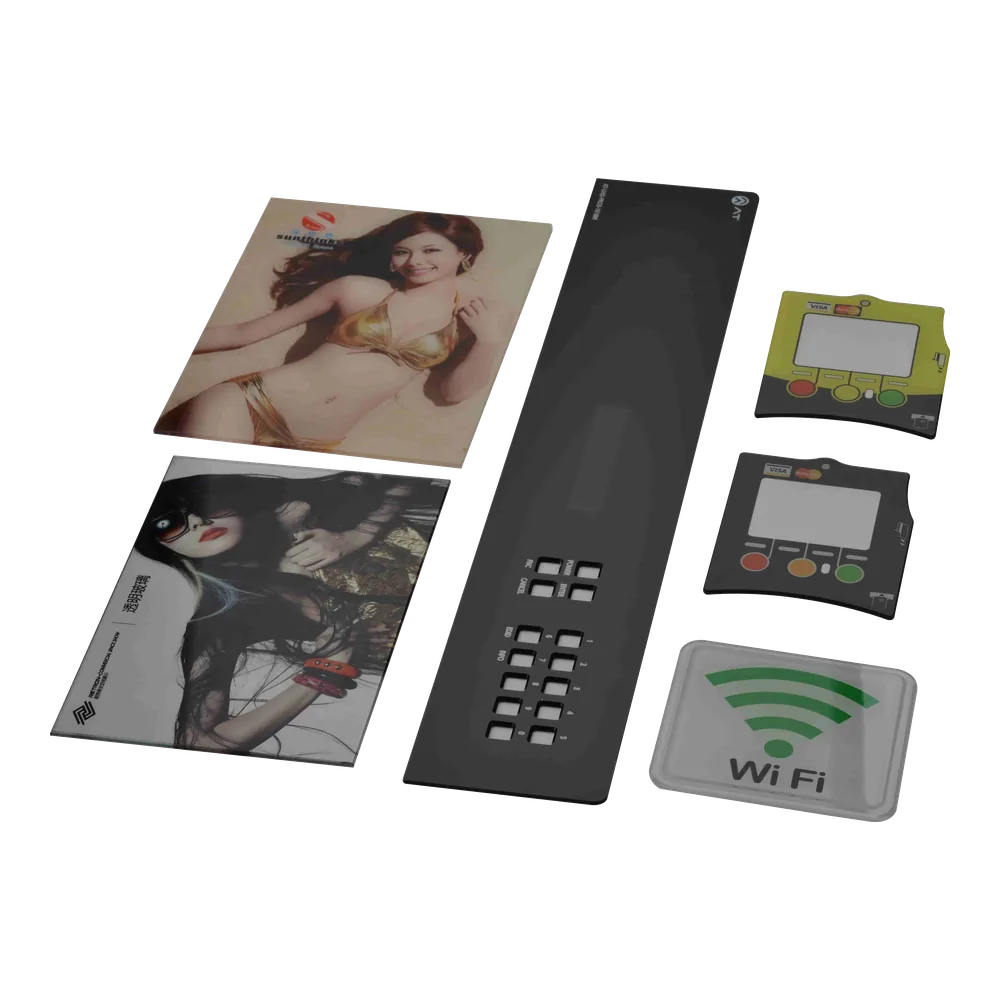
Glas-Nameplates · Dead-Front-Symbole · Displayfenster
Glas-Nameplates und Dead-Front-Glaspanels for OEM Interfaces
Siebdruck-Glasfronten with verdeckte Symbole, Displayfenster, polierte Kanten, and Klebemontage for premium equipment controls.
JASPER builds custom Glas-Nameplates for OEM equipment that needs a harder, cleaner, more premium front surface than acrylic or PET/PC film can provide.
OEMs, die mit unseren Interface-Teilen liefern




Starre Frontoberflaeche
A Glas-Nameplate is not a plastic label with a glossy finish.
A Glas-Nameplate is a screen-printed glass front part for OEM equipment. It can carry a logo, serial or model marking, printed legends, Displayfenster, dead-front indicators, backlit icons, touch-keypad graphics, and Klebemontage on the same rigid piece.
The difference from a standard label is the substrate. Instead of printed film or metal foil, the front surface is glass: tempered glass, chemically strengthened glass, float glass, or an aluminosilicate cover glass specified around the product requirement. The print is usually on the second surface, behind the glass, so the operator touches glass rather than ink.
The difference from a PET or PC kundenspezifische Grafikfolie is rigidity. A film overlay bends with the panel and can integrate directly with a membrane switch stack. A Glas-Nameplate gives a harder front, better scratch resistance, a more premium feel, and a cleaner window area for displays or verdeckte Symbole.
Kurzantwort
Was ist eine Glas-Nameplate?
A Glas-Nameplate is a rigid, screen-printed glass front panel used as a brand plate, display window, dead-front indicator panel, or premium equipment interface. It usually combines second-surface printing, polished or chamfered edges, clear or tinted windows, hidden backlit icons, and 3M Klebemontage. OEMs choose it when they need a harder and more premium front surface than acrylic or PET/PC film can provide.
Glass options
Confirm the glass, print, window, edge, and adhesive before tooling.
Every Glas-Nameplate moves through the same set of questions before we quote tooling. This review determines whether the project needs a Glas-Nameplate, an acrylic panel, a PET/PC graphic overlay, or a different nameplate route.
| Requirement | Typical options | Design note |
|---|---|---|
| Glass material | Tempered soda-lime glass, chemically strengthened glass, float glass, aluminosilicate cover glass | Choose by impact risk, scratch expectation, optical clarity, and price target. |
| Glass thickness | 0.7–3.0 mm typical for small OEM interface panels; thicker glass by project | Thicker glass feels premium and rigid, but adds weight and raises edge and bonding requirements. |
| Printing method | Second-surface screen printing, digital UV where appropriate, epoxy / polyester ink, ceramic frit ink by project | Second-surface printing protects the graphics behind the glass. Industry silk-screened glass references show fine features such as 0.005 in lines and glass thickness examples from 0.030 in to 1 in; JASPER confirms practical limits per project. |
| Display windows | Clear, tinted, smoked, anti-glare, dead-front, backlit icons | Das Fenster muss zum dahinterliegenden LCD, OLED, Segment-LED, Anzeige-LED oder kapazitiven Touchsensor passen. |
| Dead-front transmission | 5% or 10% transmission are common industry references for hidden-icon panels | Lower transmission hides graphics better when unlit; higher transmission improves icon brightness when backlit. |
| Edge finish | Polished edge, chamfered edge, radius corners, drilled holes, slots, CNC features | Edge finish affects handling, appearance, adhesive stress, and crack risk. |
| Surface options | Gloss, matte, anti-glare, anti-reflective, oleophobic, anti-fingerprint, anti-scratch coatings | Choose by lighting condition, cleaning routine, touch frequency, and display readability. |
| Adhesive mounting | 3M 467MP, 3M 468MP, 3M 300LSE, 3M 9088 / 9088FL; full or selective adhesive | Adhesive choice depends on enclosure material, glass size, temperature cycling, and cleaning chemistry. |
| Assembly rating | RoHS / REACH; IP54, IP65, or IP67 possible when bonded and sealed correctly | IP rating belongs to the complete assembly, not to the glass alone. |
Material route comparison
Glass, acrylic, PET/PC film, metal, and doming labels are not interchangeable.
They can all sit on the front of equipment, but they solve different problems.
Glas-Nameplate
Premium hard face, display window, verdeckte Symbole, high scratch resistance, and clean HMI appearance.
Acrylic panel
Choose planned acrylic panels when the front needs a lightweight transparent or colored plastic panel that is easier to CNC, laser cut, or form at lower cost.
PET / PC overlay
Use kundenspezifische Grafikfolien for flexible printed film, low-profile adhesive-backed overlays, and membrane switch top layers.
Metal or doming label
Metall-Nameplates are for durable ID plates; Doming-Etiketten are raised glossy brand badges, not display covers.
Designpruefungen
Send the details that decide whether glass is the right route.
A Glas-Nameplate quote depends on more than artwork. We review glass size, windows, backlight behavior, edge finish, adhesive contact area, cleaning chemistry, and final assembly targets before tooling.
- Panelgroesse, Zielstaerke und Gehaeusetiefe
- Display windows, LED indicators, Dead-Front-Symbole, and touch zones
- 5% / 10% transmission target or icon visibility requirement
- Polished edge, chamfer, radius corner, holes, or slots
- Pantone / PMS colors, opacity, masks, and printed stack
- Mounting surface: aluminum, powder coat, ABS, PC, acrylic, or painted steel
- Cleaning chemistry, UV exposure, temperature swing, humidity
- RoHS, REACH, UL, medical, automotive, or IP target
Was senden
Send an Adobe Illustrator file, press-ready PDF, EPS, DXF for cutting features, or CAD/STEP drawing if you have one. Vector icons and separate cut/window layers reduce review time.
JASPER will review whether glass, acrylic, metal, or PET/PC overlay is the better front-surface route before recommending tooling.
Angebot anfordernFragen zu Glas-Nameplates
Ist eine Glas-Nameplate dasselbe wie ein Acryl-Panel?
No. Glass and acrylic can both be transparent or printed, but they behave differently. Glass is harder, heavier, more scratch-resistant, and often chosen for premium Displayfenster, Dead-Front-Symbole, and high-end equipment faces. Acrylic / PMMA is lighter, usually easier to cut or form, and often lower cost. It can be the right choice for decorative panels, clear covers, and lighter-duty nameplates, but it should be treated as a separate material route rather than a substitute for every glass design.
Can a Glas-Nameplate include Displayfenster or verdeckte Symbole?
Yes. A Glas-Nameplate can include clear or tinted Displayfenster, dead-front printed icons, backlit indicators, and touch-keypad graphics. The key is to design the print opacity, transmission, backlight brightness, and window edge together. If the icon must disappear when off, we plan the dead-front layer around the light source behind it. If the display must remain readable in daylight, we review anti-glare, AR, or tinted-window options.
What files and details are needed for a custom Glas-Nameplate quote?
Send the artwork file, part drawing, display/window layout, target glass thickness, expected mounting surface, edge finish, and application environment. If available, include a STEP file or enclosure drawing, Pantone colors, LED or display specifications, cleaning chemistry, temperature range, and annual quantity. We will review whether glass, acrylic, metal, or PET/PC overlay is the better front-surface route before recommending tooling.
Pruefung des Frontoberflaechenmaterials fortsetzen
Graphic overlays
Return to the Grafikfolien hub to compare printed front-surface options.
Grafikfolien pruefen ->Kundenspezifische Grafikfolien
Compare glass with PET/PC printed film overlays made from your artwork.
Kundenspezifische Overlays pruefen ->Acrylic panels
Use acrylic when the project needs a lightweight PMMA panel or lower-cost clear face.
Acryl-Panels pruefen ->Graphic overlay materials
Review PET, PC, acrylic, glass, adhesive, coating, and environmental material trade-offs.
Materialien pruefen ->Get a Glas-Nameplate reviewed before tooling
Send your artwork, panel drawing, display-window locations, backlight notes, and mounting surface. JASPER will review the print stack, glass or acrylic route, edge finishing, adhesive selection, and whether the design should stay as a Glas-Nameplate or move to a kundenspezifische Grafikfolie.
RFQ-Pruefung startenStill comparing materials? Start with our graphic overlay materials reference.