
Kundenspezifische Sitzsensorik
Sitzbelegungssensor-Matte
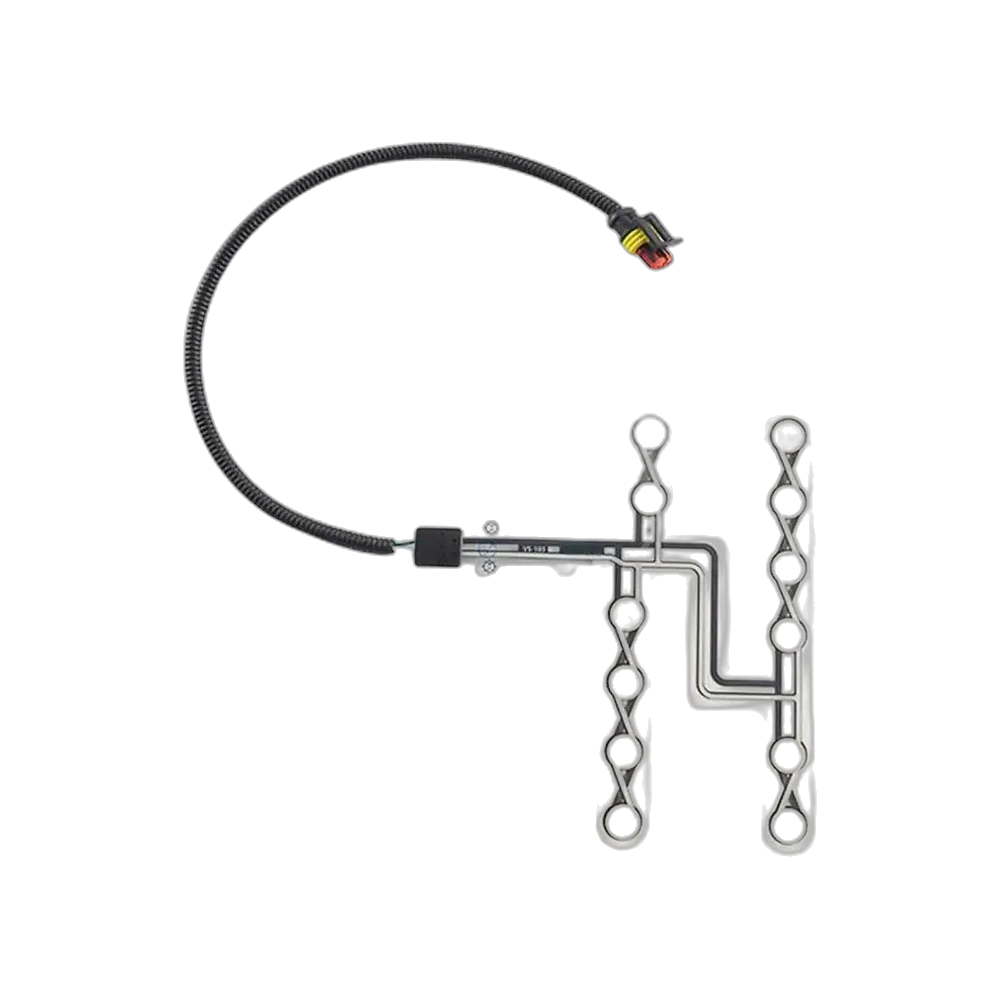
Custom pressure-sensitive Sitzbelegungssensor-Mattes for OEM car seats, with custom shape, sensing zone, cable, and connector options.
OEMs, die mit unseren Interface-Teilen liefern





Kurzantwort
A Sitzbelegungssensor-Matte is a pressure-sensitive mat or pad used inside an automotive seat to detect whether a person is sitting on the seat. In an OEM seat project, the mat is usually placed under the seat foam, inside the cushion stack, below upholstery, or inside a custom seat module, depending on the seat structure. We design the mat shape, sensing zone, activation condition, cable route, connector, and moisture-resistant structure around the customer’s seat drawing. The confirmed circuit design determines the final signal behavior.
JASPER Electronics supports OEM buyers, automotive seat engineers, sourcing teams, and seat system developers who need a custom car Sitzbelegungssensor-Matte rather than a standard spare part. We focus on new seat programs, sample validation, and production supply.
Product Overview for OEM Seat Programs
JASPER Electronics manufactures custom Sitzbelegungssensor-Matte solutions for automotive seat systems, passenger detection projects, seat belt reminder systems, commercial vehicle seating, and custom vehicle seats. We work from the customer’s seat drawing, cushion section, sensing requirement, and connector specification.
The product can also be described by buyers as a car Sitzbelegungssensor-Matte, seat occupancy mat, passenger seat occupancy mat, seat occupancy sensor pad, car seat occupancy sensor pad, seat sensor pad, or car seat sensor pad. These terms stay together because OEM sourcing teams may use different wording for the same seat detection function.
| Buyer term | What it usually means in an OEM project | JASPER design response |
|---|---|---|
| Sitzbelegungssensor-Matte | Mat-style sensor for detecting occupied seat condition | Define mat outline, sensing area, activation condition, cable route, and connector |
| Car Sitzbelegungssensor-Matte | Seat mat used in vehicle seat systems | Match the seat foam, cushion stack, and assembly path |
| Passenger seat occupancy mat | Mat used in passenger seat presence detection | Tune the sensing zone around the passenger seating surface |
| Seat occupancy sensor pad | Pad-style sensor with a compact sensing area | Define pad size, exit tail, connector, and mounting method |
| Car seat sensor pad | General sourcing term for seat pressure or occupancy detection | Clarify whether the project needs contact detection, pressure detection, or another confirmed circuit design |
How the Sensor Mat Works
A Sitzbelegungssensor-Matte does a simple job inside a difficult package: it watches the load path through the cushion. When a passenger sits down, foam compression brings pressure or contact to the defined sensing area. The seat is never flat in real life, so the mat outline, sensing window, and cable exit have to follow the cushion design.
We treat the detection behavior as an engineering target, not as a catalogue number. Before sample production, JASPER reviews the seat structure, expected occupied-seat condition, circuit requirement, connector drawing, cable route, and validation plan. That review decides whether the project needs a compact pad, a longer mat, a special exit tail, or another custom geometry.
A public technical reference, Google Patents US20060192417A1, describes a seat occupation detection mat with pressure-sensitive sensor elements arranged between mat films. We use that patent only as background terminology. JASPER’s own material stack and circuit structure must come from the OEM drawing, prototype review, and sample validation plan.
Where the Sitzbelegungssensor-Matte Is Installed
A Sitzbelegungssensor-Matte is installed inside the seat assembly, not on the visible exterior of the seat. The exact position depends on cushion thickness, foam compression behavior, upholstery construction, seat trim process, cable exit direction, and the Erkennungszone required by the vehicle program.
| Installation position | Typical use case | Design notes for engineers |
|---|---|---|
| Under seat foam | Projects where the mat must sit below the main cushion layer | Check foam compression path, mat thickness allowance, and cable exit direction |
| Inside cushion | Projects that need the sensor closer to the occupant load path | Confirm the cushion stack, assembly process, and protection from folding stress |
| Below upholstery | Projects where the mat needs a shallower seating position | Confirm trim pressure, upholstery tension, and long-term contact condition |
| Custom seat module | Special seats, commercial vehicle seats, or module-based cushion systems | Provide module drawing, available space, connector location, and mounting interface |
For early RFQ review, we prefer a seat section drawing or a physical sample. If neither is available, we can start from a top-view mat outline, expected sensing zone, cable exit direction, and connector specification.
Custom Designoptionen
JASPER Electronics can customize the Sitzbelegungssensor-Matte for OEM seat designs. The most common customization areas are mat shape, sensing area, activation condition, cable length, connector, cable exit direction, surface protection, and label requirement.
| Custom item | What we need from the OEM team | Output from JASPER |
|---|---|---|
| Mat shape | Seat top-view drawing, cushion boundary, forbidden zones | Custom outline matched to the seat package |
| Sensing area | Target occupant Erkennungszone and non-Erkennungszones | Defined sensing window or sensing pattern |
| Trigger force / activation pressure | Expected occupied-seat condition and validation method | Project-specific activation design after engineering review |
| Cable length | Cable route from mat to controller or harness | Cable length and exit direction matched to assembly path |
| Connector | Connector drawing, mating connector, pin requirement | Connector option selected or built to customer specification |
| Moisture-resistant structure | Exposure condition, cleaning process, humidity risk | Protection approach defined after material and structure confirmation |
| OEM label / drawing support | Label format, part number rule, drawing template | Drawing, label, and sample documentation for approval |
| Sample validation | Test seat, sample quantity, pilot schedule | Prototype samples for fit check and detection review |
No two Sitzschaums behave the same under load. A sports seat, a rear bench, a bus seat, and a specialty module can all need different mat boundaries and cable exits. For that reason, JASPER sets the final parameter list from the engineering file, not from a fixed catalogue table.
Material and Structure Parameters to Confirm
Seat sensor materials are selected after the seat environment is known. We ask for the cushion stack, installation position, exposure condition, and validation requirement before naming a material layer. This avoids an early PET, FPC, adhesive, or coating claim that may not fit the final seat package.
| Parameter group | What should be defined | Why it matters |
|---|---|---|
| Flexible base structure | Film or flexible carrier type after engineering confirmation | Controls fit, bending behavior, and cushion integration |
| Sensing/contact layer | Circuit structure based on the required detection behavior | Controls the sensing response and signal logic |
| Spacer or adhesive structure | Layer spacing, bonding area, and assembly method | Controls repeatability and resistance to assembly stress |
| Protection layer | Surface protection based on moisture and abrasion exposure | Controls handling during seat assembly and service life target |
| Cable interface | Cable length, exit angle, strain relief, and routing | Reduces stress during cushion installation and seat movement |
| Connector interface | Connector type, mating part, pinout, and locking method | Supports integration with the OEM harness or seat module |
| Label and traceability | Part number, revision, batch code, and customer label format | Supports sample approval and production control |
If the OEM team has confirmed material names, electrical output values, temperature targets, life-cycle targets, or certification requirements, we can carry those items into the drawing package. If they are still open, we mark them as items to verify during sample review. Guessing does not help a seat engineer.
Anwendungen
Seat Belt Reminder Systems
A Sitzbelegungssensor-Matte can support a seat belt reminder system by detecting whether a seat is occupied. The seat system can then combine the occupied-seat condition with buckle status, warning logic, and the vehicle program’s control requirements. We provide the mat as a custom sensing component; the final system logic belongs to the customer’s vehicle electronics design.
Passenger Detection
A passenger seat occupancy mat is used to detect presence on a passenger seat. In OEM programs, the sensing area, activation condition, and installation position must be matched to the Sitzschaum design. We help the seat engineering team define the mat outline and cable route before sample tooling.
Automotive Seat Pressure Sensing
Some sourcing teams call this product a Sitzdrucksensor pad because the mat responds to pressure or contact inside the cushion. We clarify the required detection behavior during RFQ review, then align the mat construction with the seat foam, cushion stack, and harness position.
Custom Vehicle Seats
Commercial vehicle seats, bus seats, specialty seating modules, and project-specific automotive seats often need a non-standard seat sensor pad. JASPER can develop that layout from a seat drawing, detection target, cable route, connector requirement, and sample schedule.
Engineering Notes for RFQ
For a faster quote, send the seat drawing first. Then add the installation position, expected occupant detection threshold, connector requirement, cable route, exposure condition, and sample quantity. A cushion sample helps when the foam compression path is not clear from CAD.
Our RFQ review has 6 checkpoints: seat structure, sensing zone, activation condition, circuit requirement, cable route, and connector interface. Miss one checkpoint and the first sample may fit the drawing but fail the seat. We try to prevent that before prototype sampling.
| RFQ item | Preferred input | If not available |
|---|---|---|
| Seat drawing | 2D or 3D Sitzschaum drawing | Top-view sketch with dimensions |
| Installation position | Under foam, inside cushion, below upholstery, or module location | Photo mark-up from the seat sample |
| Detection threshold | Target occupied-seat condition | Engineering discussion with validation sample |
| Cable routing | Exit side, length, bend points, and strain relief area | Preliminary cable route proposal |
| Connector | Connector drawing and mating part | Connector family or harness photo |
| Exposure condition | Moisture, cleaning, heat, abrasion, or assembly pressure | Risk list from the seat team |
| Production target | Sample quantity, pilot lot, annual estimate | Initial sample-only request |
Manufacturing and Validation Approach
JASPER Electronics builds Sitzbelegungssensor-Matte projects through drawing review, prototype sampling, fit check, detection review, and production preparation. We do not publish one universal test value here because the useful validation method must match the customer’s seat structure and vehicle program.
The working path is practical. Confirm the seat package. Define the mat geometry. Build samples. Test the sensor in the real seat. Revise the drawing if needed, then prepare production files. The seat is the test environment that matters.
| Stage | Was passiert | Customer output needed |
|---|---|---|
| 1. RFQ review | We review drawings, installation position, and signal requirement | Seat drawing, detection target, connector data |
| 2. Design proposal | We define mat outline, sensing area, cable exit, and connector approach | Approval of layout and critical dimensions |
| 3. Prototype sample | We make samples for seat fit and detection review | Sample test feedback and change notes |
| 4. Engineering revision | We adjust shape, sensing area, cable route, or connector details | Updated seat data if the cushion changes |
| 5. Production preparation | We lock drawing, label, inspection points, and packaging notes | Approved drawing and purchasing forecast |
FAQ
What is a Sitzbelegungssensor-Matte?
A Sitzbelegungssensor-Matte is a pressure-sensitive mat or pad placed inside a seat to detect whether an occupant is present. In automotive seats, it is commonly used for passenger detection, seat belt reminder systems, and custom seat pressure sensing projects.
Where is a Sitzbelegungssensor-Matte installed?
A Sitzbelegungssensor-Matte is usually installed under seat foam, inside the cushion, below upholstery, or inside a custom seat module. The correct position depends on the seat structure, cushion compression, sensing zone, cable routing, and assembly process.
Can JASPER customize the sensor mat shape and trigger force?
Yes. JASPER can customize the sensor mat shape, sensing area, activation condition, cable length, connector, cable exit direction, and moisture-resistant structure according to the OEM seat design. Final trigger force or activation pressure is confirmed through drawing review and sample validation.
Is a Sitzbelegungssensor-Matte the same as a seat occupancy sensor pad?
In many OEM sourcing conversations, Sitzbelegungssensor-Matte and seat occupancy sensor pad refer to a similar mat-style component used for seat presence detection. We clarify the required shape, sensing zone, installation position, and circuit behavior during RFQ review.
Can the mat support seat belt reminder systems?
Yes. A custom seat occupancy mat can support a seat belt reminder system by detecting occupied-seat condition. The vehicle system can then combine that condition with buckle status and warning logic designed by the OEM or seat system developer.
What information should we send for a custom seat sensor pad quote?
Send the seat drawing, installation position, expected detection condition, connector requirement, cable route, environmental exposure, sample quantity, and production target. If drawings are not ready, a marked photo or Sitzschaum sample can start the JASPER engineering review.
Related seat sensor products
Sitzbelegungssensor
Zur Sitzsensor-Hauptseite zurueckkehren, um alle sieben Wege zu vergleichen.
Back to hub →Car Sitzdrucksensor
Drucksensor-Baugruppe passend zu Ihrer Sitzelektronik.
Review →Gurterinnerungssensor
Belegungssignal kombiniert mit Gurtschlossstatus fuer SBR-Logik.
Review →Angebot anfordern
Senden Sie Sitzzeichnung, Erfassungszone, Kabelfuehrung und Steckverbinder.
Start RFQ →Request a custom Sitzbelegungssensor-Matte quote
Senden Sie Sitzzeichnung, Einbauposition, Erfassungszone, Kabelfuehrung, Steckverbinderanforderung und Musterplan. Wir pruefen den Aufbau und melden uns mit Materialien, Vorgehen und Angebot.
Angebot fuer kundenspezifischen Sitzsensor anfordern