
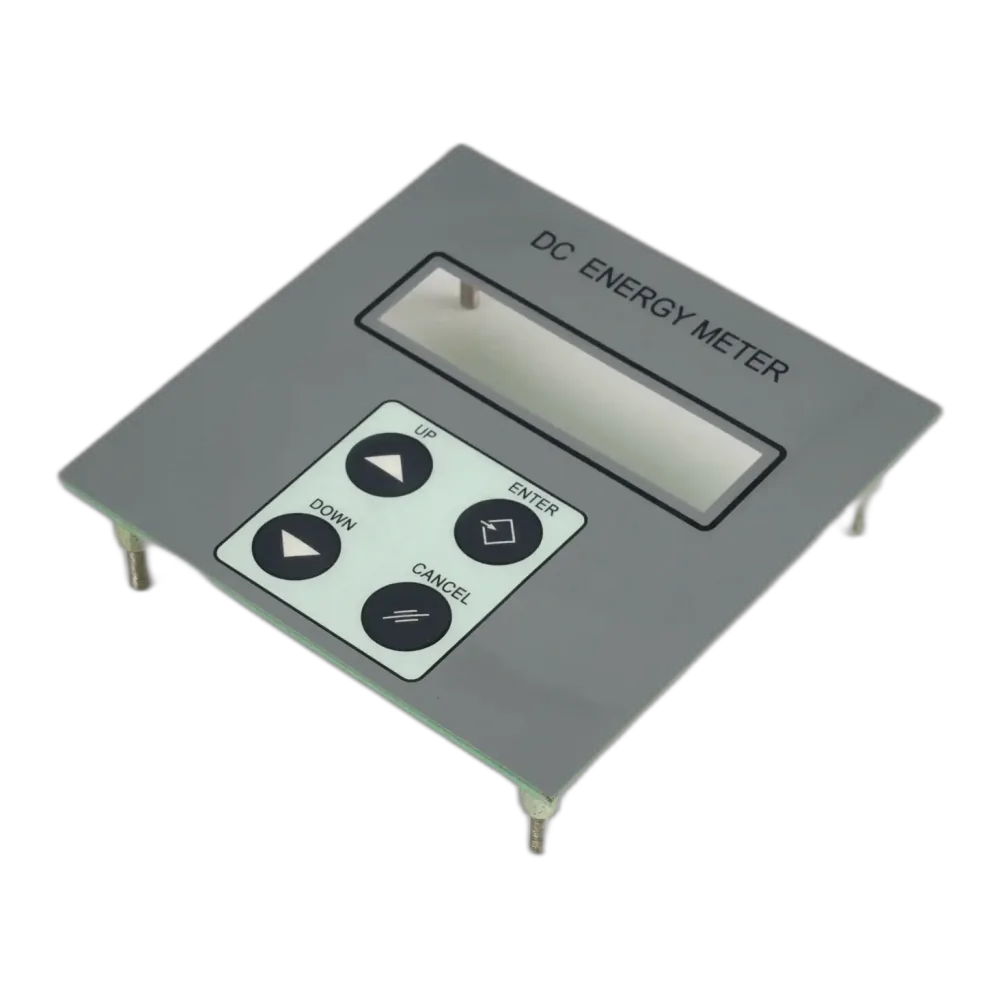
メンブレンスイッチコネクタ
メンブレン スイッチ コネクタの設計では、サンプリング前にテールの長さ、ピッチ、ピン配置、曲げ半径、補強材、出口方向、嵌合コネクタ、およびアセンブリのクリアランスを確認する必要があります。
コネクタの間違いにより、機能するスイッチの取り付けが困難になったり、実稼働環境での信頼性が低下したりする可能性があります。 JASPER は、メンブレン スイッチと製品電子機器の間のエンジニアリング インターフェイスをレビューします。
簡単な答え: コネクタはスイッチと電子機器の間のブリッジです。
メンブレン スイッチ コネクタ システムには、フレキシブル テール、導電性トレース、コンタクト ピッチ、ピン配置、補強材またはサポート領域、曲げ経路、および嵌合コネクタが含まれます。 PCB、エンクロージャのスペース、組み立てプロセス、およびサービス条件に一致する必要があります。
一般的なメンブレン スイッチ コネクタとテール オプション
最適なコネクタは、電子機器、エンクロージャ、組み立てプロセス、およびサービスまたは交換が必要かどうかによって異なります。
| Option | Typical use | Details to confirm |
|---|---|---|
| ZIF tail | Flat flexible tail inserted into a zero insertion force connector on the PCB | Tail width, pitch, contact side, stiffener thickness, insertion direction, plating/contact area |
| Crimp connector | Defined mating connector for faster assembly or service | Connector family, pin count, orientation, wire path, strain relief, locking feature |
| Pin header | PCB-supported or custom assemblies where rigid connection is needed | Soldering method, PCB support, mechanical clearance, connector height |
| Solder pads | Special cases where direct soldering is acceptable | Heat exposure, rework risk, serviceability, operator process control |
| Custom tail | Unique pitch, length, fold path, or routing around the enclosure | Tail exit, bend radius, fold sequence, shielding, stiffener, fixture clearance |
| PCB/FPC support | When connector area needs reinforcement or denser routing | Board thickness, mounting method, connector placement, test access |
図面に記載する必要があるテールとコネクタの詳細
メンブレン スイッチの図面では、フロント パネルの輪郭以上のものを定義する必要があります。テールとコネクタのメモにより、多くの予想外の組み立てを防ぎます。
| Detail | Why it matters | Common issue if missing |
|---|---|---|
| Tail length | Determines whether the switch reaches the electronics without stress | Installer forces a bend, or the connector cannot reach the PCB |
| Tail exit direction | Controls routing from the front panel into the enclosure | Tail exits toward a wall, rib, screw boss, or sealed area |
| Pitch | Must match the mating connector or board footprint | Connector insertion fails or requires redesign after sampling |
| Pinout | Defines which key or signal connects to each pin | Customer electronics reads the wrong input or needs rewiring |
| Bend radius | Protects conductive traces during installation | Sharp folds crack traces or create intermittent function |
| Stiffener | Supports ZIF insertion and connector contact area | Tail is too flexible, too thick, or unstable during assembly |
| Contact side | Determines which side faces the connector contacts | Tail is inserted but does not make electrical contact |
| Strain relief | Reduces stress on the tail or connector during use | Repeated movement damages traces near the exit or connector |
Common connector mistakes in membrane switch projects
These problems often appear late because the switch sample may work on a bench but not inside the product.
| Mistake | Result | Prevention |
|---|---|---|
| Only artwork is sent for quotation | コネクタとテール route are guessed | Send PCB layout, enclosure section, connector spec, and installation route |
| Pinout is not defined | Prototype does not match electronics | Confirm matrix, pin order, common lines, LED pins, and ground/shield needs |
| Tail is folded too sharply | Trace damage or intermittent signal | Define bend path and allow enough radius and length |
| Stiffener is missing or wrong thickness | ZIF insertion is unreliable | Match stiffener to connector requirement before sample approval |
| Connector orientation is unclear | Assembly team installs the switch in the wrong direction | Add contact side, insertion direction, and orientation notes |
| Tail exits through a sealed area | Water path or adhesive problem is created | Review enclosure, sealing path, and tail exit together |
A working switch can still be a bad assembly if the connector is wrong.
Electrical continuity on the bench is not enough. Connector design must also consider installation sequence, enclosure clearance, PCB position, operator handling, and production repeatability.
- ZIF tails are common, but they require correct pitch, stiffener thickness, contact side, and insertion direction.
- Crimp connectors can improve assembly definition but need space, orientation, and mating connector confirmation.
- Tail length should include the real enclosure path, not only the shortest distance between panel and PCB.
- If the product is sealed, the tail exit should be reviewed as part of the sealing path.
- Connector areas may need PCB/FPC support, stiffeners, or strain relief when repeated handling is expected.
RFQ note: Send connector datasheets, PCB layout, pinout, enclosure drawings, tail exit location, assembly path, and any service or replacement requirement.
What engineering teams should confirm before sampling
Connector review is a small step that prevents expensive redesign after samples arrive.
Match the mating electronics
Confirm connector pitch, pin count, contact side, PCB footprint, and insertion direction with the electronics team.
Route the tail through the real enclosure
Check screw bosses, ribs, gasket paths, bend points, adhesive zones, display windows, and assembly order.
Define pinout and matrix clearly
Avoid ambiguous common lines, LED pins, shared grounds, or reversed pin orders that can confuse production and testing.
Protect the bend area
Do not force a tight fold at the tail exit or connector end. Allow space and define a realistic bend path.
Choose support where needed
A stiffener, PCB support, or reinforced connector area can improve handling and insertion stability.
Test after full assembly
Connector reliability should be checked after the switch is installed in the housing, not only as a loose part.
Related design resources
Detailed buyer questions
What connector is most common for membrane switches?
Flat flexible ZIF tails are common, but the best option depends on the PCB, enclosure, assembly process, service needs, and customer electronics.
Can connector pitch be customized?
Yes. Pitch and connector type can be reviewed based on circuit layout and mating electronics, but the mating connector requirement should be provided before sampling.
What is a tail stiffener?
A stiffener is a reinforced section at the end of a flexible tail. It helps the tail insert correctly into a ZIF connector and provides contact stability.
Why does bend radius matter?
Sharp bends can stress or crack conductive traces. A realistic tail path should be reviewed with the enclosure and installation method.
Can JASPER help with pinout?
Yes. Pinout and matrix layout can be reviewed when the customer provides switch functions, PCB information, or controller requirements.
Can a membrane switch use PCB support near the connector?
Yes. PCB or FPC support can be used when the connector area needs stability, denser routing, or a more defined assembly method.
Should connector details be confirmed before sample approval?
Yes. Connector type, pitch, pinout, contact side, tail length, bend path, and exit direction should be confirmed before sampling or production approval.
What should I send for connector review?
Send connector datasheets, PCB layout, enclosure drawings, pinout, tail route, installation photos if available, and any service or strain-relief requirement.
Need help reviewing membrane switch connector details?
Send the PCB layout, connector specification, pinout, tail route, and enclosure drawing so JASPER can check whether the switch can be assembled reliably.
Request a Technical Review