
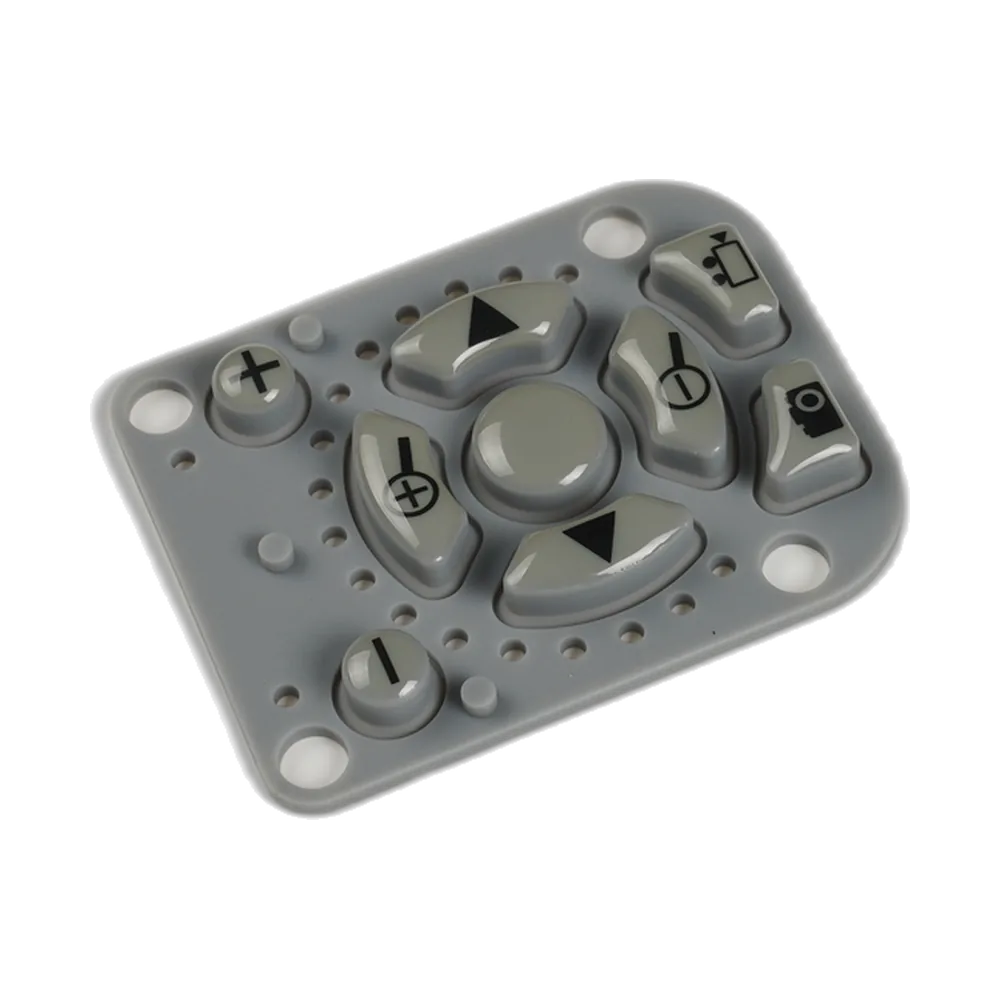
導電性ゴム製キーパッド
導電性ゴム製キーパッドは、成型シリコン キーとキーの下の導電性要素を使用して、PCB、FPC、PET 回路、またはメンブレン スイッチ上の回路を閉じます。最も一般的な接点はカーボンピルです。これは、耐久性があり、コスト効率が高く、印刷またはメッキされた接点パッドと互換性があるためです。 JASPER は、キーパッドの形状、導電性方法、接点レイアウト、抵抗ターゲット、およびアセンブリのスタックを設計し、キーパッドの感触が適切で、生産時に確実にスイッチが切り替わるようにします。
キー操作で確実なスイッチングを開始
ほとんどのゴム製キーパッドの故障は、目に見えるキートップから始まるわけではありません。それらはその下から始まります: PCB パッドにきれいに着地しないカーボン錠剤、抵抗が不安定な導電性表面、汚染された接触領域、回路が閉じる前に底が付くドーム形状、または繰り返しのプレス後に不均一に摩耗するパッド レイアウトなどです。
そのため、私たちは導電性ゴム製キーパッドの設計を単独のゴム成形作業としてではなく、電気的および機械的なスタックとして扱います。
一般的な導電性ゴム製キーパッドには次のものが含まれます。
- 調整されたウェブ形状を備えた成型シリコン キー マット
- 各キーの下にあるカーボン錠剤、導電性インク領域、メタルドームアクチュエーター、または金属接点
- PCB、FPC、PET回路、またはメンブレンスイッチの接点パターン
- 位置合わせを制御するスペーサー、接着剤、ハウジング、または保持機能
- オプションの凡例、コーティング、バックライト、最終電気テスト
ユーザーがキーを押すと、成形ドームが潰れ、導電接点が回路パッドに触れて回路が閉じ、その後ラバーウェブがキーを初期位置に戻します。設計目標はシンプルです。どのキーも毎回確実に導通し、キーごとの感触が一貫し、実際の使用後も動作し続けることです。
導電性コンタクトのオプション
| Conductive method | Best fit | Notes |
|---|---|---|
| Carbon pill / graphite pill | Standard OEM silicone keypads | Common balance of cost, life, and PCB compatibility. Good for many industrial, medical, and consumer controls. |
| Conductive ink | Thin or area-specific conductive features | Useful when the conductive region must follow a custom shape, but it needs process control and wear evaluation. |
| Metal dome under silicone actuator | Crisp tactile snap with rubber key surface | Silicone key acts as the actuator while a stainless dome provides tactile feedback and switching. |
| Metal, nickel, or gold-plated pill | Lower-resistance or special contact requirements | Used when the electrical requirement is more demanding than standard carbon contact. |
| Non-conductive actuator | Key presses a separate switch | Best when the circuit already uses mechanical switches or domes on the board. |
ほとんどのプロジェクトでは、回路要件、触感、寿命テストの目標が他の場所にない限り、カーボン錠剤から始めます。
カーボンピルの設計の重要な詳細
カーボン錠剤は細かいことのように聞こえますが、キーパッドが確実に動作するかどうかはそれによって決まります。
錠剤のサイズと位置
錠剤は、成形公差、組立公差、および通常のキーの動きの後でも、十分な重なりを持って PCB または回路の接触領域に着地する必要があります。錠剤が小さすぎる場合、または端に近すぎる場合は、断続的な接触が発生する可能性があります。
Contact pad geometry
PCB pads often use interdigitated patterns, split pads, or plated contact areas. The pad design must match the pill diameter, expected pressure, contact resistance target, and contamination risk.
Actuation force and overtravel
The key should close the circuit before the user bottoms out harshly on the board. Good overtravel protects the contact and makes the key feel less abrupt.
Resistance target
Many carbon pill keypads do not need ultra-low resistance, but they do need stable resistance across keys and over life. We confirm the electrical target before choosing pill type, pad finish, and test method.
Clean assembly
Dust, silicone oil, release-agent residue, and handling contamination can all affect contact behavior. Conductive keypad assembly should include clean handling and inspection, especially for medical, automotive, or high-volume consumer electronics.
Conductive Rubber Keypad Stack Options
Conductive rubber keypads can close onto several circuit types.
| Circuit carrier | When to use it | Design concern |
|---|---|---|
| Rigid PCB | Durable control modules, LED integration, electronics on the same board | Pad finish, LED clearance, screw bosses, and housing stack-up |
| FPC | Compact handhelds, curved routing, connector flexibility | Tail bend radius, stiffener position, and contact alignment |
| PET printed circuit | Cost-sensitive or membrane-style assemblies | Silver ink thickness, spacer design, and environmental sealing |
| Membrane switch layer | Hybrid rubber + membrane HMI | Dome clearance, adhesive stack, and overlay/keypad interface |
| Separate mechanical switch | Tactile or high-force switch designs | Actuator height, switch tolerance, and housing datum control |
JASPER can provide the rubber keypad only, but most conductive keypad problems are easier to prevent when the keypad and circuit carrier are reviewed together.
Common Failure Modes We Design Against
| Failure mode | Typical cause | Prevention |
|---|---|---|
| Intermittent key response | Pill misses pad or contact pressure is too low | Increase pad overlap, adjust pill size, tune web geometry, verify stack height |
| High or unstable resistance | Contamination, wrong pill type, poor pad finish | Define resistance target, clean process, choose suitable contact material |
| Uneven key feel | Web thickness variation or inconsistent key geometry | Review DFM, mold flow, tool tolerance, and force-displacement samples |
| Premature contact wear | Hard bottoming, abrasive pad surface, inadequate overtravel | Add overtravel, adjust contact pressure, review PCB pad finish |
| Assembly misalignment | No positive datum between keypad, PCB, and housing | Add locating pins, bosses, ribs, or carrier features |
The best time to solve these issues is before the mold is cut.
用途
Conductive rubber keypads are used wherever a molded key surface needs to close an electrical circuit reliably:
- Medical device front panels and handheld controllers
- Industrial machine controls, test equipment, and field instruments
- Automotive remote controls, seat controls, console buttons, and service tools
- Security panels, access control devices, and alarm interfaces
- Consumer electronics, appliance controls, and remote controls
If the same keypad also needs illuminated icons, see Backlit シリコンラバーキーパッド. If it needs to ship as a complete module with PCB and housing, see シリコンキーパッドアセンブリ.
RFQチェックリスト
For a conductive rubber keypad quote, send:
- Keypad drawing or product layout
- PCB/FPC/PET contact layout if available
- Preferred conductive method, or ask us to recommend one
- Target actuation force, travel, and tactile feel
- Contact resistance requirement, if specified
- Key life requirement or application duty cycle
- Environmental exposure: water, oil, cleaning chemicals, dust, UV, temperature
- Required testing and documentation
- Annual volume and prototype schedule
FAQ
What is a conductive rubber keypad?
A conductive rubber keypad is a silicone rubber keypad with a conductive element under each key. When the key is pressed, the conductive element touches a circuit pattern on a PCB, FPC, PET circuit, or membrane switch and closes the circuit.
Are carbon pills the standard contact method?
Yes, carbon pills are the standard choice for many silicone rubber keypads because they are durable, economical, and compatible with common PCB contact patterns. Conductive ink, metal domes, metal pills, or non-conductive actuators may be better for special electrical or tactile requirements.
What causes intermittent contact in rubber keypads?
Common causes include poor carbon pill alignment, insufficient contact pressure, contaminated contact surfaces, inadequate pad overlap, incorrect stack height, or a keypad web geometry that does not allow clean overtravel after the circuit closes.
Can JASPER design the PCB contact pattern too?
We can review or help define the contact pattern, pad spacing, pill diameter, alignment features, and stack height. For many projects, reviewing the keypad and PCB together prevents failures that would not be visible from the rubber drawing alone.
Build a Conductive Keypad That Switches Cleanly
Send your rubber keypad layout and circuit contact pattern. We will review pill size, pad geometry, actuation force, stack height, assembly datum, and test method before tooling.
Need help with conductive rubber keypads?
Send your drawing, layout, environment, circuit plan, and annual volume. We will review the keypad stack before tooling.
見積もりを依頼