

Table of Contents
Quick Answer: Choosing a membrane switch manufacturer requires evaluating five critical factors: 1) Certifications (ISO 9001, ISO 13485 for medical), 2) Technical capabilities (design support, material expertise, IP rating experience), 3) Quality systems (documented QC processes, testing equipment, traceability), 4) Manufacturing capacity (volume capability, lead times, scalability), and 5) Communication infrastructure (engineering support, responsiveness, documentation quality). Request facility audits, sample testing, and reference checks from existing customers before finalizing supplier selection.
Selecting the wrong membrane switch manufacturer can cost your company far more than the price difference between quotes. Over 15 years at JASPER, I've witnessed countless companies struggle with quality issues, delivery delays, and compliance failures stemming from poor supplier selection decisions.
A reliable membrane switch partner becomes an extension of your engineering team—providing design expertise, solving manufacturing challenges, and ensuring consistent quality across production runs. This guide provides a systematic framework to evaluate manufacturers and make informed supplier decisions that protect your product quality, timeline, and budget.
Key Qualifications to Evaluate
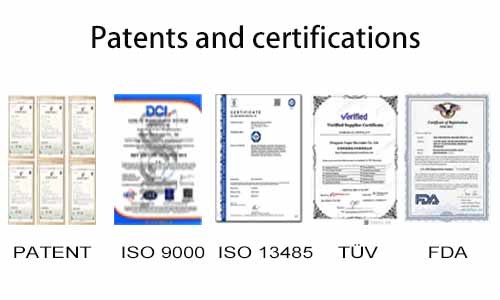
Certifications and Compliance
Industry certifications provide objective validation of a manufacturer's quality systems and capabilities. These aren't just paperwork—they represent audited, proven processes that directly impact product quality.
Essential Certifications
ISO 9001 (Quality Management Systems)
- Baseline requirement for professional manufacturing operations
- Demonstrates documented quality processes, continuous improvement, and customer focus
- Look for recent certification dates (within 3 years) and clean audit histories
- Warning sign: Companies that claim "ISO compliant" without actual certification
ISO 13485 (Medical Device Quality Systems)
- Mandatory for medical device component suppliers
- Includes design controls, risk management, traceability, and supplier controls
- Verify certification scope covers membrane switch manufacturing specifically
- Essential if your product requires FDA approval or CE marking
UL Recognition (Underwriters Laboratories)
- UL 94 (flammability rating) for materials used in electronic assemblies
- UL 796 (printed wiring materials) for circuit layer construction
- Demonstrates material safety and compliance with electrical standards
Industry-Specific Certifications
Depending on your application, additional certifications may be critical:
- IATF 16949: Automotive quality management (for vehicle applications)
- AS9100: Aerospace quality management (for aviation/defense)
- RoHS compliance: Restriction of Hazardous Substances (EU markets)
- REACH compliance: Chemical safety regulations (EU markets)
Always request copies of actual certificates rather than accepting verbal claims. Verify certificate validity dates and issuing bodies. We've encountered suppliers claiming "ISO certification" when they merely worked with ISO-certified customers—a critical distinction.
Technical Capabilities
Technical expertise separates manufacturers who simply produce parts from partners who enhance your product design. Evaluate these capabilities:
Design and Engineering Support
- In-house design team: Engineers who can optimize your specifications for manufacturability
- CAD capabilities: Ability to work with your design files (AutoCAD, SolidWorks, Adobe Illustrator)
- Prototyping services: Rapid prototyping for design validation before tooling investment
- Design for Manufacturing (DFM) review: Proactive identification of potential production issues
Ask candidates: "What design improvements would you suggest for this specification?" Strong manufacturers identify opportunities to improve durability, reduce cost, or enhance functionality.
Material Expertise
- Material selection guidance: Recommendations for overlay, adhesive, and circuit materials based on your environment
- Environmental testing experience: Knowledge of temperature extremes, chemical exposure, UV resistance requirements
- Specialty materials access: Medical-grade, antimicrobial, or high-temperature materials when needed
- Material documentation: Ability to provide material certifications, biocompatibility reports, RoHS declarations
Technology Capabilities
Verify the manufacturer can produce your required features:
| Capability | Questions to Ask | Validation Method |
|---|---|---|
| Tactile Domes | What dome suppliers do you use? Can you customize actuation force? | Request force-displacement curve data |
| Backlighting | LED options? EL panel experience? Custom lighting patterns? | Review backlit samples in dark environment |
| IP Ratings | Highest IP rating achieved? In-house testing equipment? | Request IP test reports from previous projects |
| Embossing | Embossing depth range? Pillow vs rim options? | Examine samples for consistency and clarity |
| Printing | Screen printing? Digital printing? Color matching capability? | Request Pantone color matching samples |
Manufacturing Capacity
Production capacity directly impacts lead times, scalability, and your ability to respond to market demand.
Volume Capability
- Minimum order quantities (MOQ): Can they accommodate your startup volumes?
- Maximum capacity: Can they scale as your product grows?
- Production lead times: Standard delivery timeframes for prototype, pilot, and production runs
- Rush capabilities: Expedited production options and associated costs
Request specific examples: "What's your typical lead time for 1,000 units with standard features?" Vague answers like "depends on the project" indicate lack of process control.
Facility and Equipment
Manufacturing infrastructure determines quality consistency and capability limits:
- Cleanroom environments: Controlled environments for medical or high-reliability products
- Automated equipment: Screen printing automation, die-cutting precision, assembly robotics
- Testing equipment: Force testing, electrical testing, environmental chambers, IP testing apparatus
- Quality inspection tools: Optical inspection, dimensional measurement, color spectrophotometers

Request a facility tour (virtual or in-person) to assess cleanliness, organization, equipment condition, and workflow efficiency. Well-maintained facilities with organized production areas indicate attention to quality.
Quality Control Assessment
Quality systems determine whether you receive consistent products or struggle with batch-to-batch variations and field failures.
Documented Quality Processes
Professional manufacturers maintain comprehensive quality documentation:
- Inspection plans: Defined inspection points throughout production (incoming, in-process, final)
- Control plans: Critical parameters monitored and acceptable ranges
- Work instructions: Standardized procedures for each manufacturing operation
- Corrective action systems: Documented processes for addressing defects and preventing recurrence
Ask to review sample quality documentation. Reluctance to share process documents raises concerns about quality maturity.
Testing and Validation
Comprehensive testing validates product performance:
- Incoming inspection: Material verification (thickness, color, adhesive properties)
- In-process testing: Print quality, dome force, circuit resistance during production
- Final inspection: 100% visual inspection, electrical testing, dimensional verification
- Environmental testing: Temperature cycling, humidity resistance, chemical exposure (for qualification)
- Life cycle testing: Actuation testing to verify lifespan ratings
Request test reports from similar products. Manufacturers with robust testing programs readily provide data demonstrating compliance with specifications.
Traceability Systems
Lot traceability enables rapid response to quality issues:
- Material lot tracking: Ability to trace finished products back to raw material lots
- Production records: Documentation of manufacturing parameters for each production run
- Serialization: Unit-level tracking for critical applications (medical, aerospace)
For medical applications, traceability isn't optional—it's a regulatory requirement. Verify the manufacturer can provide complete traceability documentation.
Defect Rates and Continuous Improvement
Quality metrics reveal manufacturing maturity:
- First-pass yield: Percentage of units passing inspection without rework (target: >98%)
- Customer return rates: Field failure rates (target: <0.5% for industrial, <0.1% for medical)
- On-time delivery: Percentage of orders delivered by committed date (target: >95%)
Reputable manufacturers track these metrics and continuously work to improve. Inability or unwillingness to share quality metrics suggests lack of measurement discipline.
Supplier Audit Checklist
Use this comprehensive checklist when auditing potential membrane switch manufacturers:
Documentation Review (Pre-Audit)
- ☐ ISO 9001 certificate (verify validity and scope)
- ☐ ISO 13485 certificate (if applicable)
- ☐ Business license and company registration
- ☐ Customer reference list with contact information
- ☐ Sample quality documentation (inspection plans, test reports)
- ☐ Material certifications and supplier qualification records
Facility Tour Observations
- ☐ Cleanroom or controlled environment for assembly
- ☐ Organized production areas with clear workflow
- ☐ Calibrated testing equipment with current calibration stickers
- ☐ Material storage with proper environmental controls
- ☐ Clear identification and segregation of materials and WIP
- ☐ Safety equipment and protocols visible and followed
Process Capability Assessment
- ☐ Screen printing equipment (manual, semi-auto, or fully automatic)
- ☐ Die-cutting equipment (steel rule, rotary, laser)
- ☐ Dome placement accuracy and verification methods
- ☐ Embossing capabilities and depth control
- ☐ Lamination process control (pressure, temperature, time)
- ☐ Electrical testing capabilities (resistance, continuity, actuation)
Quality System Evaluation
- ☐ Documented inspection procedures at each production stage
- ☐ Non-conforming material handling and quarantine processes
- ☐ Corrective and preventive action (CAPA) system
- ☐ Internal audit schedule and records
- ☐ Training records for production and quality personnel
- ☐ Customer complaint tracking and response system

Engineering and Support Assessment
- ☐ Size and experience level of engineering team
- ☐ CAD software capabilities and file format compatibility
- ☐ Design review process and turnaround time
- ☐ Prototyping lead times and costs
- ☐ Material selection guidance and recommendations
- ☐ Technical documentation quality (specifications, drawings, reports)
Business Stability Indicators
- ☐ Years in business and ownership stability
- ☐ Key customer relationships and longevity
- ☐ Financial stability indicators (D&B report, credit references)
- ☐ Insurance coverage (liability, product liability)
- ☐ Backup systems for business continuity
Cost vs. Quality Considerations
Price is important, but lowest cost rarely delivers best value. Understanding cost structures helps evaluate quotes effectively.
Price Breakdown Components
Membrane switch pricing includes multiple cost factors:
- Tooling (one-time): $800-3,000 for dies, screens, and embossing tools
- Engineering/setup: $300-1,500 for design optimization and production setup
- Materials: 30-50% of unit cost (overlay, adhesives, circuits, domes)
- Labor: 20-35% of unit cost (printing, assembly, inspection)
- Overhead and profit: 20-30% of unit cost
Volume Pricing Analysis
Request quotes at multiple volume tiers to understand economies of scale:
| Volume | Expected Unit Cost Range | Cost Drivers |
|---|---|---|
| 100-500 units | $15-40 per unit | Tooling amortization, setup costs dominate |
| 1,000-5,000 units | $8-20 per unit | Material and labor costs become primary |
| 10,000+ units | $3-10 per unit | Efficiency gains, material volume discounts |
Note: Actual pricing depends on complexity, materials, and features. These ranges represent typical commercial-grade switches.
Total Cost of Ownership (TCO)
Consider costs beyond unit price:
- Quality costs: Field failures, warranty returns, reputation damage (can exceed 10x purchase price difference)
- Engineering support: Time spent resolving design issues or production problems
- Inventory costs: Longer lead times require higher safety stock
- Qualification costs: Time and resources to validate new suppliers if quality issues force changes
In our experience, companies focusing solely on lowest unit cost often spend 30-50% more over 3 years due to quality issues, expedited shipments, redesigns, and supplier changes.
Red Flag Pricing
Be cautious of quotes significantly below market rates:
- 20-30% below competitors: Investigate whether corners are being cut (inferior materials, limited testing)
- No tooling charges: May indicate use of generic tooling without customization
- "Free" engineering: Professional design services have value—free may mean limited support
One client came to us after a competitor's quote was 40% lower—their "savings" evaporated when 30% of units failed field testing due to inadequate adhesive specification.
Communication and Technical Support
Your manufacturer becomes a long-term partner. Communication quality directly impacts project success.
Responsiveness Evaluation
Test communication during the quoting process:
- Response time: How quickly do they respond to inquiries? (Target: within 24 hours)
- Question quality: Do they ask clarifying questions or just provide generic quotes?
- Technical depth: Can they discuss material options, design considerations, and tradeoffs?
- Language capabilities: For international suppliers, verify adequate English proficiency for technical discussions
If communication is difficult during sales, it will be worse during production issues.
Technical Support Structure
- Dedicated project manager: Single point of contact for your account
- Engineering access: Ability to speak directly with design engineers when needed
- Documentation quality: Clear, comprehensive specifications and test reports
- Proactive communication: Updates on production status, potential delays, quality concerns
Geographic and Time Zone Considerations
Manufacturing location affects communication and logistics:
- Domestic manufacturers: Easier communication, faster shipping, higher costs
- International manufacturers: Cost advantages, potential communication barriers, longer lead times
- Time zone overlap: Minimum 2-3 hours of overlap for real-time communication
For complex or high-consequence projects (medical, aerospace), domestic or nearshore manufacturing often provides better TCO despite higher unit costs.
Red Flags to Avoid
These warning signs indicate potential supplier issues:
Quality and Capability Red Flags
- ❌ No quality certifications or expired certificates
- ❌ Unwilling to provide customer references
- ❌ Cannot produce samples for evaluation
- ❌ Vague or evasive answers about capabilities
- ❌ No documented quality procedures or test reports
- ❌ Reluctance to allow facility visits
- ❌ Claims to specialize in "everything" without focus areas
Business Practice Red Flags
- ❌ Pressure tactics or unrealistic promises
- ❌ Requests for large upfront payments before production
- ❌ No written quotations or vague terms
- ❌ Frequent ownership or management changes
- ❌ Inability to provide material certifications or compliance documents
- ❌ Poor communication or missed deadlines during quoting
Technical Red Flags
- ❌ Accepts specifications without technical questions or clarifications
- ❌ Cannot explain manufacturing processes or quality controls
- ❌ No design review or manufacturability feedback
- ❌ Uses generic templates rather than custom quotes
- ❌ Cannot provide material data sheets or specifications
Trust your instincts. If something feels wrong during the selection process, it likely indicates deeper issues.
Step-by-Step Selection Process
Follow this systematic approach to identify the best manufacturer for your needs:
Phase 1: Initial Screening (Week 1-2)
- Identify 5-8 candidate manufacturers through industry directories, trade shows, or referrals
- Request basic qualification information (certifications, capabilities overview, typical lead times)
- Verify certifications and business credentials
- Narrow to 3-4 candidates based on baseline qualifications
Phase 2: Technical Evaluation (Week 3-4)
- Provide detailed specifications and request formal quotes
- Evaluate technical questions and design feedback from each candidate
- Request customer references and contact them
- Review sample products from similar applications
- Assess quote completeness and reasonableness
Phase 3: Supplier Audit (Week 5-6)
- Conduct facility tours (virtual or in-person) for top 2-3 candidates
- Use supplier audit checklist to systematically evaluate capabilities
- Request and review quality documentation samples
- Meet engineering and quality teams
- Assess cultural fit and communication compatibility
Phase 4: Prototype Validation (Week 7-10)
- Order prototype samples from top 1-2 candidates
- Conduct comprehensive testing (functional, environmental, durability)
- Evaluate prototype quality, accuracy to specifications, and documentation
- Assess responsiveness to feedback and modification requests
Phase 5: Final Selection (Week 11-12)
- Compare TCO analysis for top candidates
- Negotiate final terms (pricing, lead times, payment terms, quality agreements)
- Establish quality agreement and inspection criteria
- Define communication protocols and escalation procedures
- Award business and plan pilot production run
Ongoing Supplier Management
Selection is just the beginning. Maintain supplier performance:
- Quarterly business reviews: Discuss quality metrics, delivery performance, improvement opportunities
- Annual audits: Periodic facility audits to verify continued compliance
- Performance scorecards: Track quality, delivery, responsiveness, and cost metrics
- Relationship development: Regular communication builds partnership and prioritization
Frequently Asked Questions
What certifications should a membrane switch manufacturer have?
At minimum, reputable manufacturers should have ISO 9001 certification for quality management systems. For medical device applications, ISO 13485 certification is essential. Additional valuable certifications include UL recognition for materials, RoHS compliance for EU markets, and industry-specific certifications like IATF 16949 (automotive) or AS9100 (aerospace) depending on your application. Always verify certificates are current and scope includes membrane switch manufacturing.
How do I verify a manufacturer's quality control processes?
Request documentation including inspection plans, test reports from similar projects, and quality metrics (first-pass yield, customer return rates). Conduct a facility audit to observe testing equipment, cleanroom environments, and quality inspection processes firsthand. Ask for customer references and contact them about quality experiences. Review traceability systems and corrective action procedures. Professional manufacturers readily share quality documentation, while evasive responses indicate weak quality systems.
Should I choose domestic or international membrane switch manufacturers?
The decision depends on your priorities. Domestic manufacturers offer easier communication, faster shipping (1-2 weeks vs 4-6 weeks), simpler quality issues resolution, and better IP protection, but cost 40-80% more. International manufacturers provide cost advantages and often high quality from established facilities, but require managing time zones, longer lead times, and potential communication barriers. For medical devices, complex designs, or rapid iteration needs, domestic often provides better total cost of ownership despite higher unit prices.
What questions should I ask potential manufacturers?
Critical questions include: 1) What certifications do you hold and can I see copies? 2) What's your typical lead time for [my volume]? 3) Can you provide customer references in [my industry]? 4) What testing equipment do you have in-house? 5) What's your approach to design review and manufacturability? 6) How do you handle traceability and quality documentation? 7) What are your minimum order quantities? 8) Can I tour your facility? Strong manufacturers answer confidently with specific details rather than vague generalities.
How long does it take to qualify a new membrane switch supplier?
Complete supplier qualification typically takes 8-12 weeks: initial screening (1-2 weeks), technical evaluation and quoting (2-3 weeks), facility audit (1-2 weeks), prototype development and testing (3-4 weeks), and final selection and agreement (1 week). For medical device suppliers, add 2-4 weeks for additional documentation review and compliance verification. Rushing qualification to save time often results in quality issues and supplier changes that ultimately cost more time and money.
What are typical minimum order quantities for membrane switches?
MOQs vary by manufacturer and complexity. Typical ranges are: prototypes (1-25 units with premium pricing), low-volume production (100-500 units), standard production (1,000+ units for best pricing). Some manufacturers specialize in low-volume custom work with 50-100 unit MOQs, while high-volume manufacturers may require 5,000-10,000 unit minimums. Discuss your volume trajectory upfront—manufacturers who can grow with you from prototype through high-volume production provide continuity and avoid costly supplier transitions.
References
- ISO 9001:2015 - Quality Management Systems - Requirements
- ISO 13485:2016 - Medical Devices - Quality Management Systems
- ASQ Supplier Audit Handbook - Best Practices for Supplier Evaluation
- FDA 21 CFR Part 820 - Quality System Regulation
- ISO 9004 - Managing for the Sustained Success of an Organization